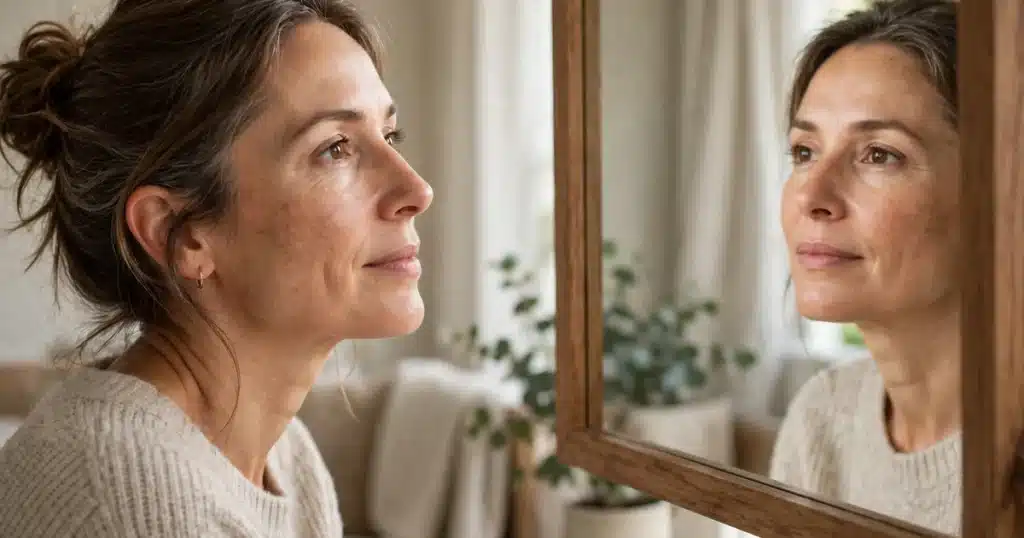
A breast cancer diagnosis can change how you see yourself — not just your health, but your sense of who you are. Many people describe feeling like a stranger to themselves: the capable person they were, the future they pictured, the roles they played. These identity shifts are common, normal, and rarely talked about. This article explains why they happen and offers steady, practical ways to rebuild your sense of self.
Key Takeaways
- Identity changes after a breast cancer diagnosis are common — you can feel like a different person, and that does not mean anything is wrong with you.
- Shifts often center on roles: patient, caregiver, partner, worker, friend. The diagnosis can rearrange all of them at once.
- Body changes can reshape self-image. Grief for the body and life you had before is a normal response, not vanity.
- Rebuilding your sense of self is gradual — small, ordinary choices often do more than dramatic reinventions.
- Individual experiences differ widely. What helps another person may not help you, and that is fine.
- If distress feels heavy or persistent, talk with your care team about support — you do not have to manage it alone.
Why Identity Shifts After a Diagnosis
Before the diagnosis, you had a working answer to “who am I” — built from habits, roles, plans, and the simple assumption of an ordinary future. A breast cancer diagnosis interrupts all of those at once. Medical appointments fill the calendar. Other people start relating to you through the diagnosis. Plans get paused or rethought. Even your body may feel unfamiliar.
Identity is not as fixed as it feels; it is the story we tell ourselves about ourselves, and that story is always partly built from the future we expect. When the future becomes uncertain, the story wobbles. Researchers of life transitions have long noted that major events — illness, loss, becoming a parent — can shake identity precisely because they rewrite the assumptions underneath it. You do not need the research to know it, though: if you have stood in front of a mirror and thought, “who is this person,” you already understand.
This is worth naming plainly because many people judge themselves for it. They think they should be grateful, strong, focused on treatment — and then feel guilty for grieving a version of themselves. But grieving who you were is not a failure of gratitude. It is an honest response to real change. Our article on grieving the life you had before breast cancer explores that grief in more depth.
Common Ways It Feels
Identity change does not look the same for everyone, but certain descriptions come up again and again:
- The stranger in the mirror. Looking at yourself — in a mirror, in photos — and feeling disconnected from the person looking back. Body changes can deepen this, but it can happen even without visible ones.
- The “patient” label taking over. You are introduced at gatherings as “going through treatment.” Appointments, medications, and symptoms become the main topic with people you love. The rest of you — humor, interests, opinions — feels edited out.
- A future on hold. Plans you were living toward — a trip, a career move, retirement timing, family plans — get suspended. When the future blurs, the present-day self can feel blurry too.
- Strength you did not order. People call you brave and strong while you feel frightened and exhausted. The gap between how you feel and how you are seen can be lonely.
- Jealousy toward your old self. Thinking of the person you were before — energetic, unworried, unaware — with a strange envy. Our article on why feelings swing so fast after a diagnosis describes how quickly emotions can cycle through these states.
It helps to see these as patterns rather than verdicts. They are things many people feel, which means feeling them does not make you unusual or unwell — it makes you human in an unfamiliar situation.

Roles and Relationships Rearranged
Much of our identity lives in roles: the reliable friend, the organized one, the parent who holds everything together, the partner, the employee. A diagnosis can scramble several roles at once. You may go from caregiver to care-receiver in a single week. The friend who always hosts may now be the one being brought meals. A professional identity built over years may be paused by treatment schedules.
This table shows how some of these shifts feel, and what is actually happening underneath:
| The role shift | What it can feel like | What is really happening |
|---|---|---|
| From independent to needing help | Guilt, frustration, feeling like a burden | A temporary change in capacity — not a change in worth |
| From private person to public patient | Exposed, over-discussed, tired of updates | Your information is circulating; you can still set boundaries around it |
| From planner to “we’ll see” | Anxious, adrift, unable to commit to anything | Planning is harder with uncertainty — flexibility is a skill, not a loss |
| From partner to patient-partner | Worry that the relationship has become one-sided | The relationship is adapting, as relationships do under stress |
| From worker to someone on leave | Invisible at work, identity thinning | Work was one part of you, not the whole |
None of these shifts are necessarily permanent. Treatment ends. Energy returns. Roles rebalance. But the experience of being rearranged can leave a mark — and it is worth remembering that many people come through it with a clearer sense of what matters to them than they had before.
Body and Appearance Changes
For many people, the most confronting identity changes are physical. Breast cancer and its treatment can alter the body in ways that are visible to you, to your partner, or to the world — and even changes only you know about can reshape how you feel in your own skin.
It is common to feel disconnected from a changed body, or to grieve the body that existed before. This grief is sometimes dismissed — including by the person feeling it — as superficial. It is not. Our bodies are where we live; our sense of self is anchored in them. Caring about how you look and feel in your body during treatment is a normal part of caring about yourself.
Some people find that small acts of agency help: choosing clothing that feels like them, trying a head covering that suits their style rather than one that simply covers, keeping a grooming routine that survived treatment days. Others find it helps to set the whole question aside for a while and return to it when energy is higher. Both are valid. There is no required timeline for making peace with a changed body — and “making peace” does not have to mean loving every change. It can simply mean living at home in yourself again, most days.

Rebuilding a Sense of Self
Rebuilding identity is not usually a single breakthrough. It is a slow accumulation of moments in which you recognize yourself again. These approaches help many people:
- Keep one non-cancer thing. One hobby, routine, or interest that has nothing to do with treatment — a book club, a morning walk, a garden, a craft. It is a reminder that you are larger than the diagnosis.
- Make small, ordinary decisions. When medical decisions dominate, choosing what to cook, what to wear, or where to walk restores a sense of authorship over daily life.
- Write it out. A few lines in a journal about how you feel today — not for posterity, just for clarity. Many people find that naming a feeling loosens its grip.
- Let people see the whole you. If every conversation has become a health update, it is okay to steer toward other topics. Ask friends about their lives. Tell a story that has nothing to do with cancer.
- Collect evidence of continuity. Notice the moments you feel most like yourself — laughing at a joke, solving a problem, noticing something beautiful — and treat them as data. The self you were is still in there.
- Allow the new parts in. Some people emerge from treatment with changed priorities, new friendships, or a different relationship with time. You do not have to “go back” to who you were. You are allowed to become someone slightly different — by choice this time.
Our pillar guide to coping emotionally with breast cancer gathers more strategies for the emotional side of the experience, from diagnosis through life after treatment.
When Identity Grief Needs Extra Support
Most identity wobbles after a diagnosis are part of a normal adjustment. But sometimes the distress is heavier, and it deserves more than self-help. Consider talking with your care team about support if:
- Low mood, hopelessness, or emptiness persists most days for weeks
- You feel unable to find meaning or interest in anything, including things you used to enjoy
- Sleep or appetite changes are significant and ongoing
- You withdraw from people you care about and cannot seem to stop
- You have thoughts of harming yourself — in that case, reach out right away to a crisis line or emergency services (call or text 988 in the US, or call 911)
Counseling, support groups, and oncology social workers exist precisely for this — many cancer centers include them as part of care. Asking for support is not an admission that you are failing to cope; it is one of the most effective coping strategies there is. Individual cases differ, and what you need is something only you and your care team can determine together.
What to Do Next
- Notice identity shifts without judging them. “I feel like a different person” is information, not a problem to fix.
- Keep at least one part of your life that is not about cancer — a routine, a hobby, a friendship on ordinary terms.
- Set a boundary around the “patient” role: decide what you will share, with whom, and when you would rather talk about anything else.
- Talk with your care team if distress feels heavy or stuck — support is part of care, not an extra.
- Give it time. Identity rebuilds in small recognitions, not all at once.
Frequently Asked Questions
Is it normal to feel like a different person after a breast cancer diagnosis?
Yes — it is one of the most common and least discussed parts of the experience. A diagnosis rearranges your routines, roles, body, and plans all at once, so the story you tell yourself about who you are gets shaken. That shaking is a normal response to abnormal circumstances, not a sign that something is wrong with you.
Why do I feel guilty about grieving who I was before?
Many people feel they should be grateful and positive, and judge themselves for missing their old life. But grief for the life and body you had before is honest, not ungrateful — you can be thankful for care and treatment and still mourn what changed. Both feelings can be true at once.
Will I ever feel like myself again?
Most people do, though “yourself” may have evolved. The stranger-in-the-mirror feeling usually fades as treatment routines normalize, energy returns, and ordinary life takes up more space again. Many people also describe discovering new priorities or strengths along the way — a changed self, not just a restored one.
How do I deal with everyone seeing me as “the cancer patient”?
It helps to be direct: thank people for caring, then steer conversations toward ordinary topics. You can also set information boundaries — a group update instead of repeated retellings, or asking a close person to share news for you. You are still the whole person you were; the diagnosis is one chapter, not the title of the book.
Does body image distress mean I am vain?
No. Caring about how your body looks and feels is a normal part of identity — our sense of self is anchored in our bodies. Grief over physical changes deserves the same respect as any other grief. If it is weighing on you, it is worth raising with your care team, who hear this concern often.
Related Articles
- Coping Emotionally With Breast Cancer: A Gentle Guide From Diagnosis Through Life After Treatment
- Why Your Feelings Swing So Fast After a Breast Cancer Diagnosis
- Grieving the Life You Had Before Breast Cancer
- Feeling Numb or in Shock After a Breast Cancer Diagnosis
- Anger After a Breast Cancer Diagnosis: Why It Happens and Healthy Ways Through It
This article is for general educational purposes only and is not medical, legal, or financial advice. It does not replace professional care. Talk to your doctor or care team about your own situation. If you think you may have a medical emergency, call 911.