
It is completely normal for scars after breast surgery to stir strong feelings — grief, anger, numbness, anxiety, or a complicated mix of all of them. Skin heals on one timeline and emotions on another, and struggling with how your body looks now does not mean you are ungrateful for the care that saved your health. Emotional healing is part of recovery, and it deserves the same patience you give your body.
Key Takeaways
- Strong feelings about surgical scars — grief, anger, numbness, anxiety — are normal and common, not a sign of ingratitude.
- Scars change over the months: they usually soften, flatten, and fade somewhat with time, though every body heals differently.
- You get to choose when and how you look at your scars. There is no required timeline for “getting used to” them.
- Talking about your feelings — with a friend, a support group, or a counselor — often helps more than carrying them alone.
- Feelings about scars can affect intimacy and relationships. These are worth discussing openly, at your own pace.
- If sadness, anxiety, or distress about your body feels overwhelming or does not ease over time, reach out to your care team or a mental health professional.
Why Scars Stir Such Strong Feelings
A scar is not just a mark on the skin. For many women, breasts are tied to identity, femininity, sexuality, and motherhood — so a scar there can feel like a visible record of everything cancer took. Even when surgery went well and the medical outcome is good, the mirror can deliver a shock that has little to do with gratitude and everything to do with loss.
There is also the timing. During treatment, most of your energy goes toward getting through it: appointments, decisions, side effects. Feelings about how your body has changed often surface later, once the crisis passes and there is finally room to feel them. If the emotions hit weeks or months after surgery, that delay is normal — not a sign that something is wrong with you.
And scars are daily reminders — there in the shower, while dressing, in intimate moments. That constant presence can make the feelings feel inescapable, especially early on. Naming why the feelings run so deep can make them a little less frightening.

Feelings That Are Normal
There is no single “right” way to feel about surgical scars. Women describe a wide range, and the feelings often shift from day to day:
- Grief. Mourning the body you had before — its shape, its symmetry, the way clothes fit. Grief over a changed body is real grief, and it deserves to be named.
- Anger. Anger at cancer, at the situation, sometimes at the unfairness of having to make these trade-offs at all.
- Numbness or avoidance. Not wanting to look at the scars, changing clothes in the dark, or feeling detached from your own body. Avoidance is a common protective response, not a failure.
- Anxiety about being seen. Worrying how a partner, a new partner, or even a doctor will react to the scars.
- Guilt. Feeling that caring about appearance is shallow when the surgery addressed something so serious. It is not shallow — caring how you look and feel in your body is human.
- Relief mixed with sadness. Being glad the cancer is gone and grieving the cost at the same time. Both feelings can be true at once.
If you recognize yourself in several of these, you are in large and ordinary company. Our pillar guide to coping emotionally with breast cancer explores the wider emotional landscape of diagnosis and treatment.
How Scars Change Over Time
Knowing what to expect physically can ease some of the emotional weight. In the early weeks, scars often look their most dramatic — red or dark, raised, firm, sometimes with swelling around them. This is the active healing phase, and it does not represent the final result.
Over the following months, scars typically soften, flatten, and fade somewhat in color. The process is slow — measured in months, not weeks — and the final appearance varies from person to person depending on the surgery, skin type, and how each body heals. Some people find that watching this gradual change helps the emotional adjustment; the scar becomes less of a shock and more of a familiar part of the landscape.
A few practical notes: protect healing scars from strong sun, since new scar tissue can darken with sun exposure. If a scar becomes very raised, itchy, or painful, or if the skin around it changes, mention it to your surgeon — there are treatments for problematic scarring. And give it time before judging the result; surgeons generally assess the final appearance many months after the operation.
The decision about reconstruction — or about not having reconstruction — also shapes how scars feel. Our guide to immediate versus delayed reconstruction timing walks through those choices without pressure in either direction.
Gentle Ways to Cope
Small, kind practices can make difficult feelings easier to carry:
- Look on your own terms. You decide when to look at your scars, for how long, and in what setting. Some women find a first look easier in soft light, alone, with no rush. Others prefer to have a trusted person nearby. Both are fine.
- Name what you feel. Writing in a journal, even a few lines, can turn a vague heaviness into something specific — and specific feelings are easier to work with than unnamed dread.
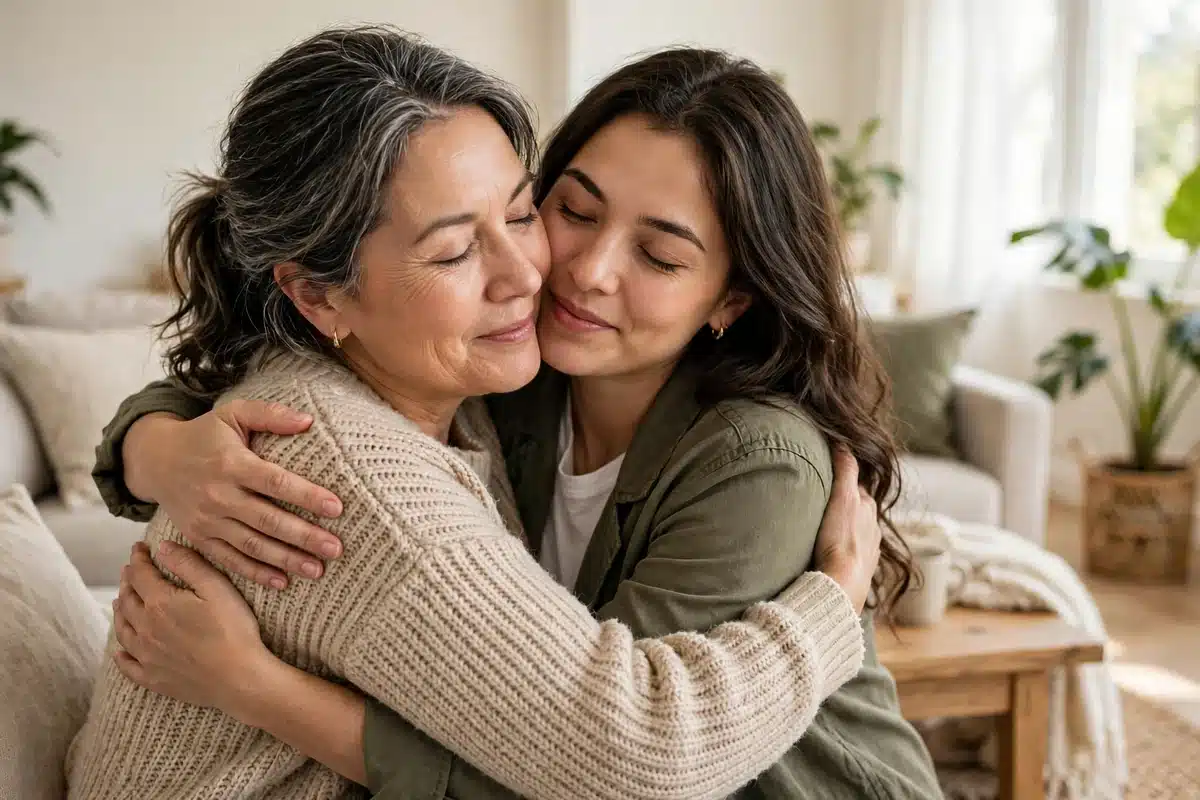
- Talk to someone who gets it. A friend who listens without fixing, a support group of women who have been through surgery, or a counselor experienced with cancer. You do not have to carry this alone.
- Touch with kindness. When the surgical team says it is safe, gentle touch — your own hand, soft lotion, a warm washcloth — can help a scarred area start feeling like part of you again rather than foreign territory. Go slowly and stop if it hurts.
- Mark the healing. A private photo each month, or a short note about how you feel, can reveal gradual progress that day-to-day living hides.
- Move your body gently. Walking, stretching, or whatever movement your team approves can ease the trapped, heavy feeling that sometimes comes with recovery.
Scars, Intimacy, and Relationships
Scars live in the most private areas of life, so it is natural for them to affect intimacy. Some women feel self-conscious undressing in front of a partner; others find that a partner’s reaction — even a well-meaning one — lands painfully. These experiences are common, and they are worth talking about rather than enduring silently.
If you have a partner, consider telling them what you need: time, gentleness, certain words or none at all. Partners often want to help but do not know how, and specific guidance helps them more than hints. If a partner’s reaction hurt you, that is worth addressing — with them, or with a counselor together — rather than absorbing it alone.
Desire itself can change after surgery and treatment, for physical and emotional reasons together. Our guide to changes in desire after breast cancer addresses this with care. And for the wider question of how you see yourself now, our guide to body image after mastectomy goes deeper. Worries about future dating and new partners are normal too — there is no rule about when to share your story, only that you deserve someone who responds with care.
When to Seek More Support
Most difficult feelings about scars ease gradually as healing progresses and life moves forward. But sometimes they settle in and harden — and that is the moment to bring in more support, not to tough it out:
- Sadness, anxiety, or distress about your body that feels overwhelming or constant.
- Avoiding mirrors, intimacy, social situations, or medical follow-ups because of how you feel about the scars.
- Thoughts of harming yourself — reach out right away: call or text 988 in the US to reach the Suicide and Crisis Lifeline, or call 911 in an emergency.
- Feelings that are getting worse over months rather than gradually easing.
- Difficulty sleeping, eating, or functioning that does not lift.
Your oncology team can refer you to counselors who specialize in cancer and body image — ask; this is a routine request. Many cancer centers have social workers and support groups built in. Seeking help for the emotional side of healing is not a sign of weakness; it is part of treating the whole person, which is what good cancer care aims to do.
What to Do Next
- Give yourself permission to feel whatever you feel about your scars — no timeline, no required attitude.
- Notice one small thing that helps — a walk, a journal entry, a conversation — and make room for it regularly.
- Tell one trusted person honestly how you feel about the scars, even briefly.
- Ask your care team about support resources: counselors, social workers, or support groups at your center.
- If someone who helps with your daily life is struggling too, share our guide on preventing caregiver burnout with them.
- If distress feels overwhelming or is getting worse, reach out to a mental health professional promptly.
Frequently Asked Questions
Is it normal to avoid looking at my scars?
Yes — especially in the early weeks. Avoidance is a common way the mind protects itself while it catches up with a changed body, and most women look when they are ready. If it is still strong months later and affecting your life, a counselor can help.
Will my scars fade?
Scars usually soften, flatten, and fade somewhat over months, but they do not disappear entirely, and the final appearance varies from person to person. Sun protection on healing scars helps prevent darkening. Your surgeon can tell you what to expect from your specific surgery and whether anything can be done about scarring that troubles you.
I feel guilty for caring about how I look. Is that wrong?
No. Caring about your appearance and how you feel in your body is not shallow, and it does not mean you are ungrateful for your treatment. Gratitude for good medical care and grief over a changed body can exist side by side — most women who have been through this would recognize both feelings.
What if my partner reacts badly to my scars?
A hurtful reaction is painful and worth addressing directly — with your partner, and with a counselor if it helps. Sometimes partners react from their own fear or grief about the cancer, not from rejection of you. But your feelings about it are valid regardless of the reason, and you deserve support in working through them.
Does everyone eventually “get over” their scars?
Most women reach a kind of peace with their scars over time — not necessarily love, but acceptance, where the scar becomes background rather than foreground. The timeline varies widely. If acceptance feels completely out of reach and distress is not easing, that is a sign to seek more support, not a personal failing.
Should I consider scar revision or tattooing over scars?
Some women explore options like scar revision or decorative tattooing later in recovery, and for some it helps. These are personal decisions to discuss with your surgeon once healing is complete — and to make for yourself, not from pressure. There is no requirement to “fix” your scars to be at peace with them.
Related Articles
- Coping Emotionally With Breast Cancer: A Guide for Patients and Families
- Body Image After Mastectomy: Reclaiming How You See Yourself
- Changes in Desire After Breast Cancer: What to Know
- Immediate vs. Delayed Reconstruction: Understanding the Timing
- How to Prevent Caregiver Burnout: A Practical Guide
This article is for general educational purposes only and is not medical, legal, or financial advice. It does not replace professional care. Talk to your doctor or care team about your own situation. If you think you may have a medical emergency, call 911.