Radiation therapy can make the skin in the treated area more sensitive to sunlight, and this sensitivity can linger after treatment ends. Protecting your skin from the sun is a simple, practical way to care for yourself during recovery. The steps are the same ones doctors suggest for everyone — shade, clothing, and sunscreen — with a little extra care for the treated area.
This article explains why sun protection matters after radiation and how to build it into your daily routine. As with everything during treatment, check with your own care team before putting anything on treated skin.
Key Takeaways
- Radiation can leave the treated skin more sensitive to the sun, sometimes long after the last session.
- Sun on irritated or healing skin can make redness, dryness, and discomfort worse.
- The basics work best: shade, protective clothing and hats, and sunscreen on skin your care team says is okay to cover.
- Ask your care team before applying any product to the treated area — some ingredients and fragrances can irritate healing skin.
- Sun protection is a long-term habit, not just a treatment-time task; keep it up as your skin recovers.
- For the bigger picture of daily life during care, see living through breast cancer treatment.
Why Sun Protection Matters After Radiation
Sunlight feels good, and nobody wants to spend recovery hiding indoors. The goal is not to avoid the outdoors — it is to enjoy it while giving your skin the gentlest possible experience. Radiation changes how skin responds to ultraviolet (UV) light, which is the invisible part of sunlight that causes sunburn. Skin that has been through radiation can burn more easily and take longer to calm down afterward.
This is true during the treatment course and for some time after it. Even when the visible redness fades, the deeper layers of skin may still be healing. Think of sun protection as part of the recovery plan, alongside rest, gentle skin care, and keeping your follow-up appointments.
The treated area deserves the most attention, but it is wise to protect all of your skin. Treatment can be tiring, and a painful sunburn on top of everything else is something you can often prevent with a few small habits.
How Radiation Affects Your Skin
Radiation therapy works by targeting cells in a specific area, and the skin over that area is part of the path. As treatment goes on, many people notice their skin becoming pink or red, similar to a mild sunburn. The skin may feel warm, tender, or itchy, and it can become dry or start to peel as the weeks pass.
These changes usually build gradually rather than appearing all at once. Your care team watches your skin at each visit and will tell you what they are seeing. Because the skin is already working hard to repair itself, extra UV exposure can add irritation on top of irritation — redness can deepen, dryness can worsen, and healing can slow down.
After the last session, the visible effects usually fade over the following weeks. But sensitivity to the sun can outlast the redness. Some people find that the treated area stays more reactive to sun for a long time, which is why doctors encourage sun protection as an ongoing habit rather than a temporary rule.
Everyday Sun Protection Steps
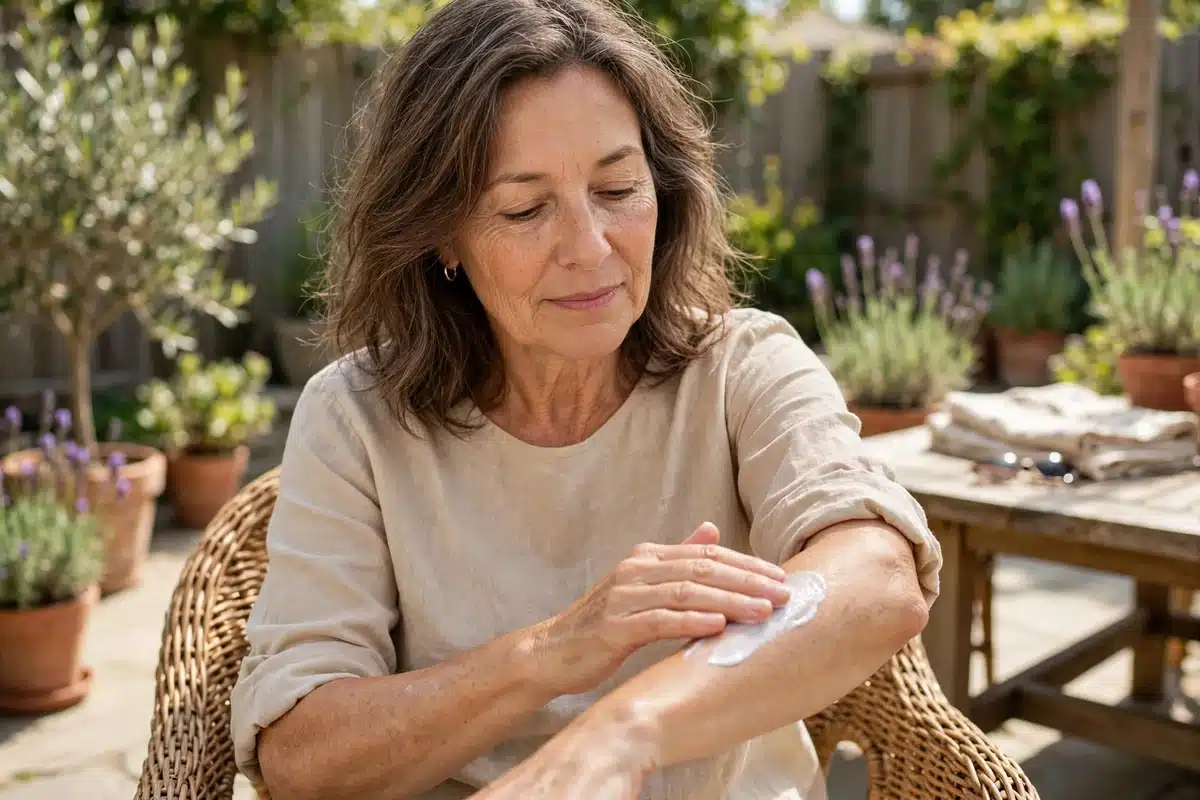
You do not need expensive products or a complicated routine. The most effective sun protection is often the simplest: staying out of direct sun when it is strongest and covering up. Here are the steps most care teams suggest, in plain terms.
Seek Shade, Especially Midday
The sun’s rays are strongest in the middle of the day. When you can, plan walks, errands, and outdoor time for the morning or late afternoon. A tree, an umbrella, or a porch awning all count as shade. If you are at an event with no shade, bring your own — a portable umbrella or a wide-brimmed hat travels easily.
Cover Up With Clothing
Clothing is the most reliable sunscreen there is. Lightweight long sleeves, long pants or skirts, and a wide-brimmed hat protect without any reapplying. Tightly woven fabrics block more UV than loose, thin knits — hold the fabric up to the light; the less light that passes through, the better the protection. Sunglasses protect the delicate skin around your eyes.
For the treated area specifically, soft, loose clothing that does not rub is usually the most comfortable choice during treatment. Your nurse can suggest fabrics and fits that other patients have liked.
Use Sunscreen on Untreated Skin
For skin that was not in the radiation field, a broad-spectrum sunscreen used as directed on the label is standard advice. “Broad-spectrum” simply means it guards against both main types of UV light. Apply it before going out, and reapply after swimming, sweating, or toweling off.
For the treated area, the rule is different: ask your care team first. During treatment and while the skin is healing, your doctors may want you to avoid putting anything on that skin, or they may recommend a specific gentle product. Do not apply sunscreen, lotions, oils, or home remedies to the treated area until your team says it is okay. This is one of the most common questions nurses hear, so do not feel shy asking it.
Build the Habit Into Your Routine
Habits stick when they are easy. Keep a hat by the door, keep sunscreen in your bag, and put the patio umbrella where you will actually use it. Small, steady steps protect your skin far better than perfect protection once in a while.

Caring for Skin After Treatment Ends
Finishing radiation is a milestone, and your skin will keep improving in the weeks that follow. Gentle care helps it along:
- Wash the treated area gently with mild soap and lukewarm water, and pat dry instead of rubbing.
- Moisturize as your care team advises — they may suggest a plain, fragrance-free product once healing allows.
- Keep sun off the treated area while it is still pink or tender, and keep protecting it afterward.
- Wear soft, breathable fabrics and avoid anything that chafes the healing skin.
- Stay hydrated and eat as normally as you can; skin heals better when the body is nourished.
Over the longer term, the treated skin may look slightly different — a little darker, drier, or firmer than before. These changes are common and usually not a cause for alarm, but mention anything that worries you at your follow-up visits. Your care team will also tell you how they want to monitor your skin going forward and how often they want to see you.
When to Call Your Care Team
Most skin changes during radiation are expected and manageable, but some deserve a prompt call. Reach out to your care team if you notice:
- Blistering, open sores, or skin that is peeling in sheets.
- Swelling, warmth, or redness that spreads beyond the treated area.
- Signs of infection, such as increasing pain, pus, or fever.
- Itching or discomfort that keeps you from sleeping.
- A severe sunburn anywhere on your body.
Do not wait for your next scheduled visit if something feels wrong. Calling early is a reasonable choice — that is what the team is there for. If you think you may have a medical emergency, call 911.
What to Do Next
If you are currently in treatment or about to start, a short conversation with your nurse can settle most sun protection questions in one visit. Consider asking:
- Which parts of my skin should I keep completely covered, and for how long?
- When may I start using sunscreen or moisturizer on the treated area, and is there a type you prefer?
- Are there clothing fabrics or fits you recommend while my skin heals?
- How will we monitor my skin at follow-up visits?
Then pick one or two habits to start this week — a hat by the door, shade at midday — and let the rest follow naturally. Recovery is a long road, and small kindnesses to your skin add up.
Frequently Asked Questions
Can I go outside at all during radiation treatment?
Yes, in most cases. Fresh air and gentle movement are good for you. The key is moderation: shorter outings, shade, and covering the treated area. Your care team can confirm what is right for your situation.
How long does sun sensitivity last after radiation?
It varies from person to person. The visible effects usually fade in the weeks after treatment, but the treated skin can stay more sun-reactive for much longer. Many doctors advise making sun protection a lasting habit. Your own team can give you guidance based on how your skin responded.
Is it safe to swim in a pool or the ocean?
This is a question for your care team, because the answer depends on the condition of your skin. Chlorine, salt water, and sun together can irritate healing skin. Ask before swimming, and ask again before your first beach trip.
What kind of sunscreen should I buy?
For untreated skin, a broad-spectrum sunscreen used as directed is the standard choice. For the treated area, do not choose on your own — ask your care team when it is okay to apply anything there and whether they recommend a particular type. Fragrance-free, gentle formulas are usually the starting point once you get the go-ahead.
Can I use aloe vera or other home remedies on radiated skin?
Ask your care team before using any home remedy, including aloe vera. Natural does not automatically mean gentle on healing skin, and some products can interfere with recovery. Your nurses hear this question often and will give you a straight answer.
Where can I find trustworthy skin care information during cancer treatment?
Patient-friendly resources are published by the American Cancer Society (cancer.org) and the National Cancer Institute at cancer.gov. Your own care team’s instructions come first.
Related Articles
- Living Through Breast Cancer Treatment: A Practical Guide — the pillar guide to daily life during care, from energy to emotions.
- What a Survivorship Care Plan Is — how follow-up care is organized after treatment ends.
- Breast Cancer Awareness Month — how awareness efforts support patients, survivors, and research.
This article is for general educational purposes only and is not medical, legal, or financial advice. It does not replace professional care. Talk to your doctor or care team about your own situation. If you think you may have a medical emergency, call 911.