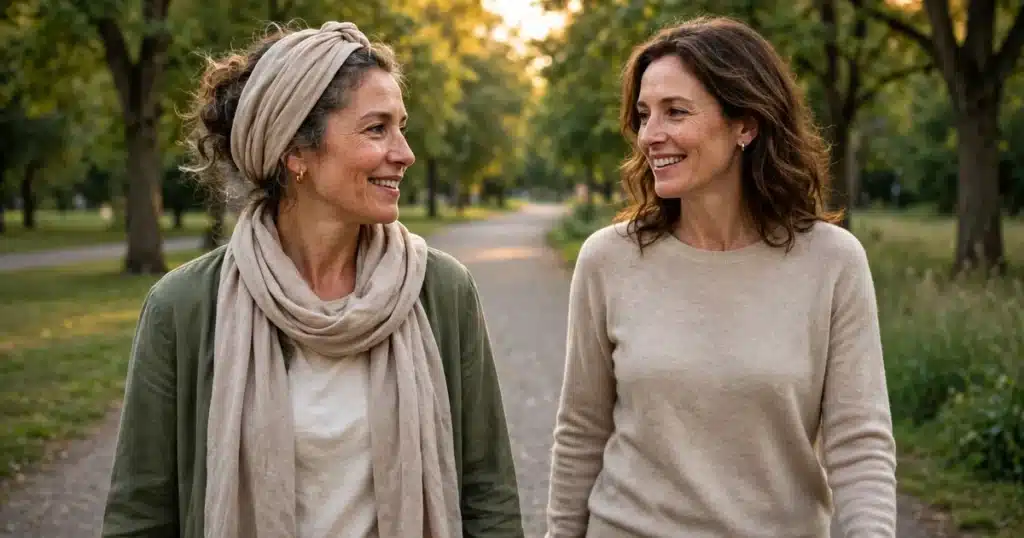
Losing your hair during chemotherapy can feel like grief — and in a real sense, it is. It is grief for a part of yourself that cancer is changing without your permission, and it often arrives wrapped in guilt for caring “so much” about something that seems small next to the cancer itself. This guide explains why hair loss hurts so much emotionally, what feelings are common along the way, and gentle ways to cope.
Key Takeaways
- Hair loss is one of the most emotionally difficult side effects of chemotherapy for many people — and grieving your hair is completely normal.
- Hair is tied to identity, femininity, privacy, and simply feeling like yourself, so losing it can feel like losing much more than hair.
- Feelings often arrive in waves rather than in order: grief, anger, embarrassment, and relief-guilt can show up together or one at a time.
- Practical steps can soften the emotional blow: trying on scarves or wigs ahead of time, choosing how and when to look in the mirror, and leaning on people you trust.
- If distress stays intense or starts affecting sleep, daily life, or relationships, reach out — your care team can connect you with counseling and support resources.
Why Hair Loss Can Hit So Hard
For many people, hair is never “just hair.” It is part of how you recognize yourself in the mirror, how you express femininity or personal style, how you show up in the world. When chemotherapy takes it, the loss can feel like an erasure of something essential — a version of yourself disappearing while you watch.
Unlike many other side effects, hair loss is also public. Nausea and fatigue can be hidden; a bare scalp or thinning hair cannot. It tells strangers, coworkers, and acquaintances that something serious is happening before you have chosen to say a word. Many people describe this as the moment they became “a cancer patient” in everyone else’s eyes — a loss of privacy on top of everything else.
Then there is the loss of control. By the time hair loss begins, you have already absorbed a diagnosis, endured scans and waiting rooms, and made frightening decisions. Hair loss is one more thing cancer takes without asking — one visible, undeniable change too many.
And layered over all of this is a particularly cruel trick of the mind: minimizing your own pain. “It’s only hair.” “Other people have it worse.” “I should be grateful the treatment exists.” All of these can be true at the same time that your grief is true. You can be deeply thankful for your care and still mourn what cancer is changing about your body. Both truths fit. Neither cancels the other.
Feelings You May Have
Difficult feelings about hair loss rarely arrive neatly, one at a time. They tend to come in waves. Here are some of the most common feelings, why they show up, and what tends to help:
| What you might feel | Why it may happen | What can help |
|---|---|---|
| Grief for your appearance as it was | Hair is tied to identity — mourning it is mourning a recognizable self | Name it as grief; allowed grief tends to move through you more gently than fought grief |
| Anger that this is happening at all | Cancer was not your fault or your choice; anger is a natural response to an unfair thing | Physical outlets like walks, writing unsent letters, talking it through with someone safe |
| Embarrassment or self-consciousness in public | Feeling exposed or stared at is deeply human — nobody enjoys being the object of pity | Choose coverings that feel like you; have a short, practiced answer for curious questions |
| Guilt about caring (“it’s only hair”) | Comparison minimizes your experience; suffering is not a competition | Hold two truths: you can be grateful for your treatment and your feelings are valid |
| Anxiety about being seen as “a patient” | Hair loss announces the diagnosis before you decide who should know | Decide in advance who you will tell and how; having a plan reduces the dread |
None of these feelings means you are vain, ungrateful, or coping badly. They mean you are a person going through one of the hardest experiences of your life — and your heart is responding the way hearts do.
The Lead-Up: Waiting for It to Happen
For many people, the weeks before hair loss begins are almost as hard as the loss itself. Every shower becomes a test. The dread can fill your thoughts in a way that surprises you — and then you feel silly for dreading something you knew was coming. You are not silly. Anticipatory grief is real grief.
Some people choose to take a small piece of control back by cutting their hair short before the shedding starts. It does not prevent what is coming, but for some it makes the transition feel less dramatic and more chosen. This is a personal decision — there is no right answer, and you should not let anyone pressure you either way.
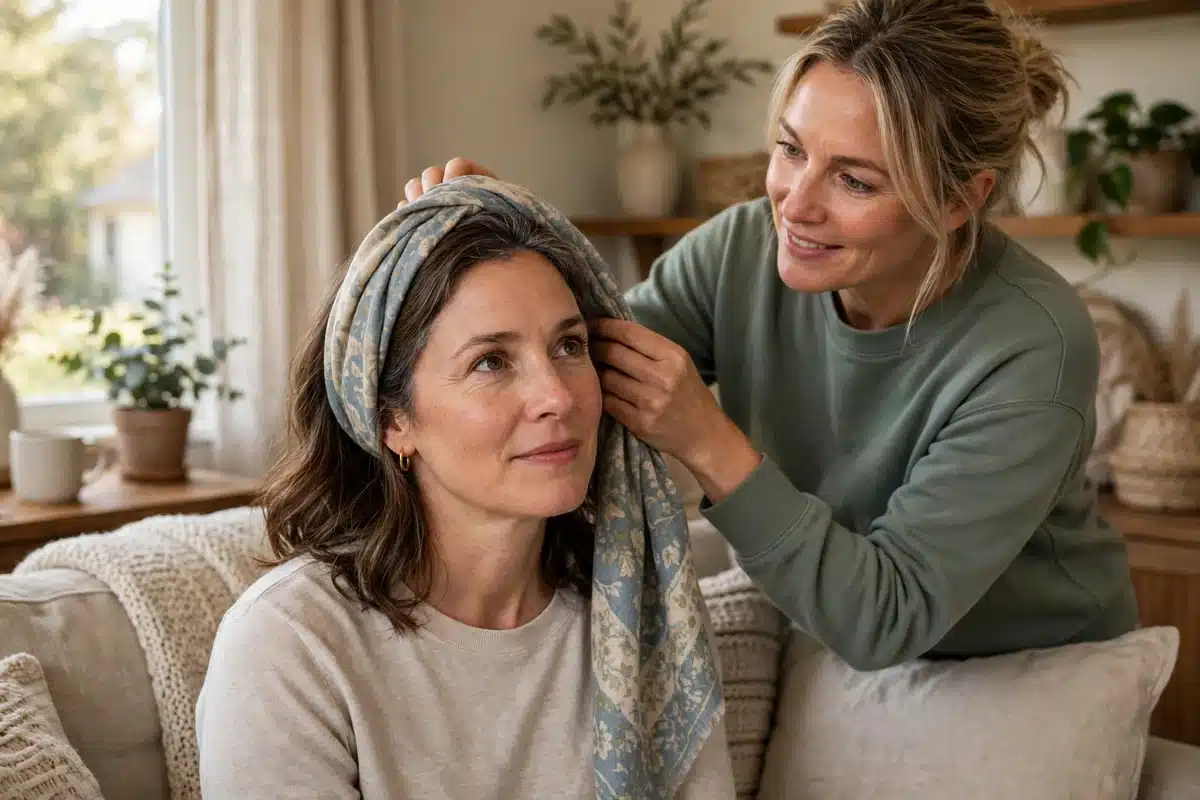
The waiting period can also be a practical window, if you feel up to it. Trying on wigs or experimenting with head coverings while you still have hair gives you time to find what feels comfortable without the pressure of needing something tomorrow. Some people find comfort in having options ready; others prefer not to think about it until they must. Both approaches are fine.
One honest caution: preparation eases the practical side, but it does not necessarily spare you the emotional side. You can own three beautiful scarves and still cry when the hair comes out. That does not mean the preparation failed.
When the Shedding Starts
It often begins quietly — a few more strands on the pillow, a handful in the shower drain — and then seems to accelerate. That in-between stage, when your hair is thinning but not gone, is one many people find the hardest.
At some point you may decide to shave your head or cut what’s left very short. Many people describe this as both the hardest moment and a strange relief — the waiting is over, and you have made a decision instead of watching it happen. If you do this, consider letting a friend or loved one be there. You do not have to face that particular mirror alone.
Public moments can sting. A stranger’s stare, a coworker who doesn’t know what to say, a child who asks a blunt question — these can catch you off guard even on a good day. It helps to have a short, practiced response ready, something like “I’m going through cancer treatment — I’m doing okay.”
Children in your life may need simple, honest words. Kids often handle the visible change better when someone they trust names it plainly: Mom is sick, the medicine makes her hair fall out, and she is still the same Mom.
Gentle Ways to Cope
There is no technique that makes hair loss painless. But small, steady practices can make the grief easier to carry:
- Give yourself permission to grieve. This is the foundation everything else rests on. You do not need to earn your sadness by being sick “enough.” Losing your hair hurts, and you are allowed to feel it fully.
- Practice self-compassion. Notice the tone of your inner voice. When you catch yourself thinking something harsh — about your appearance, or about caring at all — ask whether you would say that to a friend in your situation. Then try the kinder version on yourself.
- Choose your mirror moments. You do not have to study your reflection every day. Look when you feel ready, in lighting that feels kind, and look away when you need to. What you choose not to see is still your choice.
- Find coverings that feel like you. A wig, scarf, hat, or turban that suits your style can help you feel recognizable to yourself. There is no rule that says you must cover up, either — many people go bare at home or everywhere. It is your head, your call.
- Let people help in concrete ways. If a friend offers to come scarf-shopping, to sit with you while you shave your head, or just to be there on a hard day — say yes. People who love you want a job to do. Give them one.
- Write it out. Journals, unsent letters, voice memos to yourself — getting feelings out of your head and somewhere they can be seen tends to loosen their grip.
- Keep moving gently. Walks, stretching, or whatever movement feels good once your care team says it is okay. Movement reconnects you with your body as something capable, not just something treatment is happening to.
- Connect with people who get it. A support group — in person or online — can be a relief precisely because you do not have to explain. Everyone there already knows.

When Sadness Runs Deeper
For most people, the acute grief of hair loss softens gradually as the new reality becomes familiar. But sometimes it digs in. Consider reaching out for extra support if:
- Distress about hair loss does not ease over time, or keeps getting worse
- You are avoiding social situations, photos, mirrors, or leaving the house
- Looping thoughts about your appearance are interfering with sleep or concentration
- You feel persistently low, hopeless, or disconnected from yourself
- Your relationship or intimacy is suffering and you cannot bridge the gap alone
A good first step is your own care team — oncology teams work with counselors who specialize in exactly this, and a referral is a normal, common request. Organizations such as CancerCare offer free counseling resources, and cancer.org lists support options as well. For more on the wider emotional landscape of treatment, see our guide to coping emotionally with breast cancer.
Questions to Ask Your Doctor
- Is hair loss expected with my particular treatment plan, and when does it usually begin?
- Are there comfort measures for the scalp I should know about, such as gentle care routines?
- Can you refer me to a counselor who has experience with body image concerns during cancer treatment?
- Are there support groups — in person or online — that you recommend?
- What should I know about hair regrowth after treatment ends?
- Who should I call if I am struggling emotionally between appointments?
Frequently Asked Questions
Is it normal to cry about losing my hair when I am fighting cancer?
Yes. Crying about hair loss while facing cancer is completely normal — the two are not in competition. Needing treatment and mourning what treatment costs you can live in the same heart.
Will my hair grow back after chemotherapy ends?
For many people, hair grows back after chemotherapy ends, often coming in with a slightly different texture or color at first. Regrowth is gradual and everyone is different — your care team can tell you what is typical for your situation.
Should I cut my hair short before it starts falling out?
There is no medical requirement either way — it is purely a personal choice. Some people find that going short before the shedding starts makes the transition feel less dramatic and gives them a sense of control. Others prefer to leave their hair alone until they must deal with it. Do what feels right to you, not what anyone else did.
How can I respond when people make comments about my hair loss?
Most comments come from awkwardness, not cruelty — people often don’t know what to say. A short, warm, boundary-setting reply works well, such as “I’m in cancer treatment right now — I’m doing okay, thanks for asking.”
What if my feelings about hair loss get worse instead of better?
Grief is not always a straight line, and setbacks happen — a comment from a stranger or an upcoming event can bring it all rushing back. But if distress stays intense, grows over weeks, or starts running your daily life, that is a good reason to seek support, not a failure. Your care team can refer you to counseling and support resources.
Related Articles
- Coping Emotionally With Breast Cancer
- Choosing a Wig During Chemotherapy
- Head Coverings During Chemotherapy
- How to Care for a Wig
- The Emotional Roller Coaster After a Breast Cancer Diagnosis
This article is for general educational purposes only and is not medical, legal, or financial advice. It does not replace professional care. Talk to your doctor or care team about your own situation. If you think you may have a medical emergency, call 911.