During chemotherapy, skin commonly becomes drier, itchier, and quicker to react — products you have used for years may suddenly sting, and skin that was oily can turn flaky. A gentle routine built on three habits handles most of it: wash mildly with lukewarm water, moisturise generously and often, and protect skin from sun and friction. Just as important is knowing what to pause — harsh scrubs, heavily fragranced products, and long hot baths — and which changes, like redness, cracking, or a rash that spreads, deserve a call to your care team.
Key Takeaways
- Chemotherapy affects skin because it targets fast-dividing cells, and skin renews itself constantly — dryness, sensitivity, itching, and mild rashes are common as a result.
- The core routine is simple: gentle fragrance-free washing, lukewarm (not hot) water, and a plain, rich moisturiser applied often, especially straight after washing.
- Sun protection matters more during treatment — skin can burn more easily, so shade, covering clothing, and sunscreen on exposed skin are worthwhile habits.
- Pause the harsh end of your shelf: exfoliating scrubs, strong fragranced products, and very hot water all strip and irritate already-vulnerable skin.
- Report spreading redness, blistering, weeping or cracked skin, signs of infection, or a rash that arrives with new medicines — your team would rather hear early.
- If you are also having radiation therapy, the treated area follows its own rules — check with that team before applying products there.
Why Chemotherapy Changes Your Skin
Skin is one of the body’s fastest-renewing tissues, and chemotherapy cannot perfectly distinguish it from the fast-dividing cancer cells it targets. The result is a collection of familiar effects: skin that dries out because it is not renewing and protecting itself as well as usual, increased sensitivity to products and sunlight, itching, mild redness or rashes, and sometimes darkening or lightening of patches of skin. These effects sit in the same family as the mouth sores and nail changes chemotherapy causes — our pillar guide to living through breast cancer treatment surveys the whole range, and our overview of managing chemotherapy side effects puts skin in context with everything else.
The pattern varies: which medicines are in your regimen, your skin type, and even the season all play a part. What follows is the general, gentle approach most care teams endorse — but your own team’s advice for you always comes first.
The Gentle Daily Routine
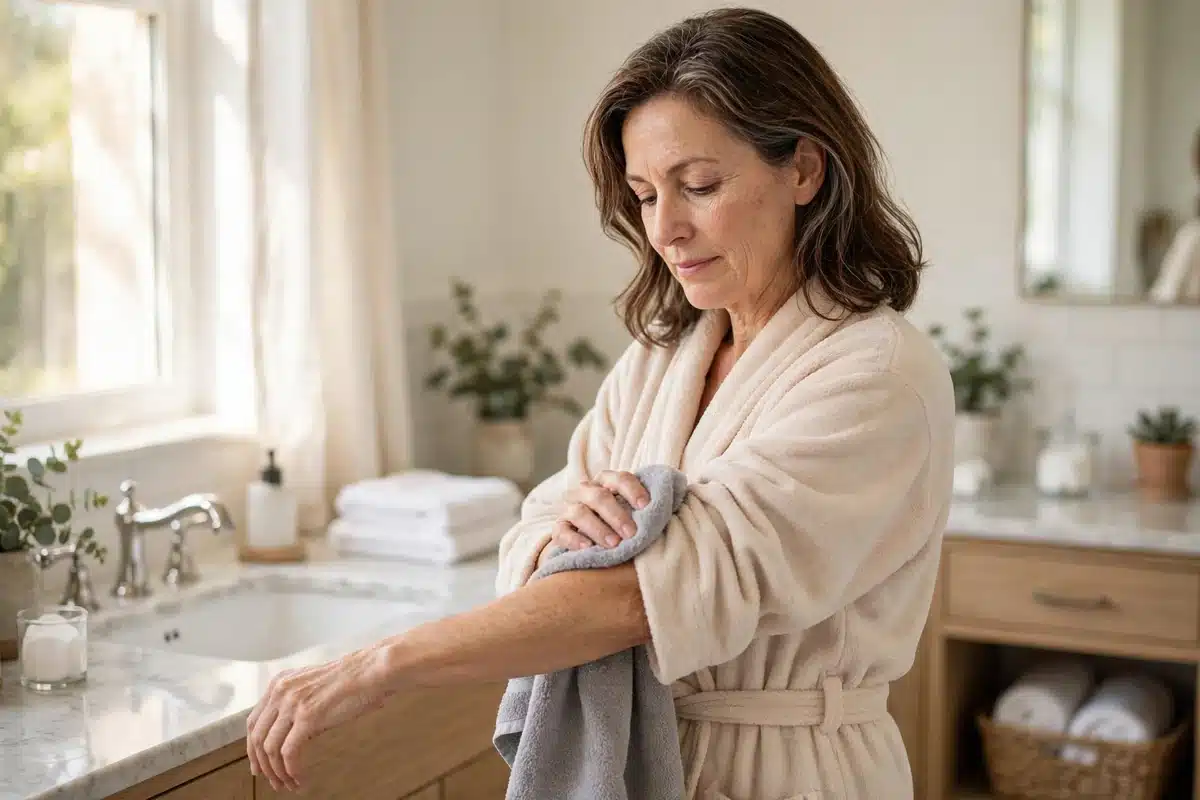
| Step | Gentle approach | Why it helps |
|---|---|---|
| Wash | Mild, fragrance-free cleanser; lukewarm water; hands or a soft cloth rather than scrubbing tools | Cleans without stripping the oils fragile skin cannot spare |
| Dry | Pat dry with a soft towel instead of rubbing | Rubbing irritates and can break delicate skin |
| Moisturise | Plain, rich cream or ointment, applied while skin is still slightly damp, and topped up during the day | Traps water in the skin and rebuilds the barrier dryness has thinned |
| Dress | Soft, loose, breathable fabrics next to the skin; wash new clothes before wearing | Reduces friction and contact irritation |
| Hands and face | Moisturise after every hand wash; be extra gentle with facial skin | These areas are washed and exposed the most |
Two habits do most of the work in that table: moisturising little and often (a tube by the sink and one by the bed beats a single elaborate product), and treating lukewarm as the default temperature for every wash. Skin under chemotherapy has less reserve than usual, so small kindnesses, repeated daily, prevent most discomfort.
Bathing and Showering
Hot water feels soothing in the moment and punishes afterwards: it dissolves the skin’s natural oils, and the itch arrives as skin cools and dries. Keep showers and baths lukewarm and reasonably short, use a gentle cleanser only where it is needed rather than over every inch, and moisturise within a few minutes of stepping out, while skin is still damp. If itching is a problem, your team may suggest additions to the bath or specific creams — ask before experimenting, because some popular home remedies irritate chemotherapy skin rather than calming it.
Sun, Weather, and the Outdoors
Several chemotherapy medicines make skin noticeably more sensitive to sunlight: you may burn faster, and in places you would not expect. Treat sun protection as part of the daily routine rather than a beach-day extra — seek shade in the middle of the day, cover up with light long sleeves and a wide-brimmed hat, and use sunscreen on skin that stays exposed, reapplying it as its own instructions advise. Cold, wind, and indoor heating pull moisture the other way, so on dry winter days the moisturiser habit matters just as much. The American Cancer Society at cancer.org publishes general guidance on skin and other side effects during treatment.

What to Pause While Skin Is Fragile
- Exfoliating scrubs and peels — physical and chemical exfoliants remove surface cells your skin currently needs; gentle washing does the job.
- Heavily fragranced products — perfumes and scented lotions are common irritants on sensitised skin; plain and fragrance-free is the safer shelf.
- Very hot water and long soaks — both strip oils and worsen dryness and itching.
- New products, mid-treatment — if you want to try something, introduce one thing at a time on a small area first, so any reaction has an obvious culprit.
- Hair removal on irritated skin — shaving or waxing over sore, broken, or rashy skin invites infection; an electric razor is gentler where removal matters, and skipping it is fine too.
None of this is permanent. It is a protective crouch while treatment lasts — the hair loss many people experience follows the same unfair logic, and the same recovery: as treatment ends, healthy renewal resumes.
Hands, Feet, and the Skin Around Nails
Hands and feet deserve a special mention because they work the hardest. Moisturise hands after every wash, wear gloves for washing dishes, cleaning, and gardening, and choose comfortable shoes that do not rub — some regimens make palms and soles particularly tender, and friction is their enemy. The skin around nails dries and cracks easily too, and cracked skin is an entry point for infection at a time when your defences are lowered; our companion guide to nail changes during chemotherapy covers the combined routine for hands, feet, and nails in detail.
Skin Changes Worth Reporting
Most chemotherapy skin changes are uncomfortable rather than dangerous, but some deserve a prompt call to your care team:
- Redness that is spreading, warm, or painful, or any sign of infection such as swelling, oozing, or fever
- Blistering, weeping, or peeling skin
- Cracks that bleed or will not heal, especially on hands and feet
- A rash that appears soon after starting a new medicine
- Itching severe enough to break sleep or break the skin
- Any change in the area where you had surgery or radiation that worries you
If you are also receiving radiation therapy, remember the skin in the treated area has its own care rules — that team may want nothing applied there before sessions, or specific products only. Individual situations differ, and your care team knows your regimen and your skin — their advice governs your case.
Questions to Ask Your Doctor
- Are skin problems expected with the medicines in my regimen, and which ones?
- Is there a moisturiser or cleanser type you recommend — or any ingredient I should avoid?
- What should I do about itching if the gentle routine is not enough?
- Are there any sun precautions specific to my medicines?
- Which skin changes should make me call straight away rather than mention at my next visit?
- I am having radiation as well — what are the care rules for that area of skin?
Frequently Asked Questions
Why has my usual moisturiser started to sting?
Chemotherapy thins and sensitises the skin’s barrier, so ingredients you tolerated for years — especially fragrances and alcohol-based formulas — can suddenly bite. Switching to a plain, fragrance-free cream or ointment usually solves it. If even plain products sting, tell your team; they can suggest alternatives and check nothing else is going on.
Can I wear make-up during chemotherapy?
Many people do. Gentle, fragrance-free products, clean applicators, and removing make-up softly rather than scrubbing are the usual precautions. Avoid sharing cosmetics, replace old products if your eyes or skin become irritated, and skip make-up over broken or infected skin until your team has seen it.
My skin has darkened in patches. Is that normal?
Changes in skin colour — darker or lighter patches, sometimes along veins or on hands and feet — are a known response to some chemotherapy medicines. They usually fade gradually after treatment ends. Mention new changes at your appointments so your team can confirm they match the expected pattern for your regimen.
Should I stop using sunscreen ingredients and just stay indoors?
No — ordinary life outdoors is good for mood and recovery, and it is manageable with shade, clothing, a hat, and sunscreen on exposed skin. Chemotherapy makes protection more important, not the outdoors forbidden. If your team advises specific caution with a particular medicine, follow their guidance for you.
Will my skin go back to normal after treatment?
In most cases, yes — as healthy skin renewal resumes after treatment, dryness and sensitivity settle and colour changes fade, though the timeline varies and can run to months for some effects. If a change persists long after treatment or a single patch behaves differently from the rest of your skin, have it looked at during follow-up.
Related Articles
- Living Through Breast Cancer Treatment: A Practical Day-to-Day Guide
- Nail Changes During Chemotherapy: What to Expect and How to Care for Your Nails
- Managing Chemotherapy Side Effects
- Mouth Sores During Chemotherapy: What Helps and When to Call
- Eating Well During Breast Cancer Treatment
This article is for general educational purposes only and is not medical, legal, or financial advice. It does not replace professional care. Talk to your doctor or care team about your own situation. If you think you may have a medical emergency, call 911.