Charity Runs and 5K Events for Breast Cancer: What to Expect
A breast cancer charity 5K is a 3.1-mile run or walk organized to raise money and awareness for breast cancer causes — and most of them welcome walkers, joggers, families, and teams of all fitness levels. You register through the organizing nonprofit’s website, show up on event day, and cover the route at your own pace. If you have never done one, here is what the whole experience looks like, from sign-up to finish line.
Key Takeaways
- A charity 5K is 3.1 miles; most breast cancer events welcome runners, walkers, and wheelchair participants — you do not need to be a runner.
- Registration happens on the organizing nonprofit’s official website; read the event page for route options, fees, and fundraising expectations before signing up.
- Fundraising is often optional — many people participate simply by registering and showing up.
- Teams, costumes, matching shirts, and memorial bibs are all part of the culture; take part in whatever way feels meaningful to you.
- If you are in treatment or recovering, talk with your care team before participating and consider walking, volunteering, or cheering instead.
- Confirm current details (date, location, route, weather policy) on the organizer’s site, since events change from year to year.
What a Charity 5K Is
A 5K is 3.1 miles — short enough for a beginner, long enough to feel like an accomplishment. When a nonprofit organizes one for breast cancer, the event serves two purposes: raising money for the organization’s programs and bringing a community together around the cause. Entry fees and donations go to the organizing nonprofit; the exact programs they support are described on the organization’s own website.
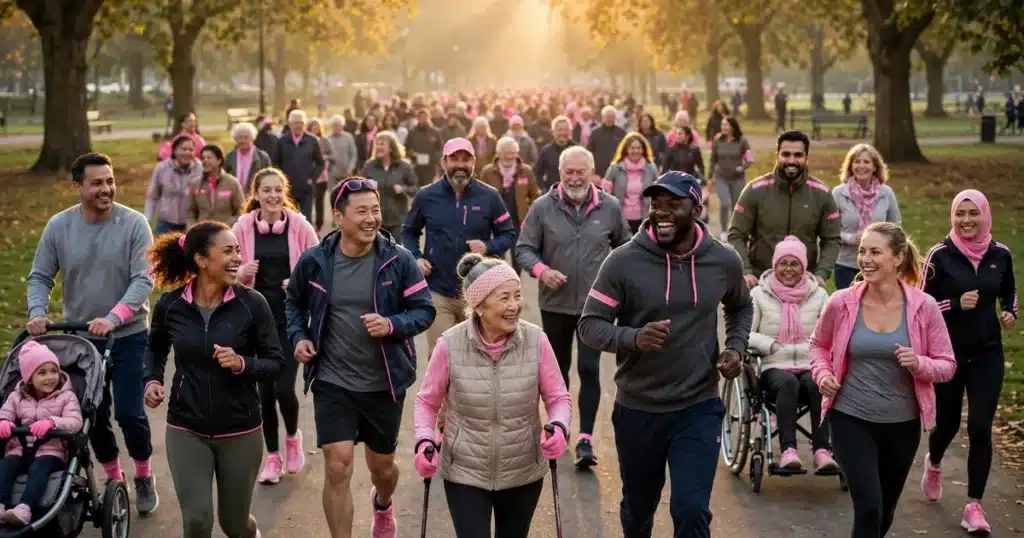
The atmosphere is closer to a community festival than an athletic competition. You will see serious runners up front, but most of the crowd is walking, chatting, pushing strollers, or wearing pink tutus. Nobody is timing your walk unless you want them to. For the broader landscape of awareness activities, our complete guide to breast cancer awareness and resources puts runs in context alongside walks, campaigns, and other ways to help.
Types of Events Compared
Not all charity runs look the same. Here are the common formats:
| Event type | What it is | Best for |
|---|---|---|
| Timed 5K race | A measured 3.1-mile course with chip timing and posted results | Runners who want a personal time, or walkers who enjoy structure |
| Fun run / untimed 5K | The same distance with no official timing — pure participation | Beginners, families, and anyone who wants zero pressure |
| Walk-friendly event | Explicitly welcomes walkers, often with a shorter route option too | People in treatment or recovery, seniors, kids |
| Virtual 5K | You register, then complete the distance on your own route and submit it online | Anyone who cannot attend in person or prefers their own neighborhood |
| Relay or team challenge | Teams split the distance or compete together in a group format | Groups of friends, coworkers, and families |
Registration Basics
Signing up is straightforward, but a few details are worth knowing:
- Register through the organizer. Use the nonprofit’s official event website — not a third-party page — so your fee and any donations go to the right place.
- Watch the deadlines. Early registration usually costs less than signing up at the last minute, and popular events can fill up. Race-day registration is sometimes available but is not always offered.
- Read what the fee includes. Most registrations include a race bib, and many include a shirt — but shirt availability, sizes, and pickup details vary. Check the event page.
- Look for route options. Many events offer a 5K plus a shorter family walk or kids’ dash. Pick the distance that fits your day.
- Check the policies. Strollers, dogs, wheelchairs, refund rules, and weather policies are all spelled out on the event page — confirm before you commit.
If this is your first charity event of any kind, our beginner’s guide to joining a charity walk covers the same registration and event-day basics in walk terms.
Fundraising, Explained Simply
Many charity runs invite participants to raise money beyond the entry fee — usually through a personal fundraising page the organizer sets up for you. How breast cancer fundraising events work is covered in detail in our companion guide; the short version:
- It is usually optional. Plenty of participants simply register, show up, and run or walk. Check whether the event has a fundraising minimum before you sign up — most do not.
- Small asks work best. A personal page with two honest sentences about why you are participating outperforms a long pitch.
- There is no shame in a modest total. Every donation goes to the cause, and participation itself raises awareness.
- Verify where money goes. Reputable nonprofits describe their programs and finances on their official websites — read before you fundraise in their name.
Teams and Togetherness
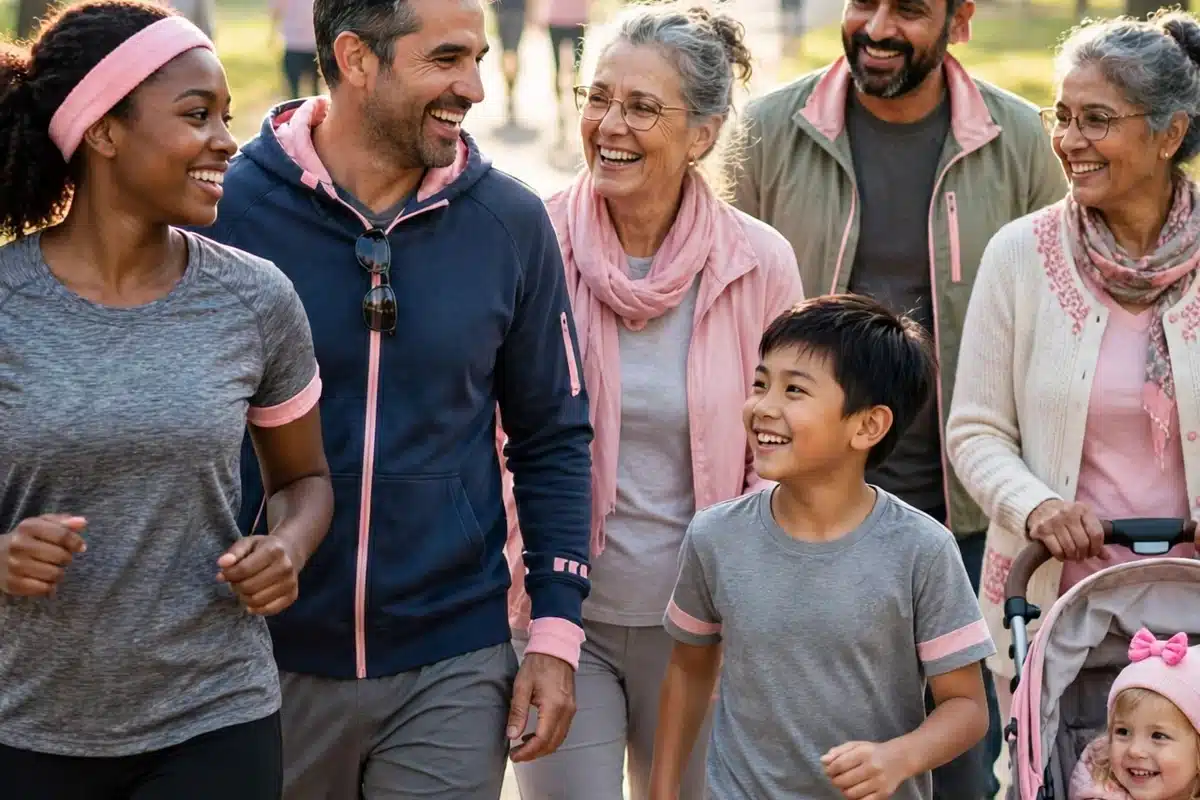
Charity 5Ks are deeply social events, and teams are a huge part of the culture. Families, friend groups, coworkers, and support groups register together under a team name — often honoring someone in treatment, remembering someone who has died, or celebrating survivorship. Our guide to walking as a team covers captains, roles, and logistics that apply to runs just as well.
Even without a formal team, the event-day community is warm: strangers cheer for each other, survivors are often recognized, and the finish line feels like a celebration. Many people come back year after year, and it becomes a tradition.

Training Gently: Getting Ready at Your Pace
You do not need to train like an athlete to finish a charity 5K — especially if you plan to walk. But a little preparation makes the day far more enjoyable:
- Walk regularly in the weeks before. Three or four walks a week, gradually building toward the full distance, is plenty for a walker.
- Break in your shoes. Never debut new shoes on event day. Wear the pair you trained in.
- Practice your event-day outfit. Comfortable, weather-appropriate layers that you have already worn on a long walk.
- Learn the course. Event pages usually post a route map — check for hills, surface type, and water stops.
- Rest the day before. A light walk or full rest day beats a hard workout right before the event.
If you are currently in treatment or recovering from surgery, clear any training plan with your care team first — they can advise on timing, sun exposure, and energy management.
What Event Day Looks Like
Arrive early — parking, bib pickup, and lines take longer than you expect. A typical morning unfolds like this: check in and collect your bib and shirt, find your team or a comfortable starting spot, warm up with a short walk, and line up. Faster runners position themselves near the front; walkers and families gather toward the back, which is exactly where you want to be if you are taking it easy.
On the route, follow the marked course, use water stations as needed, and keep to one side if you are walking so runners can pass. Volunteers line the course to point the way. At the finish, collect any medal or refreshments, find your people, and take the photo. Many events include a post-race gathering with music, food vendors, and information booths — worth lingering for.
Bring: your bib (pinned before you leave home), comfortable broken-in shoes, weather layers, sunscreen, water, a snack for after, and your phone for photos. Leave valuables at home or with a spectator.
If You Are in Treatment or Recovering
Many survivors and people in treatment take part in charity runs — and many others support from the sidelines. Both are meaningful. If you want to participate:
- Talk with your care team first. They can advise on whether the timing, distance, sun exposure, and crowds are appropriate for you right now.
- Choose the gentlest option. A short walk route, a virtual event, or a non-participant role (volunteer, cheer squad, fundraiser) all count as taking part.
- Plan for energy, not ambition. Treatment fatigue is real. Walk with a buddy, build in rest, and give yourself full permission to stop.
- Protect yourself from sun and germs. Sunscreen, a hat, and hand hygiene matter more during treatment — pack accordingly.
There is no wrong way to be part of the day. The community includes you whether you run, walk, cheer, or donate from home.
What to Do Next
- Find an event through a nonprofit you trust, and read its official event page carefully.
- Choose your distance and your role: runner, walker, virtual participant, volunteer, or team supporter.
- Register before the early deadline if you can, and note bib/shirt pickup details.
- If fundraising, set up your page with a short personal note about why you are taking part.
- Gather a team — or join an open one — and agree on a meeting spot for event day.
- Do a few practice walks in your event-day shoes and outfit.
- If you are in treatment, confirm your plans with your care team first.
Frequently Asked Questions
Do I have to run, or can I walk the whole 5K?
You can absolutely walk the whole thing. Most breast cancer charity 5Ks explicitly welcome walkers, and at many events walkers outnumber runners. Check the event page for any course time limit, but these are usually generous.
How much does it cost to participate?
Registration fees vary by event and by how early you sign up — check the organizer’s official event page for current pricing. Fees typically include your bib and often a shirt. Fundraising beyond the fee is usually optional.
Can kids participate?
Yes — charity 5Ks are famously family-friendly, and many offer a shorter kids’ dash or family walk alongside the main event. Check the event’s policy on strollers and minimum ages on the official page.
What happens if it rains?
Most events are rain-or-shine, with a weather policy posted on the event page. Severe weather can cause delays or cancellation — check the organizer’s website and social channels the morning of the event if the forecast looks bad.
Where does the money actually go?
To the organizing nonprofit’s programs — which is why it matters to participate through reputable organizations. Read the nonprofit’s own website for how it describes its programs and finances before you register or fundraise.
Related Articles
- Breast Cancer Awareness and Resources: the complete guide to helping and finding help you can trust
- How to join a breast cancer charity walk as a beginner
- How breast cancer fundraising walks work and what the money supports
- Walking as a team: how friends and families take part together
- Turning awareness into practical help: awareness vs. action
This article is for general educational purposes only and is not medical, legal, or financial advice. It does not replace professional care. Talk to your doctor or care team about your own situation. If you think you may have a medical emergency, call 911.