
Feeling at Home in Clothes Again After Breast Surgery
After breast surgery, standing in front of the closet can bring up feelings you did not expect — sadness, frustration, or simply not knowing what to reach for. Building confidence in clothes after breast surgery is rarely a single moment; it usually happens gradually, in small steps, as your body heals and you learn what feels comfortable now. This guide offers gentle, comfort-first ideas to help you feel more at home in your clothes again, at whatever pace feels right for you.
Key Takeaways
- Having complicated feelings about clothes after breast surgery is normal — clothing is closely tied to identity and how we see ourselves.
- Comfort-first dressing — soft fabrics, easy closures, and gentle fits — often helps most while your body is healing.
- Rebuilding confidence in clothes after breast surgery tends to happen in stages, not all at once, and there is no set timeline.
- Small rituals, like wearing a favorite color or getting dressed for a small outing, can make the process feel easier.
- If getting dressed brings up strong emotions, support is available from your care team, trusted people in your life, and support communities.
Why Getting Dressed Can Feel Hard
Clothes do more than cover us. They carry our identity, our habits, and the way we like to meet the world. A favorite jacket might hold the memory of a good day out; a certain dress might make you stand a little taller. So when your body has changed — even in ways other people cannot see — it makes sense that getting dressed can feel different now.
Many people find that things they used to wear without a second thought now fit or feel different. Shirts may sit differently across the chest. Sleeves, seams, or waistbands may press against areas that feel tender or numb. Some people describe feeling like their clothes belong to someone else for a while. These reactions are common, and they do not mean you are doing anything wrong.
While you are healing, there may also be practical constraints. Bandages, drains, or swelling can be part of the early weeks, and your care team will have guidance about what is safe to wear during that time. It can help to think of this as a temporary phase: the goal right now is comfort and healing, not style.
It Is Not Vanity
Some people feel guilty for caring about how they look after a serious surgery, as though it is shallow or ungrateful. It is not. Caring about your appearance is a normal part of being human, and clothes are one of the first ways we express who we are. Wanting to feel like yourself in your clothes again is a healthy impulse, not a superficial one. You can honor it without rushing it.
Comfort-First Dressing Basics
Comfort-first dressing means choosing clothes that work with your body as it is today. Think soft, stretchy, and forgiving. The following features tend to be most helpful while healing:
- Soft, breathable fabrics. Cotton, soft knits, and jersey blends feel gentler against sensitive skin than stiff or scratchy fabrics.
- Easy to get on and off. Front-closure tops, wrap styles, button-up shirts, and loose necklines are often easier than pulling tight shirts over your head, especially while your range of motion is limited.
- Gentle support, not compression. Many people prefer soft bralettes or wireless bras with wide, soft bands while healing. If your care team gave you guidance about support garments, follow that first.
- Fewer seams and tags across sensitive areas. Flat seams and tagless options reduce rubbing and irritation.
- Layers. A soft cardigan or open overshirt lets you adjust for temperature and gives you a little coverage when you want it, without commitment to a full outfit change.
- A size that fits today. Bodies change during and after treatment. Wearing a size that fits comfortably now — whatever the number — is kinder than squeezing into an old size. The number on a tag says nothing about you.
A Gentle Way to Sort Your Closet
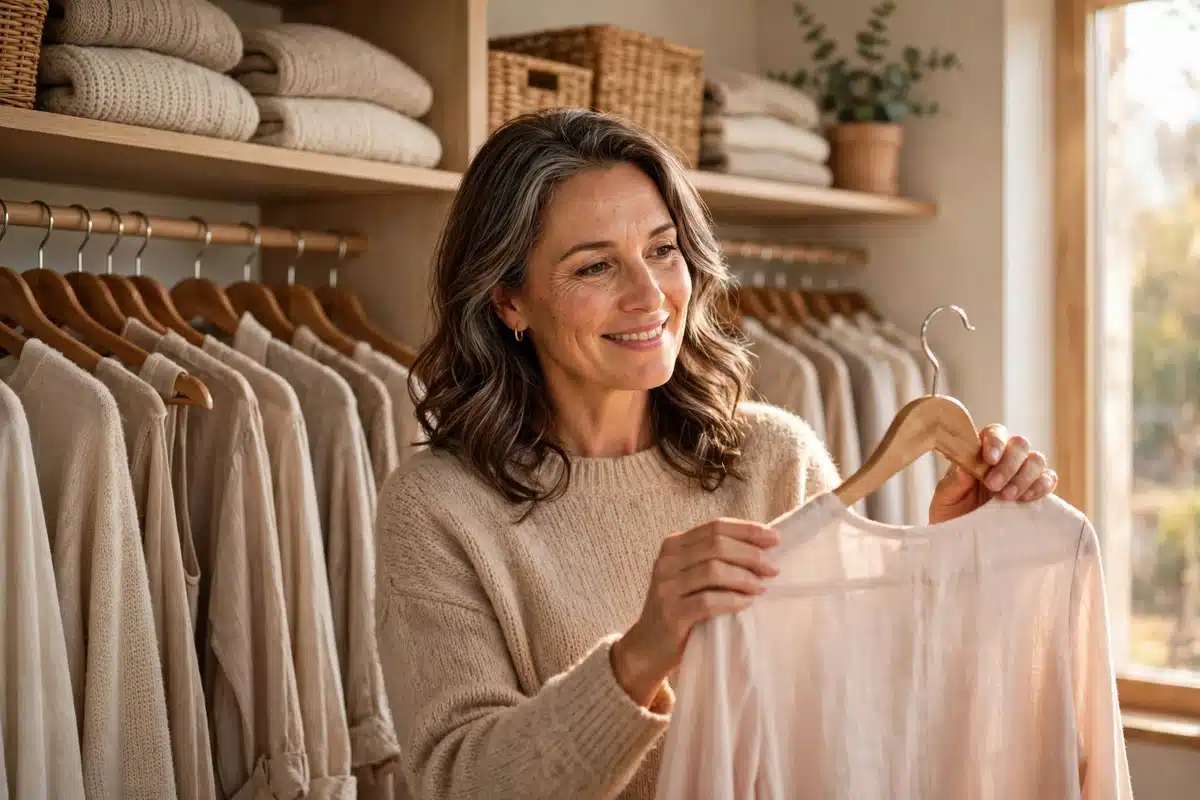
A full closet can feel overwhelming when nothing seems right. One calm approach is to create a small “comfort drawer” or corner with the few things that feel good right now — your softest shirt, easy pants, a favorite wrap. Move everything else aside without deciding its fate. You do not have to throw anything away. Clothes that do not work this month may feel fine in a few months, and revisiting them later can itself become a hopeful milestone.
Dressing Priorities Can Shift Over Time
What matters most in clothing may change as you heal. The table below shows how priorities often shift — not as a schedule, but as a general pattern many people recognize.
| What you may look for | While healing | Later, when you feel ready |
|---|---|---|
| Fit | Room to move; nothing pressing on tender areas | More structured or fitted options, if you like them |
| Fastenings | Front closures, pull-on styles, loose necklines | Whatever you enjoy wearing |
| Fabrics | Soft, breathable, stretchy | Any favorites from before |
| Approach | One or two reliable go-to outfits | Experimenting and playing with style again |
| Shopping | Buying for comfort in the present moment | Shopping for the future you are growing into |
Rebuilding Confidence in Stages
Confidence in clothes after breast surgery usually returns the way the tide comes in — slowly, with some back-and-forth. Thinking of it as stages can take pressure off any single day or outfit. Here is one way people describe the journey:
Stage one: comfort at home. The goal is simply feeling at ease in your own skin and clothes. Soft loungewear, a robe you love, pajamas that make you smile — this stage is about rest and kindness to yourself. There is no rush to move past it.
Stage two: small outings. Getting dressed for something small — coffee with a friend, a short walk, a school pickup — can be a gentle way to test the waters. Choosing one familiar outfit that feels safe takes the guesswork out of the morning.
Stage three: trying something new. When you feel curious, you might try a style you have not worn since surgery, revisit an old favorite, or explore new shapes and colors. Some days it will feel fun; some days it will not. Both are fine.
There is no deadline for any of this. Some people feel more like themselves within weeks; others take months or longer, especially if treatment is ongoing. Your timeline is your own.
Small Rituals That Can Help
- Wear a favorite color. Even on days when the fit feels off, a color you love can lift your mood.
- Add one familiar touch. A piece of jewelry, a scarf, or a familiar hairstyle can help you recognize yourself in the mirror.
- Ask a trusted opinion. Getting dressed with a friend, partner, or family member nearby — someone whose honesty you trust — can make trying things on feel lighter.
- Celebrate small wins. An outfit that worked, a day you felt good leaving the house, a compliment that landed — notice these moments. They add up.
- Notice how feelings connect. Clothing worries are often tied to bigger feelings about body image and change. Our gentle guide to coping emotionally with breast cancer explores these connections and offers more ideas for working through them.
Dressing for Everyday Occasions
Going Back to Work
Returning to work can bring its own wardrobe questions. Many people find it helps to build one or two “anchor outfits” — simple combinations that look put-together and feel comfortable, so mornings require less decision-making. Blazers and cardigans over soft tops offer a professional look with easy adjustability. If your workplace allows it, keeping a backup layer at your desk can help on days when temperatures or comfort shift unexpectedly.
Special Occasions
Weddings, dinners, and gatherings can feel loaded after surgery — everyone else seems dressed up, and you may worry about standing out. A few things that can help: choose the softest dressy option you own rather than the fanciest; prioritize sitting comfort if you will be at a table for a while; and give yourself permission to leave early if the day turns out to be too much. Showing up for part of an event is still showing up. Comfort-first does not mean style-last — many elegant outfits are also soft and forgiving.

What to Do Next
- Set up one comfortable outfit you can reach for on hard mornings, so getting dressed requires as little thought as possible.
- Keep notes on what feels good. A short list of favorite fabrics, cuts, or outfits saves you from re-deciding each time.
- Talk with your care team if clothing causes ongoing pain, pressure, or irritation — they can suggest adjustments or check whether something needs attention.
- Explore support resources. Organizations such as the American Cancer Society (cancer.org) offer general information and community resources for people adjusting to life after breast surgery.
- Reach out if emotions run deep. If getting dressed regularly brings sadness, anxiety, or distress, a counselor experienced with cancer-related body image concerns can help. Your care team can point you toward options.
Frequently Asked Questions
Is it normal to cry or feel upset while getting dressed after breast surgery?
Yes. Many people find that getting dressed is one of the first moments when the change feels real, because it is part of everyday life rather than a medical appointment. Strong emotions in front of the mirror or closet are common and do not mean you are coping badly — they mean you are processing something big.
How long does it take to feel confident in clothes again?
There is no set timeline, and it varies widely. Healing, ongoing treatment, and personal feelings all play a role. Many people find that comfort improves gradually as healing progresses and they discover what works for them. Comparing your timeline to someone else’s is rarely helpful — your pace is the right one for you.
What kinds of clothes are most comfortable while healing?
Soft, stretchy fabrics; front-closure or loose-neck tops; gentle, wireless support; and loose waistbands tend to be most comfortable. Follow any guidance your care team gave you about garments or support first, and let your own comfort be the main guide.
Should I buy a whole new wardrobe?
Usually not, at least not right away. A few comfortable pieces that fit your body today are often enough while you are healing. Your body may continue to change during treatment, so many people prefer to buy a little at a time rather than rebuilding everything at once. There is no need to decide the fate of your whole closet now.
What if getting dressed brings up feelings I do not want to face alone?
You do not have to. Talking with a trusted friend, a support group, or a counselor can make a real difference. Your care team can also suggest resources. Reaching out is a sign of strength, not weakness, and support exists specifically for moments like these.
Related Articles
- Coping Emotionally With Breast Cancer: A Gentle Guide From Diagnosis Through Life After Treatment
- Body Image After Mastectomy: Reclaiming How You See Yourself
- Coping With Scars After Breast Surgery: The Emotional Side of Healing
- Body Image After Lumpectomy: When the Change Looks Small but Feels Big
- Weight Changes During Treatment and How They Can Affect Your Mood
This article is for general educational purposes only and is not medical, legal, or financial advice. It does not replace professional care. Talk to your doctor or care team about your own situation. If you think you may have a medical emergency, call 911.