
During radiation therapy, what you wear matters more than usual: the skin in the treated area can become reddened, dry, and sensitive, and the wrong clothing can rub, press, or irritate it. The general rule is simple — soft, loose, breathable clothing, with nothing pressing on the treated area. This article walks through choosing tops, bras, and layers, in general terms, and the habits to check with your radiation team.
Key Takeaways
- The treated skin is often sensitive, so clothing should be soft, loose, and breathable, with no straps, seams, or underwires pressing on the area.
- Soft natural-fibre tops in a loose fit are the usual choice; many people are more comfortable without a bra at home during treatment.
- No brands or products are recommended here. Your radiation team’s own instructions come first, because centres differ.
- Plan for each day: layers for temperature changes, a spare top for long clinic days, and a change for the journey home if you feel damp or sticky.
- Before shaving the treated area, using deodorant on a treated underarm, or taping anything to the skin, ask your team first.
- Individual reactions differ. What follows is general comfort guidance, not a prescription.
Why Clothing Matters During Treatment
Radiation passes through the skin to reach the area being treated, so the treated skin often reacts — it may redden, feel dry, warm, itchy, or sensitive, rather like sunburn. Against skin like that, a rough seam, a tight elastic band, or an underwire is not a minor annoyance; it is a real irritant. Our pillar guide, Living Through Breast Cancer Treatment, places everyday comfort alongside the medical parts of a treatment course, and clothing is one of the simplest comfort levers you have.
The principle is the same one behind the rest of treated-skin care: be gentle, avoid rubbing, and let the area breathe. Our article on skin care during radiation therapy sets out the daily routine — washing, moisturising, sun protection — and what you wear sits naturally alongside it.
Tops and Fabrics: What Tends to Work
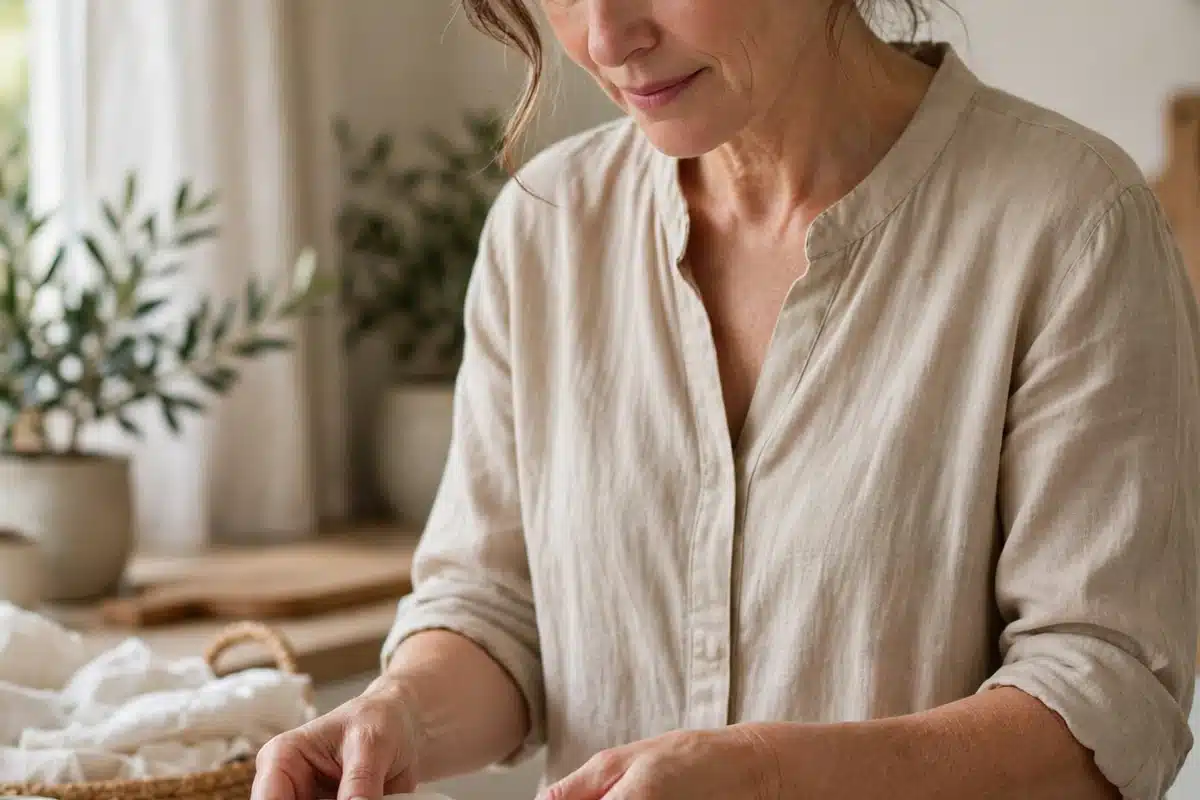
Most people settle on a small rotation of comfortable tops for the weeks of treatment. In general terms, the ones that work best share a few qualities:
- Soft and smooth. Smooth, soft fabrics are kindest against sensitive skin. Rough, scratchy, or heavily textured fabrics are worth putting aside for the duration.
- Loose rather than fitted. A loose fit means the fabric drapes over the area instead of rubbing it. Anything tight across the chest is working against you.
- Breathable. Light, airy fabrics let heat and moisture escape, which matters when skin feels warm and itchy.
- Simple seams. Turn a top inside out and look: flat, smooth seams, or seams that sit away from the treated area, are what you want.
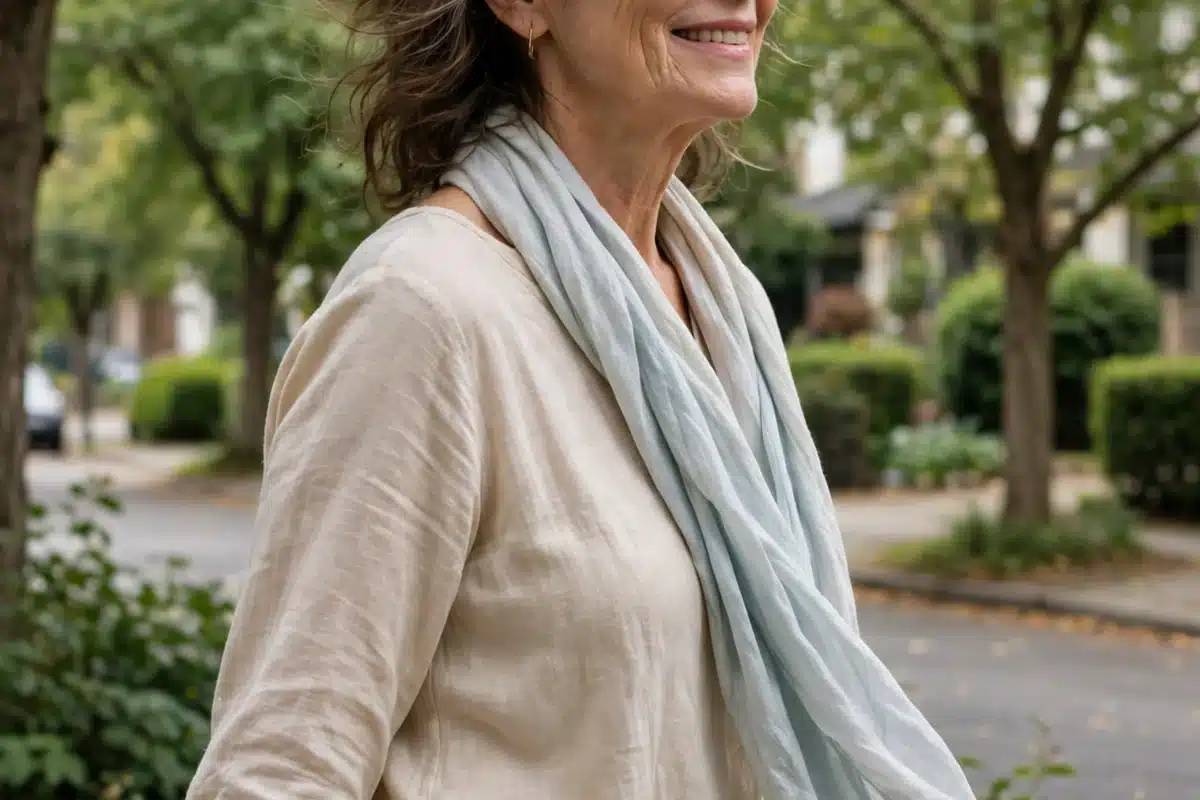
Layers are useful because treatment rooms, waiting areas, and the journey home are rarely the same temperature — and some people feel alternately warm and chilly during a course. A soft open layer you can add or remove beats one heavy garment. For long clinic days, a spare top in the bag is a small comfort that people are glad of more often than they expect.
It helps to think of the course as a few weeks rather than a single day. A small rotation of comfortable tops — enough for the week, with washing in between — means you are not doing laundry under pressure or reaching for something less comfortable because the favourites are in the wash. Keep the special-occasion clothes for afterwards; for the course itself, comfort is the whole point of the wardrobe.
Bras and Underlayers
Bras deserve their own section, because this is where most of the friction — literal and otherwise — happens. Underwires press on exactly the area that is becoming sore, tight elastic bands rub, and lace or textured cups irritate. In general terms:
- Underwires are best avoided on the treated side for the duration of treatment.
- If you wear a bra, a soft, wireless, seamless style in a comfortable fit is the usual direction.
- Many people are more comfortable without a bra at home during treatment — and some choose that for the whole course.
- Anything that leaves a mark on the skin when you take it off is too tight for treated skin.
Our article on skin care during radiation therapy covers the same principle for anything else touching the area: adhesive tape, sticking plasters, and tight accessories are best avoided on treated skin, and the team should apply any dressings.
Day-to-Day Habits to Check With Your Team
A few everyday habits touch the treated area and are worth asking about rather than guessing:
| Habit | General guidance |
|---|---|
| Shaving the treated area | Ask your team — advice varies, and they would rather be asked |
| Deodorant on a treated underarm | Ask your team before continuing as usual |
| Heating pads or ice on the area | Avoid unless your team advises otherwise |
| Taping anything to the skin | Avoid; treated skin tears easily |
| Sun on the treated skin | Cover up and choose shade; ask your team about sunscreen for the area |
| New creams, oils, or home remedies | Check with your team before using anything new on the treated area |
The journey matters too. Car seatbelts cross the chest, and on sore days a soft cloth tucked under the strap where it crosses the treated area can make the ride more comfortable. If someone drives you, this is one of the small things a driver can quietly take care of.
After Treatment Ends
Once the course finishes, the skin usually settles gradually, but the treated area can stay more sensitive than other skin for some time. Keep up the gentle clothing habits while it does, and continue protecting the area from strong sun as your team advises. When the skin has fully settled, there is no reason your normal wardrobe cannot return — the loose, soft rotation was for the course, not for life. If the skin has not settled as expected, or new changes appear in the treated area later on, raise it at a follow-up appointment.
Questions to Ask Your Radiation Team
- Is there anything specific about clothing I should know for my treatment area?
- Should I avoid wearing a bra, or is a soft style acceptable?
- Can I shave the treated area, or use deodorant on a treated underarm?
- Is there anything I should bring or wear for the treatment sessions themselves?
- Which changes in my skin should I report straight away?
- How long after the course ends should I keep up the gentle routine?
Frequently Asked Questions
Do I really need to change what I wear?
Not your whole wardrobe — just the items that touch the treated area. If a top is soft, loose, and smooth, it is probably fine. The things to set aside for the course are tight fits, rough fabrics, underwires, and anything with seams or elastic pressing on the sore area.
Can I wear a bra during treatment?
Many people do, in a soft, wireless, seamless style — and many are more comfortable without one at home. Underwires are best avoided on the treated side. If your team has given you specific guidance, theirs comes first.
What about the seatbelt on the way to treatment?
Seatbelts cross the chest and can press on sore skin. A soft cloth placed where the strap crosses the treated area often helps. Never skip the belt itself — comfort padding is fine, but the belt must still sit properly.
Is there anything I should not put on the skin?
As a general rule: nothing new without asking your team first. That covers new creams and oils, home remedies, strongly fragranced products, adhesive tape, and heating pads or ice. Your team’s own instructions are the authority for your skin and your treatment area.
When can I go back to normal clothes?
When the skin has settled after the course ends, which it usually does gradually. Keep the gentle habits going while the area is still sensitive, and protect it from strong sun in the meantime. If you are unsure whether the skin has settled enough, mention it at a follow-up appointment.
Related Articles
- Living Through Breast Cancer Treatment: A Complete Guide
- Skin Care During Radiation Therapy: Daily Basics
This article is for general educational purposes only and is not medical, legal, or financial advice. It does not replace professional care. Talk to your doctor or care team about your own situation. If you think you may have a medical emergency, call 911.