
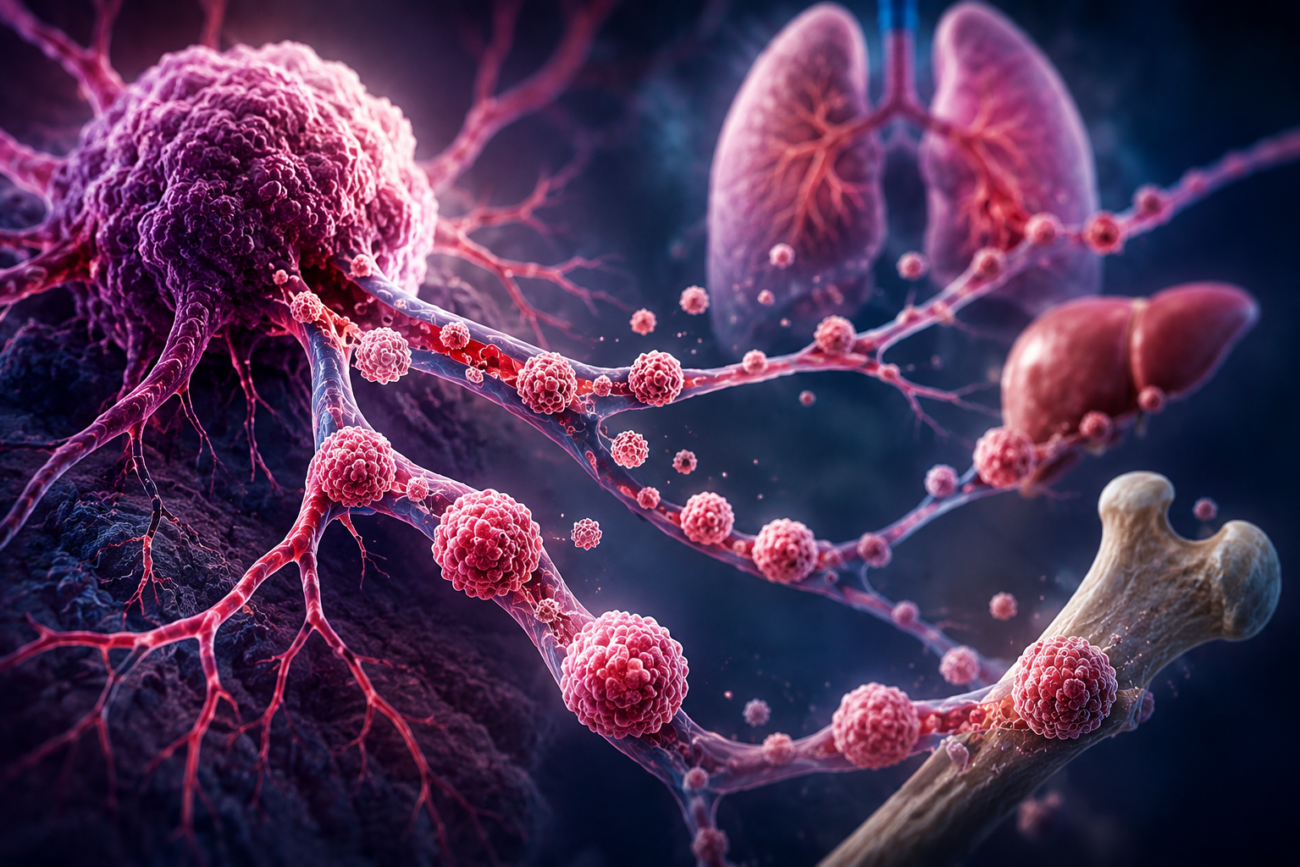
Metastatic cancer is cancer that has spread from its original location to a different part of the body. It is also commonly referred to as advanced cancer or stage 4 cancer for many cancer types.
The process through which cancer cells spread from the primary tumor to distant organs is called metastasis.
Although metastatic cancer spreads to another organ, it remains the same type of cancer as the original tumor. For example, breast cancer that spreads to the lungs is still called metastatic breast cancer, not lung cancer.
Understanding how metastatic cancer develops can help patients and families better understand diagnosis, treatment options, and prognosis.
What Is Metastatic Cancer?
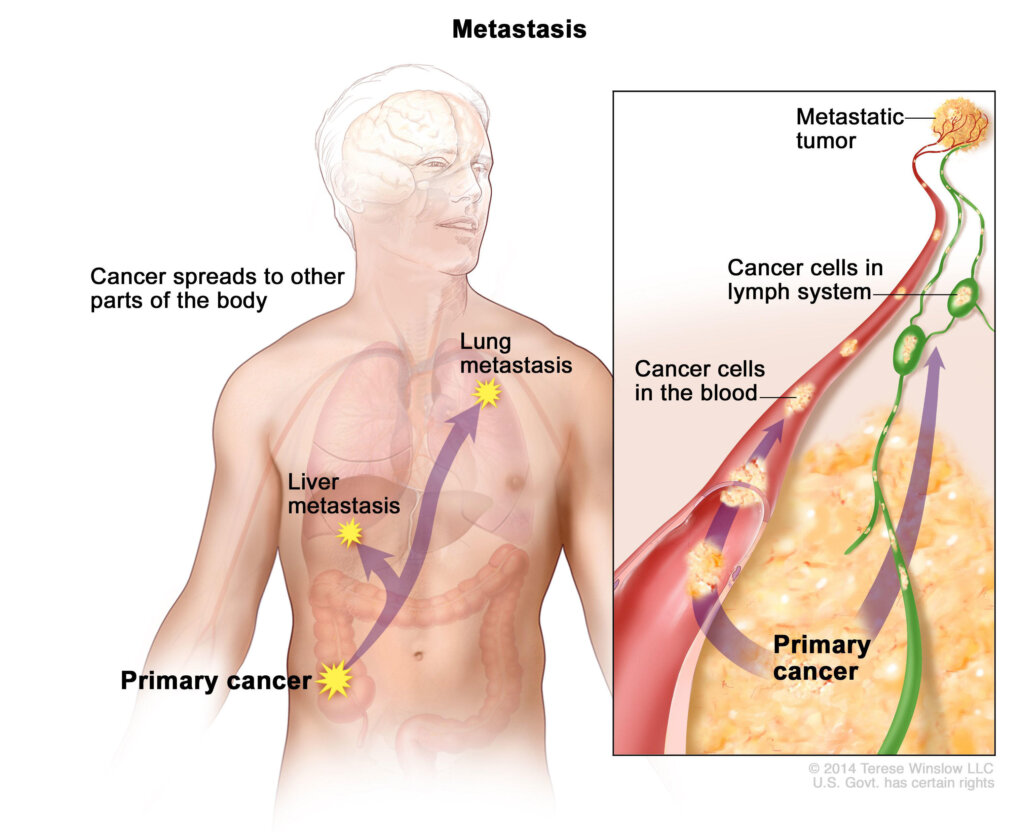
Metastatic cancer occurs when cancer cells break away from the original tumor and travel to other parts of the body through the bloodstream or lymphatic system.
Once these cancer cells reach a new location, they may settle and form new tumors called metastatic tumors.
Even after spreading, metastatic tumors contain the same type of cancer cells as the primary tumor.
For example:
- Breast cancer that spreads to the bones remains breast cancer.
- Prostate cancer that spreads to the liver remains prostate cancer.
- Colon cancer that spreads to the lungs remains colon cancer.
This distinction is important because treatment is usually based on the original cancer type rather than the location where it spread.
How Does Cancer Spread?
Cancer spreads through a process known as metastasis.
This process generally occurs in several stages:
1. Growth Into Nearby Tissue
Cancer cells begin by invading healthy tissue surrounding the original tumor.
2. Entry Into Blood Vessels or Lymph Nodes
Cancer cells enter nearby blood vessels or lymphatic channels.
3. Travel Through the Body
The cells move through the bloodstream or lymphatic system to distant organs.
4. Formation of New Tumors
Some cancer cells survive the journey and settle in another organ where they begin growing into new tumors.
5. Development of Blood Supply
The metastatic tumor creates new blood vessels to support its growth and survival.
Many cancer cells die during this process, but some successfully establish new tumors in other parts of the body.
Common Sites Where Cancer Spreads
Different cancers tend to spread to certain organs more frequently than others.
| Cancer Type | Common Sites of Metastasis |
|---|---|
| Breast Cancer | Bone, brain, liver, lungs |
| Bladder Cancer | Bone, liver, lungs |
| Colon Cancer | Liver, lungs, peritoneum |
| Lung Cancer | Brain, bone, liver, adrenal glands |
| Prostate Cancer | Bone, liver, lungs |
| Pancreatic Cancer | Liver, lungs, peritoneum |
| Ovarian Cancer | Liver, lungs, peritoneum |
| Thyroid Cancer | Bone, liver, lungs |
| Kidney Cancer | Brain, bone, liver, lungs |
Symptoms of Metastatic Cancer
Symptoms vary depending on where the cancer has spread and the size of the metastatic tumors.
Common symptoms include:
Bone Metastasis
- Bone pain
- Fractures
- Weakness
Brain Metastasis
- Headaches
- Seizures
- Dizziness
- Vision problems
Lung Metastasis
- Shortness of breath
- Persistent cough
- Chest pain
Liver Metastasis
- Jaundice
- Abdominal swelling
- Loss of appetite
- Fatigue
Some patients may have no symptoms initially, and metastatic cancer may be discovered during routine scans or follow-up appointments.
How Is Metastatic Cancer Diagnosed?
Doctors may use several tests to determine whether cancer has spread, including:
- CT scan
- MRI scan
- PET scan
- Bone scan
- Ultrasound
- Blood tests
- Biopsy
These tests help determine the location and extent of metastasis and guide treatment decisions.
Treatment Options for Metastatic Cancer
Treatment depends on several factors, including:
- The original type of cancer
- The location of metastasis
- Previous treatments
- Overall health of the patient
Common treatment options include:
Chemotherapy
Chemotherapy can help destroy cancer cells throughout the body.
Hormone Therapy
Certain cancers, such as breast and prostate cancer, may respond to hormone-blocking treatments.
Targeted Therapy
Targeted medications attack specific genetic or molecular changes in cancer cells.
Immunotherapy
Immunotherapy helps the immune system recognize and fight cancer cells.
Radiation Therapy
Radiation can help control symptoms and shrink tumors in specific areas.
Surgery
In selected cases, surgery may be used to remove metastatic tumors.
Palliative Care and Symptom Management
For many patients, treatment focuses not only on controlling cancer but also on improving quality of life.
Palliative care can help manage:
- Pain
- Fatigue
- Breathing difficulties
- Emotional distress
- Treatment side effects
Palliative care can be provided alongside active cancer treatment at any stage of the disease.
Can Metastatic Cancer Be Cured?
Some metastatic cancers can be successfully treated for long periods, while others may not be curable.
In many cases, treatment aims to:
- Slow cancer growth
- Reduce symptoms
- Improve quality of life
- Extend survival
Many people live for years with metastatic cancer that is well managed with modern treatments.
Ongoing Research in Metastatic Cancer
Researchers continue to develop new treatments for metastatic cancer, including:
- Advanced immunotherapy
- Precision medicine
- Targeted therapies
- Gene-based treatments
- Clinical trials
These advances continue to improve outcomes for patients living with advanced cancer.
Final Thoughts
Metastatic cancer occurs when cancer spreads beyond its original location to other parts of the body. Although it is often considered advanced disease, modern treatments have significantly improved survival and quality of life for many patients.
Understanding the symptoms, treatment options, and support available can help patients and families navigate the challenges of metastatic cancer with greater confidence and hope.
