
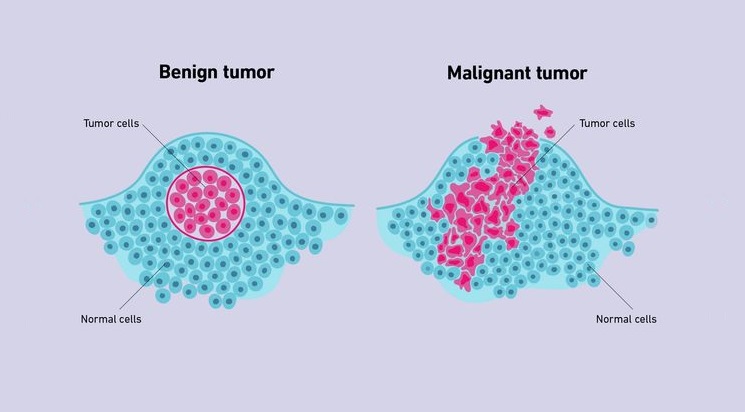
Discovering a lump in the breast can be frightening, but not every breast lump is cancer. Breast tumors can be either benign (non-cancerous) or malignant (cancerous), and understanding the difference is important for diagnosis, treatment, and peace of mind.
While benign tumors generally remain localized and do not spread, malignant tumors have the ability to invade nearby tissues and spread to other parts of the body.
What Is a Tumor?
A tumor, also known as a neoplasm, is an abnormal growth of cells that occurs when cells divide more than they should or fail to die when they normally would.
Tumors can develop in almost any part of the body, including the breast, and are classified into two main categories:
- Benign tumors
- Malignant tumors
What Is a Benign Breast Tumor?
A benign breast tumor is a non-cancerous growth that remains confined to its original location and does not spread to other organs or tissues.
Benign tumors usually grow slowly and often have smooth, well-defined borders that make them easier to distinguish from cancerous growths during imaging tests.
Although benign tumors are not cancer, some may become large enough to cause discomfort or require removal.
Common Types of Benign Breast Tumors
- Fibroadenoma
- Breast cysts
- Intraductal papilloma
- Lipoma
- Fat necrosis
- Adenosis
Most benign breast conditions do not increase the risk of breast cancer, although some types may require monitoring.
What Is a Malignant Breast Tumor?
A malignant breast tumor contains cancer cells that can grow uncontrollably and invade nearby tissues.
Unlike benign tumors, malignant tumors can spread through the bloodstream or lymphatic system to distant organs such as the bones, lungs, liver, or brain. This process is known as metastasis.
Malignant tumors require medical treatment to prevent further growth and spread.
Common Types of Malignant Breast Tumors
- Invasive Ductal Carcinoma (IDC)
- Invasive Lobular Carcinoma (ILC)
- Triple Negative Breast Cancer
- HER2-Positive Breast Cancer
- Inflammatory Breast Cancer
- Metastatic Breast Cancer
Benign vs Malignant Breast Tumors: Key Differences
| Feature | Benign Tumor | Malignant Tumor |
|---|---|---|
| Cancerous | No | Yes |
| Growth Rate | Usually slow | Often faster |
| Spread to Other Organs | No | Yes |
| Borders | Smooth and well-defined | Irregular or poorly defined |
| Recurrence After Removal | Rare | Possible |
| Treatment Required | Sometimes | Usually necessary |
Can a Benign Tumor Become Cancerous?
Most benign breast tumors never become cancerous.
However, certain abnormal breast changes may slightly increase future breast cancer risk and may require regular monitoring or removal. Your healthcare provider can determine whether additional testing or follow-up is necessary.
Symptoms of Benign and Malignant Breast Tumors
Both benign and malignant breast tumors can cause similar symptoms, including:
- A breast lump or thickening
- Changes in breast size or shape
- Pain or tenderness
- Skin dimpling
- Nipple discharge
- Changes in the nipple position
- Swelling in the breast or underarm area
Because symptoms can overlap, medical evaluation is important for any new breast change.
How Are Breast Tumors Diagnosed?
Doctors use several methods to determine whether a breast tumor is benign or malignant.
Diagnostic tests may include:
- Clinical breast examination
- Mammogram
- Breast ultrasound
- MRI scan
- Needle biopsy
- Pathology testing
A biopsy is the only way to confirm whether a tumor is cancerous.
Treatment Options
Treatment for Benign Tumors
Depending on the size and symptoms, treatment may include:
- Monitoring and regular follow-up
- Medication
- Surgical removal if necessary
Treatment for Malignant Tumors
Treatment depends on the type and stage of cancer and may include:
- Surgery
- Chemotherapy
- Radiation therapy
- Hormone therapy
- Targeted therapy
- Immunotherapy
When Should You See a Doctor?
You should consult a healthcare professional if you notice:
- A new breast lump
- Persistent breast pain
- Nipple discharge
- Skin changes on the breast
- Swelling under the arm
Early evaluation helps ensure accurate diagnosis and timely treatment if needed.
Final Thoughts
Finding a breast lump does not automatically mean cancer. Many breast tumors are benign and can be managed successfully without major treatment.
However, because benign and malignant tumors can appear similar, professional medical evaluation is essential. Early diagnosis remains one of the most important factors in improving breast cancer outcomes.
If you notice any unusual breast changes, speak with your healthcare provider for proper assessment and guidance.
