
Yes — feeling jealous of healthy friends after a breast cancer diagnosis is common, and it does not make you a bad friend or an ungrateful patient. A friend books a holiday, signs up for a run, or complains about something small, and alongside genuine happiness for them there can be a sharp, unwelcome pang: why do they get the easy life back, when mine has been turned upside down? This article looks at why that feeling shows up, what it points at underneath, and gentle ways to carry it without shame.
Key Takeaways
- Jealousy of healthy friends is a common, human response to a breast cancer diagnosis — not a character flaw, and not a sign that you are coping badly.
- The feeling usually points underneath itself: at grief for your old life, fear about the future, or sheer exhaustion with treatment — not really at the friend.
- It tends to flare at particular moments: friends’ milestones, carefree plans, social media highlights, and small everyday complaints.
- You do not have to confess it to everyone. Naming it to yourself, one trusted person, or your care team takes away much of its sting.
- Most waves of jealousy pass on their own. If difficult feelings become constant or overwhelming, your care team or a counsellor can offer real support.
Why This Feeling Shows Up
A diagnosis divides life into a before and an after. Your friends, for the most part, are still living in the before: their diaries fill with holidays, work projects, and family plans, and their bodies are simply not something they have to think about. You are living in the after, where the calendar is organised around appointments. Jealousy is often just the moment those two worlds brush against each other.
Comparison is also automatic. Human beings measure their own situation against the people around them without deciding to; it is how we work out what is normal. When the comparison group is healthy friends living unexamined lives, the gap can feel unfair in a way logic cannot argue with — because it is not a logical feeling. It is a fairness feeling: something has happened to you that did not happen to them, and part of you protests that fact.
Notice what the feeling is not. It is almost never a wish that your friend were ill instead: “I don’t want her to be sick — I just want to not be sick.” The jealousy is aimed at the situation, not the person — at the lost ease and the lost plans. Our pillar guide to coping emotionally with breast cancer places jealousy in its proper company: one of the ordinary, unwelcome feelings that travel with this disease, alongside fear, grief, and frustration — not a private failing.
What the Jealousy Is Usually Pointing At
Jealousy is rarely the whole feeling. It is more often the visible tip of something underneath, and working out which can turn a shameful pang into useful information:
- Grief. Underneath many flashes of jealousy is mourning — for your health, your plans, your hair, your energy, the version of this year you had imagined. A friend’s good news simply gives the grief a place to land.
- Fear. A friend planning two years ahead can sharpen the question you are trying not to ask about your own future.
- Exhaustion. Treatment is wearing. Watching someone complain about being “so tired” after a late night can sting most when you are tired in a way sleep does not fix.
- Feeling left behind. Groups move on — conversations, in-jokes, shared plans continue without you during treatment. Jealousy can be the feeling of watching your own life carried on by other people.
- Loss of control. Friends can choose their next step; so much of yours is currently chosen by a treatment plan. Wanting their freedom is natural.
The reason this matters is practical: each underneath-feeling asks for something different. Grief asks to be acknowledged. Fear asks for information or reassurance from your care team. Exhaustion asks for rest and help. A jealous pang treated as a signal — “what do I actually need right now?” — loses much of its power to shame you.

Why It Feels So Hard to Admit
If jealousy is this common, why does nobody talk about it? Partly because it breaks the script. From the day of diagnosis, patients are quietly handed a role: brave, positive, grateful. People say “you’re amazing” when you are simply doing what the appointment letter told you to do. Inside that script there is no line for “I cried because my sister booked a beach holiday.” So the feeling goes underground, where it grows a second layer — guilt about the jealousy itself.
The gratitude pressure makes it worse. Most patients have real things they are grateful for: a good team, an early find, a supportive family. But gratitude and jealousy are not opposites; they routinely live in the same person on the same day. Holding both is not hypocrisy. It is honesty.
Naming the feeling — even only to yourself, in plain words — is the first release. “That was jealousy. It makes sense. It will pass.” A feeling you can name is a feeling you can carry; the ones that hurt most are the ones we insist we are not having.
The Moments That Tend to Set It Off
Jealousy has triggers, and knowing yours in advance softens the ambush:
- Milestones that feel uncertain for you. A friend’s retirement plans, a wedding invitation years ahead, a promotion — celebrations built on an assumed future, the very thing your diagnosis has made feel fragile.
- Health treated as a given. Friends training for races, planning demanding trips, or moaning happily about hangovers — the spectacle of a body that simply works.
- Small complaints. “I’m exhausted, I only got six hours.” Their problems are real to them; the sting is the reminder of the scale difference, not their insensitivity.
- Social media. A feed is a highlights reel of the healthy world, consumed often at your lowest points — in waiting rooms, on sleepless nights. It is the comparison machine at its least kind.
None of this requires you to police your friends’ happiness. It simply means that on scan weeks, treatment weeks, and hard anniversaries, you might choose your inputs a little more carefully — the same kindness our article on intrusive thoughts about breast cancer recommends for other unwelcome visitors of this experience.
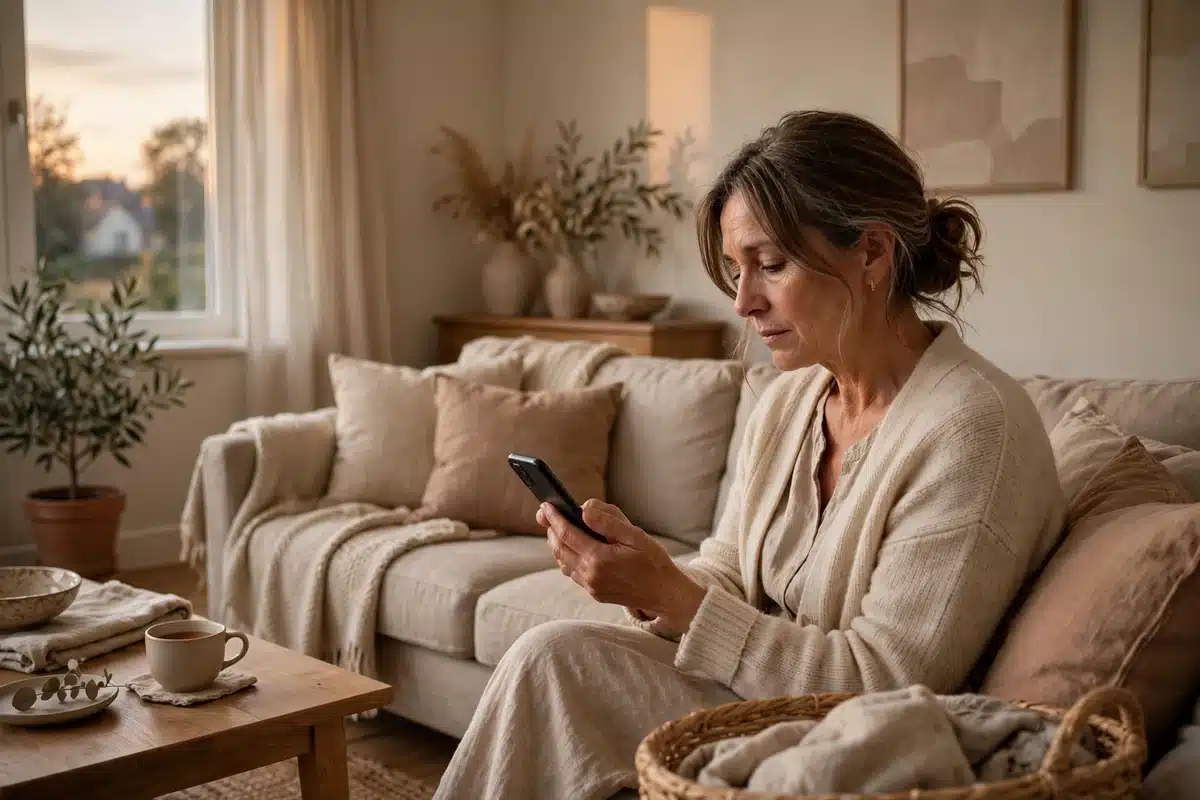
Carrying It Without Shame
There is no technique that deletes jealousy. The goal is smaller: to stop the feeling from running your friendships or your opinion of yourself. A few gentle approaches help many people:
- Name it and normalise it. “There’s the jealousy again” — said with the same tone you’d use for weather — denies it the drama it feeds on.
- Ask what it is pointing at. If the answer is exhaustion, the remedy is rest, not self-criticism. If it is fear, bring it to your next appointment.
- Ration the comparison machine. Muting or skipping social media during hard weeks is not bitterness; it is dose control.
- Keep the friendships, adjust the dose. A shorter visit, a walk instead of a long evening, permission to leave early — most real friendships bend without breaking. Distance chosen kindly beats attendance that leaves you in tears in the car.
- Tell one safe person. A partner, a fellow patient, a support group, a counsellor — someone who will hear “I felt jealous of my best friend today” and simply nod. Unwelcome feelings shrink in company; our article on the fear that every ache means the cancer is back describes the same relief that comes from finding your feeling is shared.
And a word about time: for most people, the sharpness fades as treatment ends and life refills. The friend who seemed unbearably lucky in month two becomes, by month twelve, simply your friend again. If, instead, difficult feelings are constant and heavy — if low mood, anxiety, or jealousy is there most days and is affecting your sleep, your relationships, or your ability to get through treatment — tell your care team. Support for exactly this is part of good cancer care, and reaching out early is a strength, not a last resort.
Do You Tell Your Friends?
Usually, no formal confession is needed, and delivering one can burden a friendship with a problem it cannot solve. Your friend cannot become less healthy to make the maths fair.
Sometimes, though, one honest sentence is a relief to both sides — especially if you have gone quiet and your friend is wondering what they did wrong. It can be as small as: “I love hearing your news. Some days it’s a bit hard to read, and that’s about my situation, not about you.” Said once, kindly, it explains the distance, protects the friendship, and lets your friend stop guessing. Many friends respond by simply becoming more thoughtful about timing — not less joyful, just better aimed.
Choose the friend and the moment with care: the person whose news stung most is not always the right audience. A trusted third person — or no one at all — is a perfectly good choice too. This is your feeling to manage, and privacy is a legitimate way to manage it.
Questions to Ask
- (Your care team) I am having feelings I did not expect — jealousy, resentment, grief. Do you hear this from other patients?
- (Your care team) What emotional support is available here — counselling, support groups, or a social worker I could talk to?
- (A support group or counsellor) How do other people handle feeling envious of healthy friends?
- (A trusted friend) Can I tell you when I am having a hard week, so my quieter days do not worry you?
Frequently Asked Questions
Is it normal to feel jealous of healthy friends after a diagnosis?
Yes — it is one of the most common emotional responses to a serious diagnosis, and one of the least discussed, because it feels unflattering to admit. It reflects the unfairness of the situation, not your character.
Does feeling jealous mean I wish my friend was ill instead of me?
No. In almost every case the wish underneath is “I want my own life back,” not “I want hers taken away.” The feeling is aimed at the situation — the lost health, plans, and ease — not at the person.
Will this feeling go away?
For most people it softens as treatment ends, energy returns, and their own life refills with plans and ordinary pleasures. It may still flare at milestones or anniversaries, usually more briefly. There is no schedule anyone can promise — but a feeling that is becoming constant and heavy rather than occasional is worth raising with your care team, because support can help.
Should I step back from friends whose happiness is hard to be around?
A temporary, kindly-explained adjustment — shorter visits, fewer big group events during treatment — is reasonable and common, and good friendships survive it. Complete withdrawal is worth questioning, though: isolation tends to deepen difficult feelings. If you are pulling away from everyone, mention it to your care team as well as to your friends.
How is this different from simple anger about the diagnosis?
They overlap, but jealousy has a specific address: it is triggered by comparison with other people’s lives. Anger is often aimed at the disease, the situation, or no one in particular; jealousy flares when a friend’s good fortune throws your own losses into relief. Naming which one you are feeling helps you choose what to do with it.
When should I ask for more support with these feelings?
When they stop visiting and move in: difficult feelings most days, persistent low mood or anxiety, broken sleep, loss of interest in everything, or withdrawing from the people and treatment that matter. You do not need to reach a crisis to qualify. Your care team would rather hear early, and emotional support is a standard part of cancer care.
Related Articles
- Coping Emotionally With Breast Cancer: A Complete Guide
- Intrusive Thoughts About Breast Cancer
- Every Ache Feels Like the Cancer Is Coming Back
- Anxiety the Night Before an Appointment: Calming the Spiral
- Scanxiety Years Later: Why Follow-Up Scans Can Still Feel Hard
This article is for general educational purposes only and is not medical, legal, or financial advice. It does not replace professional care. Talk to your doctor or care team about your own situation. If you think you may have a medical emergency, call 911.