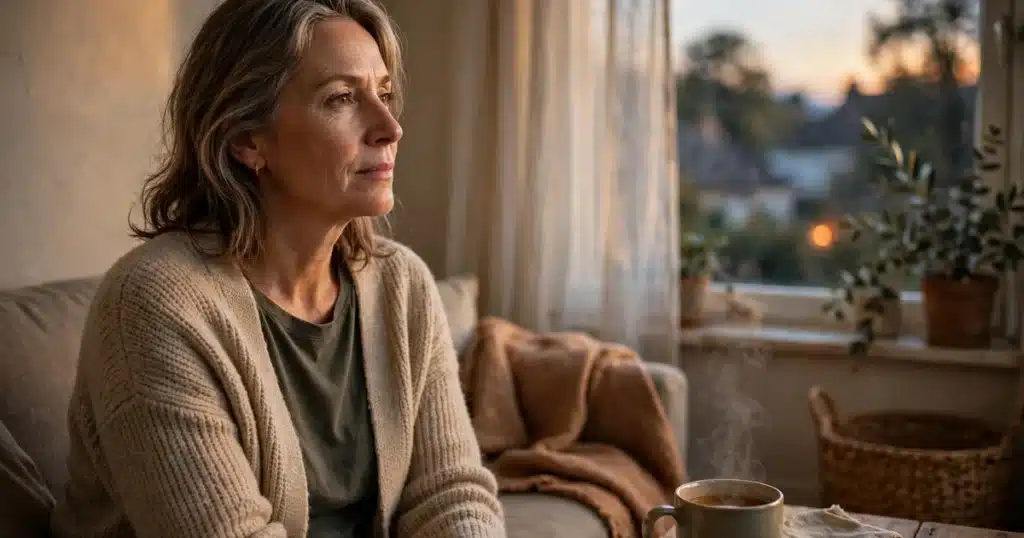
Loneliness during breast cancer is the ache of feeling set apart by your experience, even when family and friends are close by and trying their best. It is common during treatment, after treatment ends, and long into survivorship — and it is not a sign that you are ungrateful, or that the people around you have failed. This article looks at why the feeling happens, why it can sit alongside a busy and supported life, and gentle ways to feel more connected again.
Key Takeaways
- Loneliness in breast cancer is usually about feeling different, not about being physically alone — it can happen in a full house.
- It often peaks at turning points: diagnosis, the long middle stretch of treatment, and the return to “normal” life, when check-ins from others fade.
- Kindness from others can still leave a gap, because few people around you know this experience from the inside.
- Small, honest steps tend to help more than big fixes: naming the feeling, one real conversation, and time with people who understand.
- If loneliness deepens into persistent low mood or withdrawal, tell your care team — emotional support is a normal part of cancer care.
Why Breast Cancer Can Feel Lonely
A diagnosis changes the ground under your feet in a way that is hard to describe to anyone who has not stood on it. The people who love you can see the appointments, the tiredness, and the hospital bags — but the inner part of the experience, the 3 a.m. thoughts and the changed relationship with your own body, is largely invisible. That gap between what others can see and what you are carrying is where loneliness grows.
Protective silence plays a part too. Many people hold back their hardest feelings because they do not want to frighten a partner, upset their children, or seem ungrateful to friends who are helping. The kinder the support around you, the stronger that pressure can feel — and the lonelier the silence becomes. Our pillar guide to coping emotionally with breast cancer places loneliness among the other common feelings of this experience, including the guilt many people feel after a diagnosis, which often travels with it.
It also helps to know that loneliness is not a measure of how loved you are. It is a measure of how much of your current experience feels unshared. Two people with identical families can feel completely different levels of it — individual experiences differ widely, and there is no right amount of loneliness to feel at any stage.
When Loneliness Tends to Appear
Loneliness does not follow one timetable, but certain moments commonly bring it forward:
- The weeks after diagnosis. Everything is new, other people’s lives carry on as usual, and the contrast can feel stark.
- The middle of treatment. The first wave of support has settled into a routine, treatment days are long, and energy for social life is at its lowest exactly when company might help.
- The end of active treatment. This surprises many people. Appointments thin out, friends assume the hard part is over, and the regular contact with your care team — which had quietly become a kind of company — drops away.
- Milestones and anniversaries. Dates that mean a great deal to you may pass unnoticed by everyone else, which can sharpen the feeling of being alone with the experience.
- Watching ordinary life continue. Holidays, work events, and family plans that go ahead without you, or in a changed form, can leave you feeling like a spectator in your own life.
A close cousin of this feeling is the unease described in our article on survivor’s guilt — doing well while others are still struggling — and the two often arrive together once treatment ends. Naming which feeling is in front of you on a given day is a small but real step toward carrying it.
The Feeling, and a Steadier Way to See It
| The lonely thought | A steadier way to see it |
|---|---|
| “Everyone has gone back to normal except me.” | Other people’s routines resumed because routines do. Your inner life is on a different timetable, and that lag is a normal part of recovery, not a personal failure. |
| “I should feel grateful, not lonely.” | Gratitude and loneliness commonly sit side by side. Feeling one does not cancel the other, and you do not have to fix the mixture before you are allowed to enjoy anything. |
| “Nobody understands what this is like.” | Few people close to you know it from the inside — which is exactly why peer support exists. People who have been through treatment often understand in a sentence what takes an hour to explain elsewhere. |
| “I don’t want to be a burden.” | Small, specific requests — a walk, a lift, a phone call on scan day — are easy for people to give and are not a burden. Most people are relieved to be asked for something concrete. |
Gentle Ways to Feel More Connected
There is no single cure for loneliness, but small, repeatable steps tend to help more than one big gesture:
- Say it plainly to one person. “I have been feeling lonely, even with everyone being kind” is a complete sentence. It gives the people around you something true to respond to, instead of a brave face to admire.
- Ask for company, not “support”. A short walk, a cup of tea, someone sitting with you during a long afternoon — company is easier to give and receive than an emotional summit, and it is often what loneliness actually wants.
- Spend some time with people who understand. Support groups, peer programmes, and survivor communities — often reachable through your cancer centre or national organisations — put you in a room, physical or online, where nothing needs explaining. Go once and see; you are not committing to anything.
- Keep low-energy connections alive. On tired days, a message thread, a short call, or listening to a familiar voice still counts as contact. Lower the bar rather than disappearing.
- Protect one small ritual. A weekly call, a standing walk with a friend, a regular coffee — predictable contact carries more weight against loneliness than occasional big occasions.
General information about emotional support during and after cancer is published by the American Cancer Society at cancer.org and the National Cancer Institute at cancer.gov. What helps most, though, is usually local and personal — and it starts with the people and services already around you.
When to Reach Out for More Support
Loneliness that lifts and returns is part of many people’s experience. It deserves more support when it settles in and stays: feeling cut off most days, withdrawing from people you usually enjoy, losing interest in things that normally matter to you, sleeping badly because your mind will not settle, or feeling persistently low or hopeless alongside the loneliness. Those are signs the feeling needs company of a professional kind.
Telling your care team is a practical first step, during treatment or at any follow-up visit afterwards. They hear about loneliness regularly, and they can connect you with counselling or with an oncology social worker — the team member whose work centres on the life around the medicine. Our article on support services through your cancer center explains what those services usually include and how to ask about them. If feelings ever feel overwhelming, say so promptly to someone you trust or to your care team rather than waiting for them to pass on their own.
Questions to Ask Your Care Team
- I have been feeling lonely even though I have support around me. Is that something you hear about often?
- What emotional support is available through this centre — counselling, groups, or peer programmes?
- Can I speak with an oncology social worker about feeling cut off from people?
- The loneliness is worst now that treatment has ended. Is that common, and what helps?
- How would I know if what I am feeling has become low mood that needs more help?
Frequently Asked Questions
Is it normal to feel lonely when I have plenty of support?
Yes. Loneliness in this situation is mostly about feeling that your experience is not fully shared, not about how many people are helping. Practical support and emotional understanding are different things, and it is common to have plenty of the first and still miss the second.
Why did the loneliness get worse after treatment ended?
It is a pattern many people describe. During treatment there is structure, frequent contact with your care team, and a shared sense of purpose. Afterwards, check-ins fade, other people assume life is back to normal, and the feelings that were postponed during treatment often arrive. It does not mean you are going backwards.
How is loneliness different from depression?
They can overlap, but they are not the same thing. Loneliness is about connection — feeling set apart and unshared. Persistent low mood, hopelessness, and loss of interest in everything are different territory and deserve professional support. Only your care team can assess what is going on for you, so if you are unsure, describe what you feel and let them help sort it out.
Will joining a support group actually help?
Many people find that being with others who have been through treatment eases loneliness in a way other company does not, because so little needs explaining. Groups vary in style — some talk, some focus on activities or information — so it is reasonable to try one and, if it is not for you, try a different format or a one-to-one peer programme instead.
What can I say to family when I feel lonely around them?
Something simple and specific tends to land best: “I love that you’re here. I still feel a bit alone with this sometimes — could we just talk about ordinary things?” or “I don’t need cheering up; I’d like company.” People usually respond better to a clear, kind request than to guessing what is wrong behind a brave face.
Related Articles
- Coping Emotionally With Breast Cancer
- Guilt After a Breast Cancer Diagnosis
- Survivor’s Guilt: When You Are Doing Well and Others Are Not
- Anger After a Breast Cancer Diagnosis
- Support Services Through Your Cancer Center: What to Ask About
This article is for general educational purposes only and is not medical, legal, or financial advice. It does not replace professional care. Talk to your doctor or care team about your own situation. If you think you may have a medical emergency, call 911.