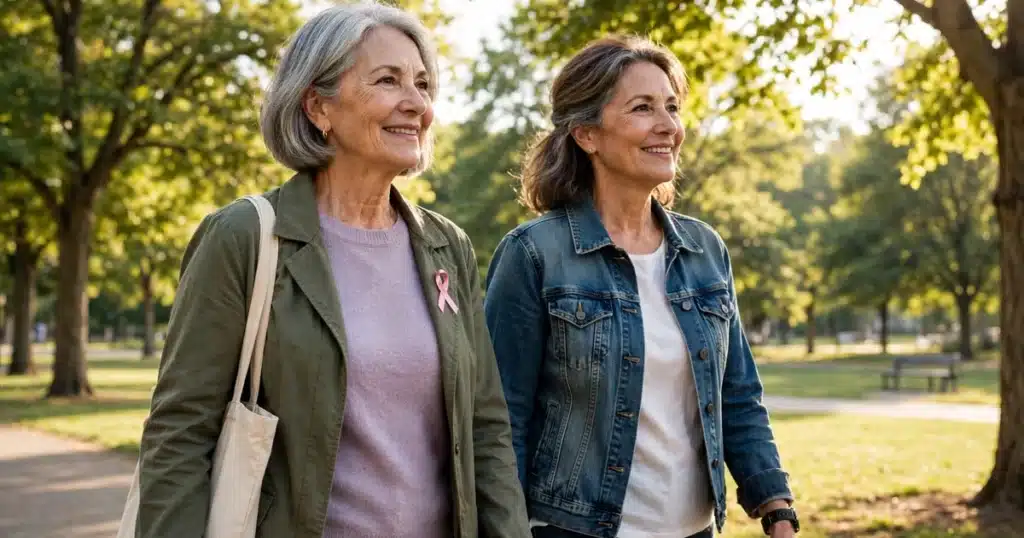
Survivor’s guilt is the uneasy feeling that can arrive when your own treatment is going well, or has finished, while someone else you know is still struggling — or has not survived. You can feel grateful and guilty in the same hour, and that mixture is common, understandable, and not a sign that anything is wrong with you.
Key Takeaways
- Survivor’s guilt means feeling guilty for doing well when others with breast cancer are not — it is different from guilt about causing your illness.
- It often appears at transition points: good scan results, the end of treatment, or meeting someone whose situation is harder.
- Different outcomes are not a reward or a punishment. They reflect many medical factors that no one chooses or controls.
- The feeling tends to soften when it is named, spoken about, and met with the same kindness you would offer a friend.
- If guilt becomes constant, heavy, or tangled with low mood, tell your care team — support is part of survivorship care.
What Survivor’s Guilt Is
Survivor’s guilt, in the context of breast cancer, is guilt about your own good fortune. It might sound like: “Why did my treatment work when hers did not?” “I feel bad celebrating my clear scan when my friend is starting treatment again.” “People keep calling me lucky, and I feel guilty every time.” The guilt is not about anything you did. It is about the gap between your outcome and someone else’s.
It helps to separate it from a different feeling covered elsewhere on this site. Our article on guilt after a breast cancer diagnosis is about the “did I cause this?” thoughts that come early. Survivor’s guilt usually comes later, once treatment is under way or finished, and it points outward: not “I caused this” but “why me — in the good sense — when not her?” Our pillar guide to coping emotionally with breast cancer places both kinds of guilt in the wider emotional landscape of diagnosis, treatment, and life afterwards.
Feeling this guilt does not mean you are ungrateful, and it does not cancel your own hard road. You went through your own diagnosis, your own treatment, and your own fear. Two things can be true at once: your experience was real and difficult, and someone else’s is harder right now. Guilt appears precisely because you can hold both truths and you care about the other person.
When It Tends to Appear
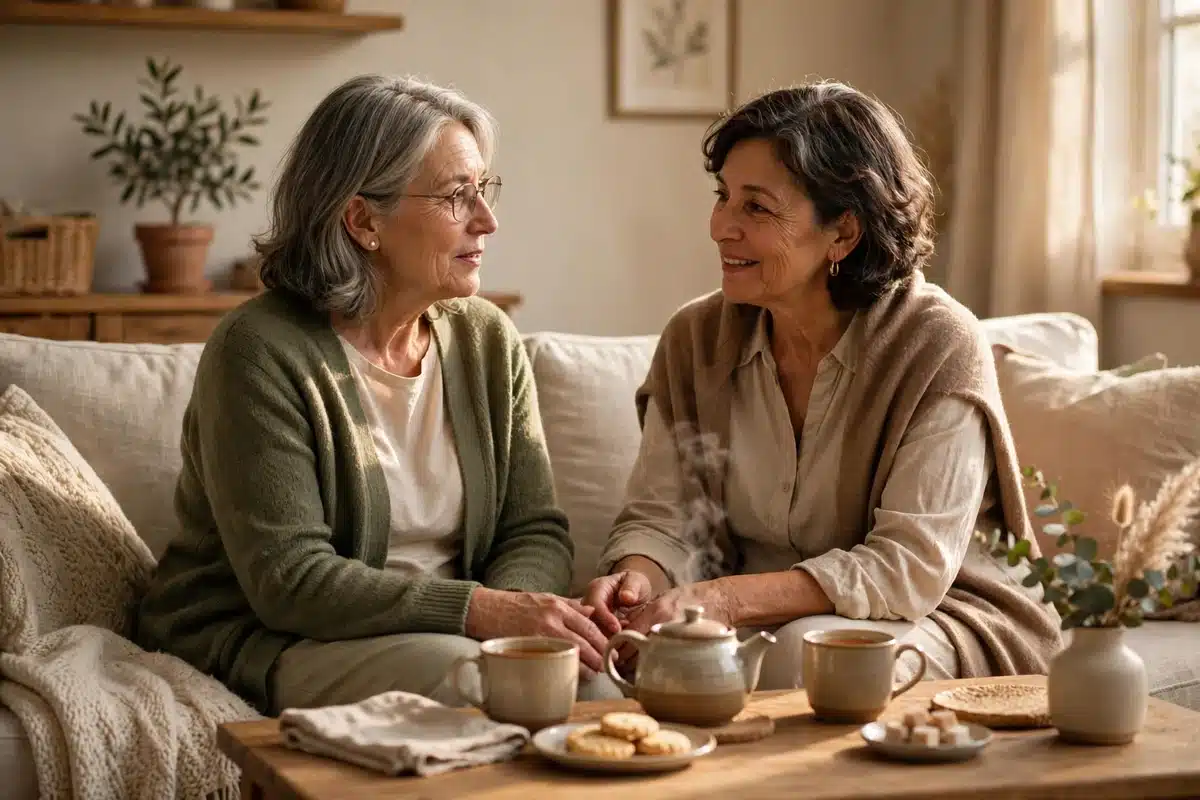
Survivor’s guilt rarely arrives on a schedule, but certain moments commonly trigger it:
- Good news days. A clear scan, a reassuring appointment, or the final treatment session — followed, sometimes within minutes, by a pang of guilt instead of pure relief.
- Meeting someone with a harder path. A conversation in a waiting room, a support group, or online, where someone describes a recurrence, more treatment, or a later stage than yours.
- Losing someone. Hearing that someone from your treatment circle, a friend, or a relative has died can bring grief and guilt together — “it could so easily have been me.”
- Returning to ordinary life. Going back to work, planning holidays, complaining about small things — normal life can feel strangely disloyal while others are still in treatment.
- Milestones. Anniversaries and awareness events can surface the feeling even years later.
For some people the feeling is a brief shadow across a good day. For others it settles in for weeks. Both patterns are seen, and neither means you are coping badly. It is also common for survivor’s guilt to travel with other feelings — the unease described in our article on feeling jealous of healthy friends is its mirror image, and many people feel both at different times.
Why It Happens
There is no single reason, but a few human tendencies help explain it. The mind looks for fairness and pattern: if outcomes differ, it hunts for a reason, and when no reason is visible it can land, unfairly, on “I did not deserve this as much as she did.” Empathy plays a part too — the same capacity that lets you imagine another person’s fear makes it hard to enjoy your own relief while they are still afraid.
| The guilty thought | A steadier way to see it |
|---|---|
| “My cancer was caught earlier, so my good outcome is just luck — I should not feel proud of getting through it.” | Getting through treatment is work whatever the stage. Your effort, your fear, and your endurance were real, and acknowledging them takes nothing from anyone else. |
| “She did everything right and still got worse news. It makes no sense.” | It genuinely may not make sense at the level of individual lives. Outcomes reflect the type and biology of each cancer, how it responds to treatment, and many other factors — not effort, attitude, or worth. |
| “I should not complain about my side effects when others have it worse.” | Your symptoms deserve care on their own terms. Mentioning them to your team is not a complaint about your fortune; it is how good follow-up care works. |
| “Celebrating feels wrong.” | Celebration and compassion can share the same day. Marking your milestone quietly or joyfully does not diminish anyone else, and most people in treatment want to hear that treatment can end. |
It can help to remember, plainly, what determines outcomes. Breast cancers differ in type, stage, and biology, and they respond differently to treatment. Individual cases differ — sometimes greatly — for medical reasons that are nobody’s fault and nobody’s credit. General information about types and treatment is published by the American Cancer Society at cancer.org and the National Cancer Institute at cancer.gov. Your own doctor is the right person to talk through your particular situation.
Gentle Ways to Live With It
Survivor’s guilt usually cannot be argued away, but it can be lived with more lightly:
- Name it plainly. “I am having survivor’s guilt today” is a surprisingly powerful sentence. A named feeling is easier to carry than a vague heaviness, and naming it to a partner or friend invites the exact conversation that helps.
- Let gratitude and guilt coexist. You do not have to choose between them or fix one before feeling the other. Many survivors find it steadier to say “I am grateful, and I feel sad for her, and both are allowed.”
- Answer it as you would a friend. If a friend said “I feel guilty for being well,” you would not agree that she should feel bad. Practise giving yourself that same reply.
- Limit comparison spirals. Support groups and online communities help many people and stir guilt in others. Notice your own pattern. If a particular space consistently leaves you worse, it is reasonable to step back from it for a while without abandoning the people in it.
- Turn the feeling into something chosen, not owed. Some survivors find meaning in giving back — a lift for a neighbour in treatment, a donation, listening to a newly diagnosed friend. Done from choice, this can feel settling. Done from obligation, it can deepen guilt, so let it be an offer, never a debt.
- Keep your own follow-up. Guilt sometimes whispers that attending your own appointments is self-indulgent. It is not. Your follow-up care matters, including mentioning the guilt itself — emotional wellbeing is part of what those visits are for.
The unsettling background worry that treatment has ended but vigilance has not is explored in our article on when every ache feels like a warning sign. Guilt and that worry often overlap in the first year after treatment, and both deserve to be spoken about rather than carried silently.
Supporting Others Without Hurting Yourself
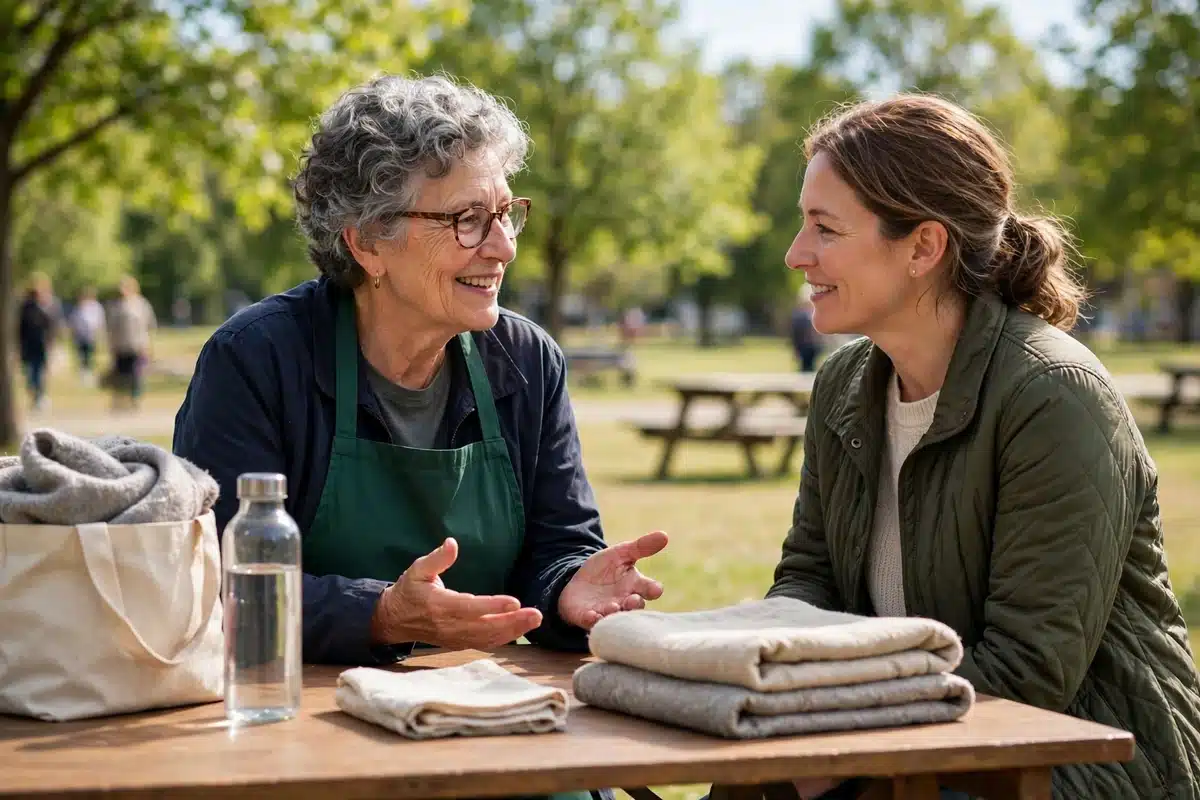
Many survivors worry about how to be around friends who are still in treatment, or whose news is worse. There is no perfect script, but a few approaches tend to land well. Stay in ordinary contact rather than disappearing — silence is often felt more keenly than an imperfect message. Let the other person set the tone: some people want to talk about treatment, others want an hour of normal life. Avoid apologising repeatedly for your own health, which can put the other person in the position of comforting you. And be honest, briefly, if asked how you are: “I am doing well, thank you — and I think of you often” is both truthful and kind.
It is also acceptable to have limits. If supporting someone through a harder path is reopening your own fear to a degree you cannot carry right now, stepping back a little — while saying so kindly — protects both of you. Our article on intrusive thoughts about breast cancer may help if contact with others’ treatment keeps triggering frightening thoughts of your own.
When to Reach Out for More Support
Most survivor’s guilt eases with time, conversation, and the slow rebuilding of ordinary life. Reach out for more support if the guilt is present most days, if it has merged with persistent low mood, hopelessness, or loss of interest in things you usually enjoy, if it is disturbing your sleep, or if it is making you avoid follow-up appointments, friends, or activities you value. Those are signs the feeling needs company and professional support.
Telling your care team is a practical first step even after treatment has ended — they can connect you with counselling or survivorship support, and they hear about this feeling regularly. If feelings ever feel overwhelming, say so promptly to someone you trust or to your care team rather than waiting for them to pass on their own.
Questions to Ask Your Care Team
- I am doing well, but I feel guilty about it when I think of others who are not. Is this something you hear about often?
- What emotional support is available for survivors through this center, even though my treatment has finished?
- The guilt is worst around my follow-up scans. Can we talk about how to handle those weeks?
- How will I know if what I am feeling has become low mood that needs more help?
- Are there survivor groups where people talk honestly about mixed feelings like this?
Frequently Asked Questions
Is survivor’s guilt normal after breast cancer?
Yes. It is a commonly described reaction among people whose treatment has gone well, especially when they know others whose treatment is ongoing or whose outcomes were worse. Feeling it does not mean you are ungrateful or coping badly — it usually reflects empathy and the mind’s search for fairness where outcomes were never about fairness.
How is survivor’s guilt different from guilt about causing my cancer?
They point in different directions. Guilt about causing your cancer looks backwards at your own past choices. Survivor’s guilt looks sideways at other people’s outcomes compared with yours. They can occur in the same person at different stages, and both are worth talking through if they weigh on you.
Should I hide my good news from friends who are still in treatment?
Usually not — disappearing or hiding tends to hurt more than honest, sensitive sharing. Let your friend’s responses guide how much detail you offer, keep the focus on them when you are together, and do not apologise for your health. Most people in treatment want their friends to stay present and truthful.
Does feeling guilty mean I am not grateful?
No. Gratitude and guilt commonly coexist. You can be deeply thankful for your own outcome and saddened by someone else’s at the same time. Neither feeling cancels the other, and you do not need to resolve the mixture before you are allowed to enjoy your life.
When should I ask for help with survivor’s guilt?
If it is constant rather than occasional, comes with persistent low mood or hopelessness, disturbs sleep, or leads you to avoid appointments, people, or activities, tell your care team. Support after treatment is a normal part of survivorship care, and asking early is easier than waiting.
Related Articles
- Coping Emotionally With Breast Cancer
- Guilt After a Breast Cancer Diagnosis
- Anger After a Breast Cancer Diagnosis
- Feeling Jealous of Healthy Friends After a Diagnosis
- Intrusive Thoughts About Breast Cancer
- When Every Ache Feels Like a Warning Sign
This article is for general educational purposes only and is not medical, legal, or financial advice. It does not replace professional care. Talk to your doctor or care team about your own situation. If you think you may have a medical emergency, call 911.