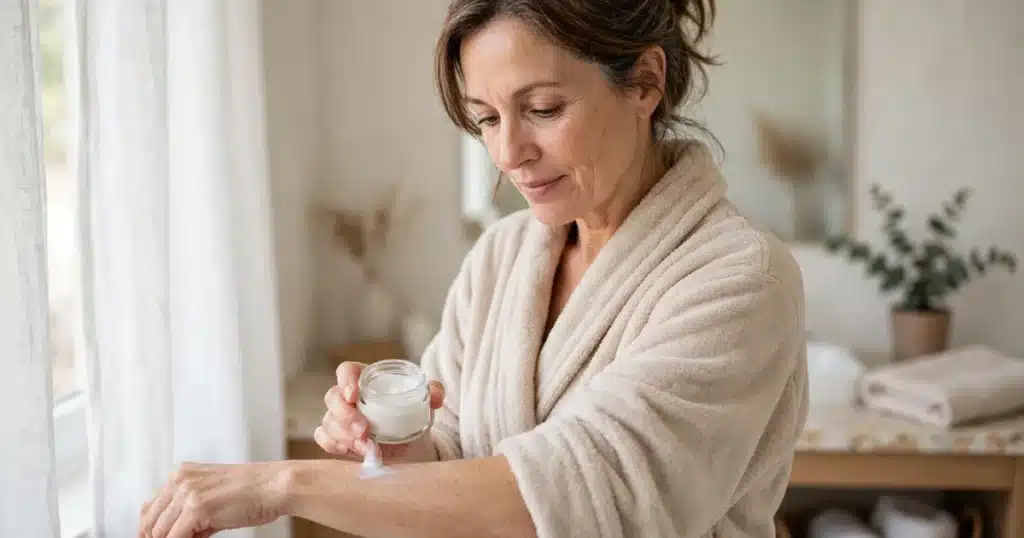
Radiation therapy passes through the skin to reach the area being treated, so the skin in that area often reacts — it may redden, feel dry, warm, itchy, or sensitive, rather like sunburn. A gentle daily routine helps you stay comfortable: wash softly with lukewarm water, moisturise in the way your team advises, wear loose, soft clothing, and protect the area from the sun. Your radiation team’s own instructions come first, because centres differ on details such as which creams to use and when to apply them.
Key Takeaways
- Skin changes in the treated area are common. They usually build gradually during the course of treatment rather than appearing all at once.
- Wash the area gently with lukewarm water and pat it dry — no scrubbing, and no harsh or fragranced products on the treated skin.
- Moisturising is usually part of the routine, but ask your team which products to use and whether they want anything on the skin before a session.
- Soft, loose clothing reduces rubbing. Protect treated skin from the sun by covering it and choosing shade where you can.
- Tell your team promptly about broken, weeping, or blistering skin, or pain that is getting worse — they have ways to help.
- Individual reactions differ. Your team’s advice for your skin and your treatment area is the authority.
Why Skin Changes Happen
Radiation is aimed as precisely as possible, but the skin in the treatment area receives some of it on the way through. Skin renews itself constantly, shedding old cells and making new ones; during a course of treatment, the treated skin cannot replace its cells as quickly as usual, so a reaction gradually builds. That is why changes tend to appear over the course rather than on the first day, and why they can continue to develop for a short while after the course ends before settling.
Reactions vary a great deal from person to person — with skin type, the area treated, and the treatment plan itself. Common descriptions include redness (on darker skin, the area may instead look darker, or simply feel tender and warm), dryness, itching, and sensitivity to touch or clothing. Later in a course, and especially in skin folds, the surface can become sore or start to break down. That stage is a reason to tell your team promptly rather than manage it alone, so they can advise on dressings and care.
A Gentle Daily Routine
Most people fold skin care into the rhythm they already have: a gentle wash in the morning or evening, moisturiser applied at the times their team suggests, and a quick look at the area each day so that changes are noticed early rather than late. Keeping the same plain products and the same order each day makes it easier to spot what is new. If someone at home helps you with creams or dressings for areas you cannot easily reach, that is a normal arrangement — brief them on the same gentle rules.
- Washing. Shower or bathe as your team allows. Use lukewarm water, let it run gently over the area, and pat dry with a soft towel instead of rubbing. If your team has placed small skin markings to position the treatment, ask how to wash around them.
- Moisturising. Keeping the area moisturised is usually encouraged, with a plain, unfragranced product. Ask your team which type they prefer and how often to apply it — and ask about timing, because centres differ on whether they want anything on the skin when you arrive for a session. Do not start a new product partway through the course without checking first.
- Clothing. Soft, loose fabrics are kindest. Choose tops that do not rub the treated area, and avoid straps, seams, or underwires pressing on sore skin. Some people are more comfortable without a bra at home during treatment.
- Everyday irritants. Try not to scratch itchy skin. Avoid very hot water on the area. Before shaving treated skin or using deodorant on a treated underarm, ask your team — advice varies, and they would rather be asked than have you guess.

Habits to Check First, and Things to Avoid
| Approach | General guidance |
|---|---|
| Gentle washing with lukewarm water | Part of the daily routine for most people |
| A plain moisturiser your team is happy with | Use as they direct, and ask about timing around sessions |
| Any new cream, oil, gel, or home remedy | Check with your team before using it on the treated area |
| Perfumed or strongly fragranced products | Best avoided on the treated skin during treatment |
| Heating pads, hot water bottles, or ice on the area | Avoid unless your team advises otherwise |
| Adhesive tape or sticking plasters on treated skin | Avoid; the skin tears easily — let the team apply any dressings |
| Sun on the treated skin | Cover up and use shade; ask your team about sunscreen for the area |
When to Call Your Team
Your radiation team expects to hear about skin problems during treatment — it is a routine part of their work, not an interruption. Contact them promptly if:
- The skin breaks, weeps, or blisters.
- Pain in the area is increasing rather than settling.
- Redness spreads, the area swells, or you feel unwell or feverish alongside the skin changes.
- Anything about the area worries you, even if it seems small.
Mention skin changes at your regular treatment reviews as well, even the ones you are coping with. The team can often adjust your care, suggest dressings, or simply reassure you that what you are seeing is within the usual range.
After Treatment Ends
Once the course finishes, the skin usually settles gradually. The treated area can stay more sensitive than other skin for some time, so keep up the gentle routine, and continue protecting the area from strong sun as your team advises. Our pillar guide, Living Through Breast Cancer Treatment, places skin care alongside the other everyday parts of getting through a treatment course, and our article on follow-up care after breast cancer treatment explains what ongoing appointments are for. If the skin has not settled as expected, or new changes appear in the treated area later on, raise it at a follow-up appointment.

Questions to Ask Your Radiation Team
- Which moisturiser would you like me to use, and how often should I apply it?
- Should my skin be clean and product-free when I arrive for each session?
- Can I shower as usual, and is there anything to avoid in the bath or shower?
- What should I do about shaving, or deodorant, in the treated area?
- How should I protect the treated skin from the sun, during treatment and afterwards?
- Which skin changes should I report straight away, and how do I reach the team between appointments?
Frequently Asked Questions
Can I shower during radiation therapy?
In general, yes. Gentle washing with lukewarm water, followed by patting the skin dry with a soft towel, is part of the usual routine. Follow any different guidance your own team gives — for example, if they ask you to take care around skin markings or dressings.
Should I put cream on right before a treatment session?
Ask your team, because centres genuinely differ. Some are content with your normal routine; others ask for nothing to be applied to the skin at treatment time. Their answer for their own equipment and planning is the one to follow.
Can I keep using my usual skincare products?
Check each product with your team before using it on the treated area. Strongly fragranced products are commonly best paused there during treatment, and anything new — including natural or homemade preparations — should be cleared with the team first.
Will the redness go away after treatment ends?
For most people the reaction fades gradually once the course is over, though the treated skin may stay more sensitive than before and need ongoing sun protection. If changes persist longer than your team led you to expect, or new ones appear, mention it at a follow-up appointment.
The itching is hard to leave alone. What helps?
Itching is a common part of the reaction. Loose clothing, keeping the area moisturised as your team advises, and keeping your nails short so that absent-minded scratching does less harm are the everyday measures. If itching is severe or keeps you awake, tell the team rather than reaching for a pharmacy cream on your own — they can suggest something suitable for treated skin.
What should I do if the skin breaks or becomes very sore?
Contact your radiation team promptly and let them advise you. They can suggest or apply dressings and adjust your care. Do not apply leftover creams, antiseptics, or home remedies to broken skin without asking first — the team needs to see what they are treating.
Related Articles
- Living Through Breast Cancer Treatment: A Complete Guide
- Follow-Up Care After Breast Cancer Treatment
- Support Services Through Your Cancer Center
- What Questions Should I Ask My Oncologist?
This article is for general educational purposes only and is not medical, legal, or financial advice. It does not replace professional care. Talk to your doctor or care team about your own situation. If you think you may have a medical emergency, call 911.