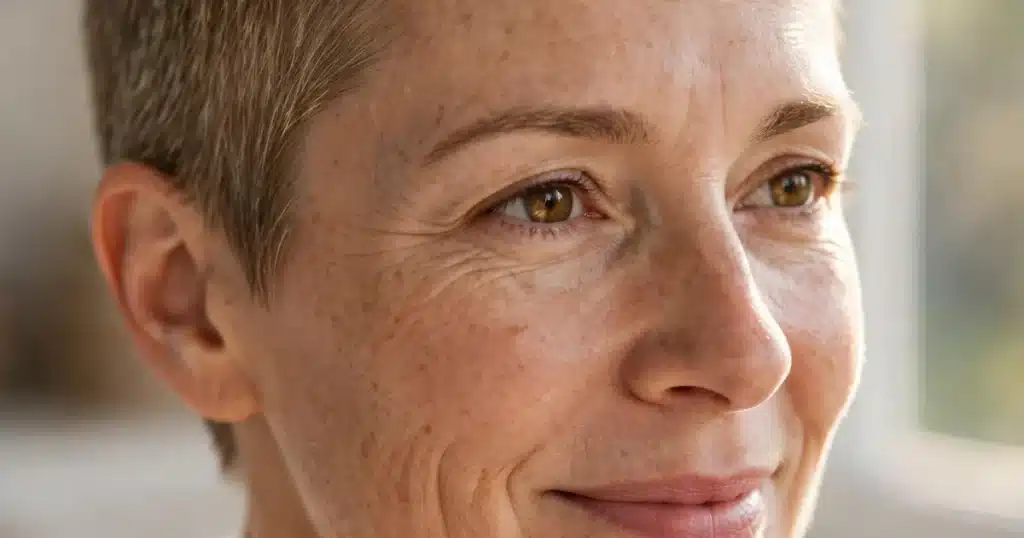
If you are watching your hair grow back after chemotherapy, you may feel grateful — and, at the same time, strangely sad, frustrated, or unlike yourself. That combination of feelings is completely normal: regrowth is a milestone worth celebrating, but it can also stir grief, impatience, and a complicated relationship with the mirror. There is no “right” way to feel about your new hair.
Key Takeaways
- Feeling relief and grief at the same time when hair grows back after chemo is normal — the two are not opposites.
- New hair sometimes comes in with a different texture, curl, or color at first; these changes are often temporary, but individual cases differ.
- “Back to normal” pressure from others can feel dismissive — you are allowed to set the pace of your own recovery.
- Gentle habits — scarves, hats, styling experiments, honest conversations — can help you feel more like yourself on your own terms.
- If sadness or anxiety about appearance is weighing on daily life, talking with your care team or a counselor is a practical next step.
Why Regrowth Brings Mixed Feelings
Losing your hair during chemotherapy is often described as one of the most visible and emotional side effects of treatment. So when the first soft fuzz appears, many people expect pure happiness — a sign that treatment is working and the worst is over.
Sometimes happiness is exactly what arrives. But for many others, regrowth brings a tangle of feelings: relief mixed with sadness, gratitude mixed with frustration, pride mixed with the wish to still look like “the old me.” These reactions can be surprising, especially if people around you are celebrating while you feel anything but celebratory.
It helps to know that this emotional mix is widely reported by people who have been through treatment. Grieving your hair did not end when the hair started returning — in some ways, regrowth can reopen that grief, because now you are looking at the loss in a new form: the hair you have is not the hair you lost.
What New Hair Can Look Like
The hair that grows back after chemotherapy sometimes differs from your pre-treatment hair, at least at first. Commonly described changes include:
- A different texture — often finer, softer, or more curly or wavy than before
- A different color or shade, sometimes lighter or grayer at first
- Uneven or patchy growth, especially in the early stages
- Changes to eyebrows, eyelashes, or other body hair as well
For many people, these changes are temporary and the hair gradually shifts over time, though individual cases differ and no one can promise exactly how or when your hair will change for you. If you have concerns about your hair, scalp, or skin during regrowth, your own doctor or care team is the right place to bring them — this article cannot assess your situation.
Emotionally, the texture and color changes can hit harder than expected. Hair is tied up with identity, culture, age, and how we present ourselves to the world. When your new hair looks or feels unfamiliar, it can feel like one more thing treatment took — even though, technically, hair is growing again.
Relief and Grief at the Same Time
One of the hardest things about this phase is that relief and grief are not opposites here — they arrive together. You can be genuinely relieved that treatment is behind you and genuinely sad about what changed in the process.
Some feelings people describe during regrowth include:
- Impatience: wanting the process to be faster, and frustration with short, thin, or patchy hair.
- Disappointment: when the new hair looks different from what you expected or remembered.
- Grief, again: regrowth can remind you of the hair you lost, reopening feelings you thought had passed.
- Guilt: feeling ungrateful for being unhappy “when it could have been worse.”
- Anxiety: worrying whether the changes are permanent or what others will think.
If guilt shows up, it helps to notice it for what it is: a sign that you are comparing your suffering to someone else’s. Your feelings do not need to be proportional to anyone else’s diagnosis or outcome to be valid. Feeling both lucky and sad is not a contradiction — it is the honest shape of recovery.
Identity and the Mirror
Hair is never just hair. It carries meaning about who you are — your age, your style, your culture, the way you have recognized yourself in a mirror for years. When regrowth looks different, the reflection can feel like someone slightly unfamiliar looking back.
Many people describe a kind of identity adjustment during this period: figuring out who they are now, after treatment, with this new hair. It can help to think of it as an adjustment rather than a verdict. You are not required to love your new hair immediately, and you are not betraying your old self by exploring a new look.
Some find it useful to treat regrowth as a transition style rather than a final one — experimenting with short cuts, head wraps, hats, or color (once your care team says scalp products and dyes are appropriate for you) until they find what feels right. If you would like broader support for rebuilding your sense of self after treatment, coping emotionally with breast cancer covers the longer arc from diagnosis through life after treatment.
| Feeling | What It Might Sound Like | A Gentle Reframe |
|---|---|---|
| Impatience | “Why isn’t it growing faster?” | Healing takes the time it takes; noticing progress in weeks, not days, can help. |
| Disappointment | “This isn’t my hair.” | It isn’t your old hair — and it is okay to mourn that while getting to know this hair. |
| Guilt | “I should just be grateful.” | Gratitude and sadness can share a room. You do not have to choose. |
| Feeling unseen | “Everyone acts like I’m all better now.” | Looking “normal” is not the same as feeling normal. Saying so is reasonable. |
The “Return to Normal” Pressure
One of the most quietly painful parts of regrowth is that other people often treat it as the finish line. “Look, your hair is growing back!” is meant kindly — but it can feel like permission you never asked for: permission to be fully fine now.
This pressure can come from friends, family, coworkers, or even well-meaning strangers. The message underneath is: the visible sign of illness is fading, so the emotional aftermath should fade too. But inner recovery does not run on the same schedule as hair follicles.
You are allowed to set boundaries here. Simple, honest phrases can do the job: “I’m still processing things — I’d rather not talk about how I look right now,” or “I appreciate that, but recovery is still ongoing for me.” You do not owe anyone a performance of being back to normal.
At the same time, some people find it healing to mark regrowth as a milestone on their own terms — a photo for yourself, a note in a journal, a quiet moment of acknowledgment. The difference is choice: it matters that the milestone is yours, not one assigned to you.
Gentle Ways to Cope
There is no technique that will make complicated feelings disappear, and that is not the goal. Coping, here, means giving the feelings room while continuing to care for yourself. A few approaches that many people find steadying:
- Name what you feel without fixing it. Saying “I feel sad about my hair today, and that’s allowed” can loosen the grip more than arguing with the feeling.
- Experiment at your own pace. Short styles, accessories, hats, and scarves can be fun to explore — or you can skip all of it. There is no requirement to “do” anything with your hair.
- Ask before styling. Hair color, heat styling, and chemical treatments should wait until your care team says your scalp and new hair can handle them. When in doubt, ask.
- Talk to someone who gets it. A support group — in person or online — can be a relief after months of hearing “you look great!” from people who mean well. Resources such as CancerCare (cancercare.org) and the American Cancer Society (cancer.org) offer support programs; your care team may know local groups too.
- Watch for the comparison trap. Other people’s regrowth photos online show one moment of one person’s journey. They are not a standard you are behind on.
- Be as kind to yourself as you would be to a friend. If you would not call a friend ungrateful for feeling sad about her new hair, don’t call yourself ungrateful either.
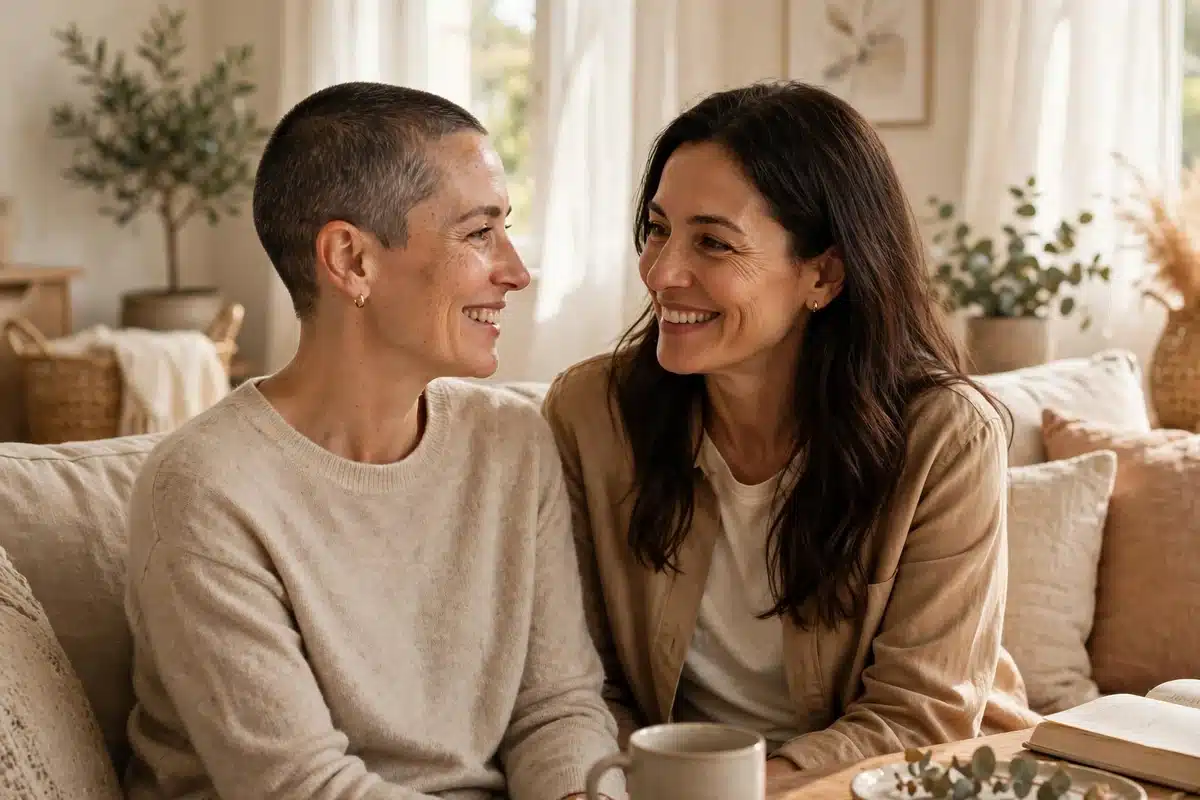
Caring for new hair, practically
New hair can be fragile, and the scalp may be sensitive after treatment. General, non-prescriptive habits that people often find comfortable include using a soft brush or wide-tooth comb, washing gently, avoiding very hot water, and protecting the scalp from sun with a hat or gentle sunscreen as your care team advises. These are comfort measures, not medical recommendations — for anything about scalp health or hair products after your specific treatment, ask your own doctor or care team.
What to Do Next
If the emotions around regrowth are manageable, time and self-compassion may be all you need. But if any of the following sound familiar, it is worth reaching out:
- Sadness, anxiety, or body-image distress that lingers most days or interferes with work, sleep, or relationships
- Avoiding mirrors, photos, or social situations because of how you look
- Feeling unable to talk honestly about it with anyone in your life
- Thoughts of harming yourself — if this is happening, call 911 or a crisis line right away
Practical next steps you can take this week:
- Bring up hair changes and how you feel about them at your next oncology or primary-care visit — emotional side effects are a legitimate thing to discuss with your care team.
- Ask your care team or a hospital social worker about counseling referrals or support groups for people in recovery.
- Look at the American Cancer Society (cancer.org) or CancerCare (cancercare.org) websites for free support resources.
- Tell one trusted person the truth about how you feel, in plain words. Being seen accurately is part of feeling like yourself again.
Frequently Asked Questions
Is it normal to feel sad when my hair is growing back?
Yes. Regrowth can reopen grief about the hair you lost, and the new hair may look or feel unfamiliar, which can bring disappointment or frustration. Relief and sadness often exist side by side during this phase — feeling both is normal.
Will my hair ever look like it did before treatment?
Sometimes new hair gradually becomes more like your pre-treatment hair over time, and sometimes it stays different. Individual cases differ, and no one can promise a particular outcome for you. If you are concerned about your hair’s texture, color, or growth, talk with your own doctor or care team.
When can I color or style my new hair?
There is no single safe date that applies to everyone, because treatments, scalp sensitivity, and skin healing vary from person to person. Ask your own care team before using hair dye, chemical treatments, or heat styling, so they can advise based on your situation.
Why do people act like I’m completely fine now that my hair is back?
Because hair loss is the most visible sign of treatment, its return looks like recovery to others. But looking “normal” is not the same as feeling normal, and emotional recovery often continues long after hair returns. You are allowed to say that recovery is still ongoing.
Should I feel grateful instead of upset about my hair?
Gratitude and upset are not mutually exclusive. You can be thankful that treatment is behind you and still sad about what changed along the way. Feeling guilty about your feelings usually means you are comparing your pain to someone else’s — your feelings are valid on their own terms.
Related Articles
- Coping emotionally with breast cancer, from diagnosis through life after treatment
- The emotional side of hair loss: grieving your hair during chemotherapy
- Identity changes after a breast cancer diagnosis: who am I now?
- Body image after mastectomy: reclaiming how you see yourself
- Coping with scars after breast surgery: the emotional side of healing
This article is for general educational purposes only and is not medical, legal, or financial advice. It does not replace professional care. Talk to your doctor or care team about your own situation. If you think you may have a medical emergency, call 911.