
Living far from a cancer center changes the logistics of care, not its importance. Rural patients routinely travel hours for specialist appointments, and the distance itself becomes part of the illness to manage — fuel, weather, time off work, a driver for the days you cannot drive. The good news is that modern cancer care has more ways than it used to of splitting the work: specialist planning at the center, a meaningful share of ongoing care closer to home, and electronic links between the two. This article sets out how that shared model generally works, and how to make distance a problem you have organised, rather than one that organises you.
Key Takeaways
- Distance from a cancer center is a real burden, but it does not have to mean second-class care — shared-care arrangements exist precisely for this situation.
- A common pattern: diagnosis, planning, and key treatment decisions at the specialist center; some tests, check-ins, and day-to-day support handled locally, with the two teams in contact.
- Video and phone appointments can replace some journeys, though not all — anything needing examination, imaging, or treatment itself still means travel.
- The single biggest risk in split care is a gap: results nobody saw, a question nobody owned. Agreeing in advance who does what — and who you call — prevents most of them.
- Practical help with travel and lodging exists in many places, through hospitals, cancer organisations, and community programs — ask early rather than absorbing the cost in silence.
The Distance Problem, Honestly Stated
It deserves stating without softening: rural patients carry an extra load. An appointment a city patient reaches by bus can cost you a full day, a tank of fuel, a hotel the night before an early scan, and a family member’s day of work as your driver. Bad weather can undo a week of scheduling. And the burden is unevenly spread across treatment — some phases mean repeated weekly journeys at exactly the time you feel least able to make them.
None of that is a reason to accept less care, and specialist centers are well used to patients who live far away. But it is a reason to plan the geography of your care as deliberately as the medicine. Our pillar guide to navigating breast cancer care maps the system as a whole; this article is about bending that system around a long map.
How Shared Care Generally Works
The arrangement most rural patients end up with is a partnership between two teams. The specialist cancer center holds the overall plan: it confirms the diagnosis, decides the treatment approach with you, and handles anything requiring its particular facilities or experience. A local doctor or hospital — your primary care doctor, a community oncologist, a regional hospital — handles the parts that can safely happen near home, and watches over everything the center cannot see between visits.
For this to work, two things must be true. The teams must actually communicate — records, results, and treatment summaries travelling in both directions, not just at the start. And you must know the shape of the arrangement: which team is responsible for what, and which door you knock on for which problem. Our article on coordinating care between a local doctor and a cancer center walks through that division of labour in detail, including what to do when advice seems to conflict.
What Can Happen Near Home, and What Cannot
| Often possible closer to home | Usually requires the specialist center |
|---|---|
| Blood tests and many routine monitoring checks, with results sent to the center | The initial diagnostic workup and treatment planning |
| Some follow-up appointments, especially stable check-ins | Surgery and treatments needing specialist facilities |
| Video or phone consultations for results, reviews, and questions | Imaging that must be done on the center’s equipment or read alongside your previous scans |
| Supportive care: symptom management, wound checks, general health care | Decisions about changing the treatment plan |
| Prescription refills and everyday health needs through your local doctor | Assessment of new or worrying symptoms the center wants to evaluate itself |
Where the lines fall in your case depends on your treatment, your local facilities, and both teams’ judgement. The table is a sketch of the usual pattern, not a promise about yours — the arrangement is built person by person, and it can shift as treatment moves through its phases. If there is no suitable local facility for some of it, our article on care options when there is no cancer center near you covers the further possibilities, from regional networks to how second opinions work at a distance.

Staying Connected Between Trips
- Learn the portal. If the center offers an online patient portal, it may be your strongest tool: results, letters, appointment changes, and a messaging route that does not care how far away you live. Ask the center to set it up with you before you leave, not after.
- Batch the journeys. When a trip is unavoidable, ask whether other business can share it — a scan and a consultation on the same day, bloods done the same morning. Centers that serve rural patients expect the request.
- Keep your own file. In split care, you are the one constant. A folder — or photos on your phone — with your treatment summary, current medicines, and key results means no appointment ever starts from zero. Keep copies yourself rather than assuming every record has travelled.
- Agree the emergency route in daylight. If something frightens you at home on a Sunday night, where do you go first? Usually your local hospital or urgent service, with the center informed — but agree it with both teams in advance, including how the local service reaches your records.
- Use the referral system properly. New specialists, tests, and services usually connect through referrals from one of your teams; our explainer on how referrals work in cancer care describes the mechanics. A referral sent is not always a referral received — a quick confirming call saves journeys made in vain.
The Practical Costs: Travel, Time, and Help
Distance is expensive in ways that rarely appear on a bill: fuel, parking, meals, lodging, lost wages — yours and your driver’s. Do not treat those costs as private bad luck. Many hospitals and cancer centers have social workers or navigators whose work includes exactly this: knowing which lodging programs, transport schemes, and charitable funds serve their patients. National cancer organisations also run or list support services of various kinds; check CancerCare (cancercare.org) and the American Cancer Society (cancer.org) for what exists, and verify current details on their official websites, as programs change.
Two habits protect you. First, ask early — the first planning visit is not too soon to say “I live three hours away; what help with travel exists?” Second, keep receipts for everything travel-related in one envelope or folder; some assistance, and some tax or insurance processes, will ask for them, and the time to be organised is as the costs happen, not after. If the distance ever makes a particular center unworkable, changing where your care is anchored is a legitimate conversation too — our guide to switching cancer centers during treatment explains how planned transfers work, though for most rural patients a shared-care arrangement with their chosen center is the better answer.
Questions to Ask Your Teams
- Which parts of my care can happen locally, and which will always mean travelling to you?
- Who is my main contact at each place — and who do I call first when I am not sure?
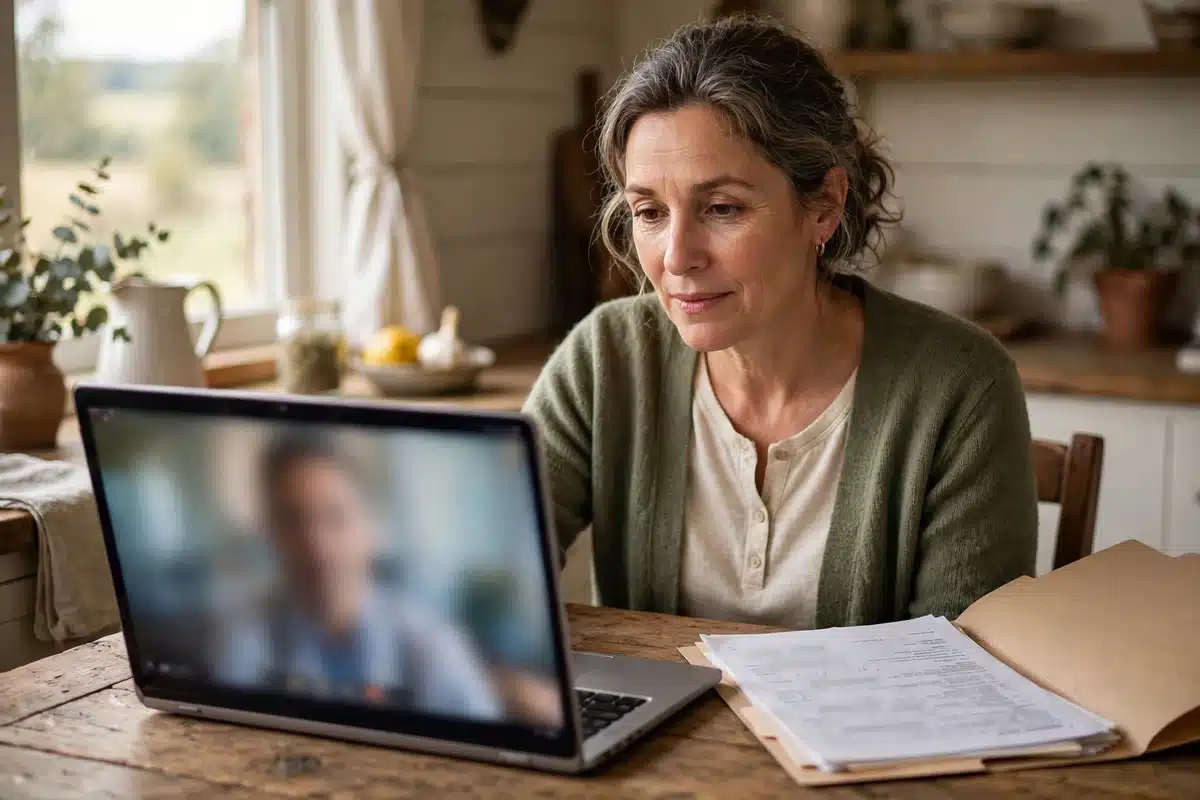
- Can some of my appointments be by video or phone? What do I need to set that up?
- How will results and records move between the center and my local doctor — and how will I know they have?
- Can appointments be clustered on the same day when I travel?
- What help exists with travel and lodging costs, and who here can tell me about it?
Frequently Asked Questions
Will I get worse care because I live far away?
You should not — but it takes organising. The specialist plan is the same wherever you live; what distance threatens is the connective tissue — follow-up, communication, speed when something changes. A deliberate shared-care arrangement, with named contacts and clear responsibilities, is how rural patients protect themselves against those gaps.
Can I do everything by video appointment?
No. Conversations, results, and many reviews work well by video, and they can save you real journeys. But examinations, scans, biopsies, surgery, and treatments themselves happen in person, and some consultations are simply better face to face. Expect a mix, and ask which of your specific appointments can be remote.
My local hospital is small. Can it really be part of my cancer care?
Very often, yes — within limits both teams agree on. Local services commonly handle blood tests, some monitoring, supportive care, and first response when you are unwell, working to the specialist center’s plan. What your local hospital can take on depends on its facilities and staff; the honest answer comes from asking both teams what they propose.
What if the two teams disagree?
It happens occasionally, and it is resolvable: ask each side to explain its reasoning, and ask the center — which holds the overall plan — to talk it through directly with your local doctor. You should not have to carry messages or choose between them. Our coordinating care article covers this situation step by step.
Is it worth asking about travel help, or is that only for people worse off?
Ask. Distance costs are a recognised part of rural cancer care, and the people who administer lodging, transport, and assistance programs expect patients at every income level to enquire — the costs of a long treatment are heavy for almost everyone. The worst outcome of asking is a no; the usual outcome is at least one useful lead.
Related Articles
- Navigating Breast Cancer Care: The Complete Guide
- Coordinating Care Between Your Local Doctor and a Distant Cancer Center
- No Cancer Center Near You? Options for Care Far From Home
- How Referrals to Specialists Work in Cancer Care
- Switching Cancer Centers During Treatment: What to Plan For
This article is for general educational purposes only and is not medical, legal, or financial advice. It does not replace professional care. Talk to your doctor or care team about your own situation. If you think you may have a medical emergency, call 911.