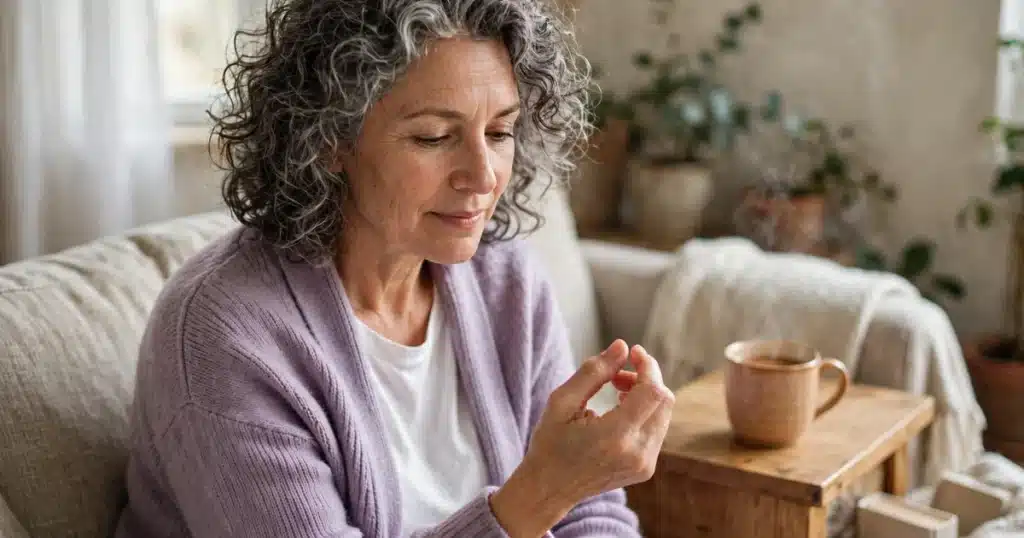
Numbness, tingling, and “pins and needles” in the hands and feet are a common side effect of some chemotherapy medicines. This effect, usually called peripheral neuropathy, happens when treatment irritates or damages the small nerves furthest from the centre of the body. It cannot be switched off at home, but careful habits can protect numb hands and feet from injury, and telling your care team early — as soon as you notice it — gives them the most options for helping you.
Key Takeaways
- Some chemotherapy medicines affect the peripheral nerves — the nerves in the hands and feet — causing numbness, tingling, burning, or reduced feeling.
- The main risk of numbness is injury you do not notice: burns from hot water, cuts, and trips or falls. Protecting numb hands and feet is the most useful thing you can do at home.
- Always test water temperature with a thermometer or a less-affected part of your body, wear gloves for washing up and oven mitts for cooking, and check your feet daily for cuts or blisters.
- Tell your care team as soon as symptoms appear, and tell them again if they grow worse or start interfering with buttons, keys, writing, or walking. Decisions about treatment doses belong to them — reporting early protects you.
- Do not start supplements, vitamins, or products marketed for nerve symptoms without asking your team first; some can interfere with treatment.
What Chemotherapy Neuropathy Is
Your nervous system includes long nerves that carry feeling from your hands and feet back to your brain. Some chemotherapy medicines, as they work against cancer cells, also affect these peripheral nerves. When the nerves are irritated or damaged, the signals they send become unreliable: feeling may fade, arrive distorted as tingling or burning, or become oversensitive so that light touch or cold feels unpleasant.
Symptoms usually begin in the fingertips and toes — the far ends of the longest nerves — and can spread in the pattern doctors sometimes call “glove and stocking.” Not everyone on chemotherapy develops neuropathy, and its severity varies widely from person to person and from one medicine to another. Our pillar guide on living through breast cancer treatment places this effect among the other everyday experiences of treatment, and our guide to chemotherapy and what to expect explains how treatment cycles work.
What It Can Feel Like Day to Day
| In the hands | In the feet |
|---|---|
| Tingling or “pins and needles” in the fingers | Tingling, buzzing, or burning in the toes and soles |
| Fingers feel clumsy; buttons, zips, jewellery, and coins become fiddly | Feet feel as if you are walking on pebbles, sand, or thick socks |
| Reduced sense of touch — dropping things, or gripping too hard or too lightly | Balance feels less certain, especially in the dark or on uneven ground |
| Cold water or cold weather feels unexpectedly painful | Shoes that once fit well start to rub without you noticing |
Symptoms may come and go around treatment cycles, may build gradually over a course of treatment, and can continue for a time after treatment ends before easing. For some people they fade substantially; for others a degree of change lingers. The pattern is individual, which is one reason your team will ask about it rather than assume.
Protecting Numb Hands
Numb fingers cannot warn you about heat, sharp edges, or pressure — so protection is mostly about substituting other checks for the feeling you have lost:
- Test water before it touches your hands. Use a bath or kitchen thermometer, or test with your elbow or forearm, where feeling may be better. Turn the hot tap down at the boiler if your household setup allows it, or run cold water first.
- Use gloves and mitts. Wear washing-up gloves for dishes and cleaning, and proper oven mitts — not a folded tea towel — for anything hot. Gloves also protect against cleaning products, which numb skin tolerates badly.
- Slow down with sharp things. Knives, graters, needles, and garden tools deserve extra care when grip and fingertip feeling are unreliable. Good lighting helps your eyes do the checking your fingers cannot.
- Look at your hands. Check daily for cuts, blisters, or sore spots you may not have felt happening, and clean and cover anything you find.
- Keep hands warm in cold weather if cold makes your symptoms flare — warm gloves are a comfort measure many people find genuinely helps day to day.
Protecting Numb Feet and Preventing Falls
Feet carry the twin risks of unnoticed injury and falls, because feeling in your feet is part of how you balance:
- Check your feet every day, including the soles — use a mirror or ask someone to help if you cannot see them. Look for cuts, blisters, redness, or anything stuck in the skin, and have anything you find looked at promptly.
- Wear well-fitting shoes that protect the whole foot, indoors as well as out. Shake shoes out before putting them on, and avoid walking barefoot, when you cannot feel what you are stepping on.
- Take extra care with hot water in baths and foot soaks — test the temperature first, every time.
- Make falls less likely: keep walkways at home clear, use handrails on stairs, get up slowly if you also feel light-headed from treatment, and use a night light if you get up in the dark. Wear shoes with firm, low heels rather than loose slippers or socks alone.
- Be honest about driving. If you cannot reliably feel the pedals, talk to your team before driving — your safety and everyone else’s matters more than convenience.
Everyday Workarounds for Fiddly Tasks
Life is full of small tasks that assume fingertip feeling: buttons, keys, phone screens, pill bottles, page-turning. Workarounds people commonly find useful include choosing clothes with larger buttons, zips, or elastic waists on treatment days; using a key turner or larger-grip utensils; asking the pharmacy about easier-to-open caps (while keeping medicines safely stored); and doing fiddly jobs slowly, seated, in good light, at the time of day your hands feel best. Preparing your chemo day bag with these days in mind — easy layers, slip-on shoes, nothing that needs fastening in a hurry — can take one pressure off treatment days. None of this is a treatment for the nerves themselves; it is how you keep life workable while they recover.

When to Report It — and Why Early Matters
Tell your care team about numbness or tingling as soon as you notice it, even if it seems minor, and update them if it worsens or starts affecting what you can do — fastening buttons, writing, walking safely, or sleeping. Do not wait for a routine review if symptoms are escalating quickly, if you have injured yourself without noticing, or if weakness develops, such as trouble lifting your foot or gripping objects.
Early reporting matters because the options available to your team are widest at the start. They may want to examine you, review which medicines you are receiving, and consider whether the plan should be adjusted — dose decisions of that kind belong entirely to them, and they can only make them if they know what you are experiencing. It also matters for ruling out other causes: not all numbness during treatment is from chemotherapy, and new or unusual symptoms deserve a proper look. Our overview of managing chemotherapy side effects gives the general rule that applies here: most side effects are far easier to address when they are reported small.
One caution belongs in this section. Supplements, vitamins, creams, and devices are marketed for nerve symptoms, and friends may suggest remedies that helped them. Some supplements can interfere with chemotherapy or with the team’s assessment of your symptoms, so check with your care team before starting anything of that kind — they would rather be asked than surprised.
Questions to Ask Your Care Team
- Is the chemotherapy I am receiving one that commonly affects nerves?
- What changes should I report to you straight away, and who should I call?
- How will you check my nerves at my appointments?
- Is it still safe for me to drive, cook, and bathe as usual?
- Are there any medicines or measures you would suggest for the discomfort?
- Is there anything I should avoid taking or using for these symptoms?
- What usually happens to these symptoms after treatment ends?
Frequently Asked Questions
Will the numbness go away after chemotherapy ends?
For many people, neuropathy eases gradually in the weeks and months after treatment finishes, as the nerves recover. For some, a degree of numbness or tingling lingers longer. Recovery is individual and cannot be promised either way — which is why reporting symptoms early, so your team can respond, is the most useful step you can take.
Should I stop or reduce my chemotherapy if my hands go numb?
Never make that decision on your own. Tell your team about the symptoms promptly — they will weigh the neuropathy against the purpose of your treatment and decide whether any adjustment is needed. That balancing is precisely their job, and they can only do it with accurate information from you.
Are there vitamins or supplements I should take for nerve symptoms?
Do not start any supplement for neuropathy without asking your care team first. Some products can interfere with chemotherapy or affect how the team interprets your symptoms. If a deficiency or another cause is found, your team will recommend what is appropriate for you — self-prescribing is a risk not worth taking during treatment.
Why are my symptoms worse in cold weather?
Cold sensitivity is a commonly reported feature of nerve irritation during chemotherapy: cold water, cold air, and even cold drinks can trigger tingling or discomfort in affected hands, feet, or the throat with some medicines. Keeping warm and avoiding sudden cold exposure helps many people day to day, and it is worth mentioning the pattern to your team.
When is numbness something to call about the same day?
Call promptly if symptoms are rapidly getting worse, if you notice new weakness — such as foot drop or being unable to grip — if you have burned, cut, or injured yourself without feeling it, or if numbness appears suddenly in a new pattern, such as on one side of the body. Your team would always rather hear from you early.
Related Articles
- Living Through Breast Cancer Treatment: A Practical Day-to-Day Guide
- Chemotherapy for Breast Cancer: What to Expect
- Managing Chemotherapy Side Effects
- Mouth Sores During Chemotherapy: Everyday Care and Comfort Basics
- Chemo Day Bag Checklist: What to Pack for Infusion Days
This article is for general educational purposes only and is not medical, legal, or financial advice. It does not replace professional care. Talk to your doctor or care team about your own situation. If you think you may have a medical emergency, call 911.