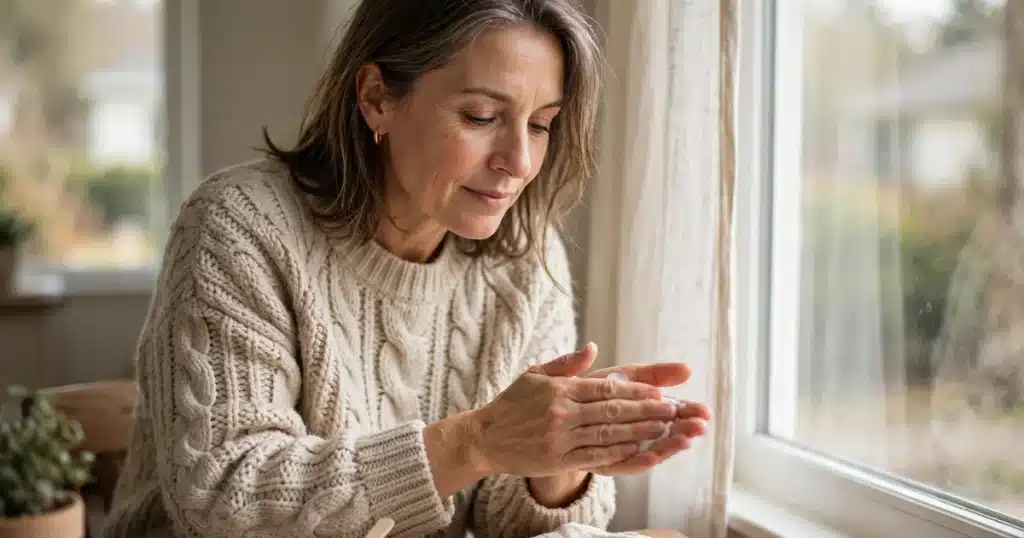
Nail changes are a common and often overlooked effect of chemotherapy. Nails may darken or develop lines, grow more slowly, become brittle or ridged, lift away from the nail bed, or feel sore — and toenails are frequently affected as well as fingernails. Most changes are temporary and grow out after treatment ends. Gentle everyday care — keeping nails clean, short, and moisturised, and protecting them from knocks and harsh chemicals — helps keep them comfortable and lowers the chance of infection while treatment continues.
Key Takeaways
- Chemotherapy affects nails because nail cells divide quickly, like the cancer cells the treatment targets — so lines, colour changes, and brittleness are common.
- Typical changes include dark or pale bands, ridges, splitting, nails lifting from the bed, and soreness around the edges.
- Basic care does most of the work: keep nails clean and trimmed short and straight, moisturise hands and cuticles, and wear gloves for washing up and housework.
- Avoid biting or tearing nails, cutting cuticles hard, and harsh polish removers while your nails are fragile.
- Call your care team promptly about pain, swelling, redness, warmth, or oozing around a nail — during chemotherapy, signs of infection should never be left to wait.
Why Chemotherapy Changes Nails
Nails grow from a root of rapidly dividing cells under the skin at the base of the nail. Chemotherapy is designed to attack fast-dividing cells, and it cannot perfectly spare the healthy ones — which is why hair, the lining of the mouth, and nails are so often affected, as our pillar guide to living through breast cancer treatment explains across the whole range of everyday effects. When the nail root is disrupted, the nail that grows out carries a record of it: a groove, a band of different colour, or a weaker stretch of nail that splits easily weeks later. Because fingernails and toenails grow slowly, a change caused by one cycle of treatment may only become visible some time afterwards.
The Changes You Might See
Not everyone gets every change, and the pattern depends partly on which medicines are in your regimen. Common ones include:
- Colour changes. Nails may develop dark bands or patches, pale or white areas, or a yellowish tint. These usually grow out with the nail.
- Lines and ridges. Horizontal grooves or bands can appear across the nail — each one a marker of a period when growth was disrupted — along with vertical ridging.
- Brittleness. Nails may become dry, thin, and prone to splitting, peeling, or breaking at the edges.
- Lifting. A nail may partly separate from the nail bed beneath it, which can make it catch on things and feel tender.
- Soreness around the edges. The skin beside the nail can become dry, cracked, or inflamed, and hangnails are more likely.
- Slower growth. Nails may simply grow more slowly, and toenails — already slower — can lag for a long time.
Our overview of managing chemotherapy side effects puts nail changes in context alongside the other effects you may be juggling, from mouth sores to tingling hands and feet.
Everyday Nail Care During Treatment
| Care step | How to do it | Why it helps |
|---|---|---|
| Keep nails short | Trim straight across with clean clippers; file edges smooth | Short nails catch and tear less, and harbour less dirt |
| Moisturise daily | Work a plain, gentle cream or oil into hands, nails, and cuticles | Counters dryness and cracking in skin and nail alike |
| Gloves for wet work | Wear gloves for washing dishes, cleaning, and gardening | Protects fragile nails from water, chemicals, and knocks |
| Gentle washing | Wash hands with mild soap, pat dry, moisturise afterwards | Keeps the area clean without stripping already-dry skin |
| Leave cuticles mostly alone | Push back only very gently after a shower, if at all; never cut them hard | Cuticles seal out germs — cutting them opens a door to infection |
| Comfortable footwear | Choose shoes with room in the toe box; keep toenails trimmed straight | Reduces pressure and rubbing on lifting or sore toenails |
The theme running through the table is gentleness: during chemotherapy your nails and the skin around them have less reserve than usual, so small kindnesses — cream, gloves, short nails — prevent most of the trouble.
Protecting Weak Nails
A few habits are worth dropping while your nails are fragile. Biting or picking at nails and hangnails tears the skin and invites infection; if a hangnail catches, trim it cleanly with clean clippers instead of pulling. Avoid using your nails as tools — prising lids, scratching labels — because a weakened nail can lift or tear. If a nail has partly lifted, keep it clean and dry, trim the loose part carefully if it catches, and do not tape it down tightly or try to glue it; mention it to your care team at your next visit, or sooner if it becomes sore.
Household chemicals deserve respect too: cleaning sprays and detergents that were merely drying before treatment can now sting cracked skin and worsen brittleness, which is another reason gloves earn their place. These small-patient-care habits sit alongside the other comfort basics in our guide to oral care during chemotherapy — different body part, same principle of gentle protection.
The Polish Question
People often ask whether they can wear nail polish during chemotherapy. There is no single rule for everyone, and practices differ between treatment centres — some teams prefer nails left bare so they can see colour changes and check circulation easily, while others are content with polish between checks. The practical points most teams would agree on: avoid harsh removers, which dry and weaken fragile nails; take extra care with hygiene if you visit a salon, or do your nails at home with your own clean tools; and never use polish to cover a nail that is sore, lifting badly, or surrounded by red skin — that nail needs to be seen, not decorated. When in doubt, ask your own team what they prefer for you.
When to Call Your Care Team
During chemotherapy your immune defences may be lowered, so infections that would be minor at other times deserve prompt attention. Contact your team the same day if you notice around any nail:
- Pain that is new, worsening, or throbbing
- Redness, swelling, or warmth in the skin beside the nail
- Pus, oozing, or a bad smell
- A nail that has lifted completely, torn, or bled
- Redness spreading up the finger or toe, or fever alongside any of the above
These are the same “report it early” instincts that apply to numb or tingling hands and feet, covered in our article on neuropathy in hands and feet during chemotherapy. Mention milder changes at routine appointments too — your team would rather hear about them than have you quietly put up with them. The American Cancer Society at cancer.org also publishes general guidance on managing treatment side effects.
After Treatment Ends
Once chemotherapy finishes, the nail root recovers and new, healthy nail grows in from the base — the bands, grooves, and fragile sections gradually travel outward and are trimmed away. Fingernails renew noticeably sooner than toenails, which take much longer to replace themselves fully, so toenail changes can linger long after you feel otherwise recovered. If a nail still looks abnormal a long while after treatment, or one single nail behaves differently from all the others, mention it at a follow-up visit so it can be looked at properly. Individual experiences differ, and your own care team knows your regimen and your history — their advice governs your case.
Questions to Ask Your Doctor
- Are nail changes expected with the medicines in my regimen?
- Is there anything specific you want me to do — or avoid — for my nails and skin?
- What is your preference about nail polish during my treatment?
- Which nail symptoms should make me call straight away rather than wait for my appointment?
- One of my nails has lifted — can you look at it and tell me how to care for it?
Frequently Asked Questions
Why have dark lines appeared across my nails?
Lines and bands are one of the most common nail responses to chemotherapy: each marks a period when the nail root’s growth was disturbed by treatment. They are usually harmless and grow out with the nail after treatment ends. If a single dark streak appears on one nail only, or changes shape, show it to your team so they can check it in person.
My nail is lifting away from the bed. What should I do?
Keep it clean and dry, trim any loose edge carefully so it does not catch, and avoid taping or gluing it down. Lifting is a known chemotherapy effect, but because the gap can collect moisture and germs, mention it to your care team — promptly if the area becomes sore, red, or swollen.
Can I get a manicure or pedicure during treatment?
Many people do their own gentle nail care at home during chemotherapy, with their own clean tools, to reduce infection risk. If you visit a salon, hygiene standards matter a great deal while your immune system is lowered, and some teams advise against it during treatment. Ask your own team what they recommend for you.
Will my nails go back to normal?
In most cases, yes — once treatment ends, healthy nail grows in from the base and the damaged sections are gradually trimmed away. Toenails take considerably longer than fingernails to renew. If a change persists long after treatment, or affects only one nail, have it checked at a follow-up visit.
Should I take a supplement to strengthen my nails?
Be cautious: supplements can interfere with treatment, and no supplement should be started during chemotherapy without your team’s knowledge. Tell your oncologist about anything you are taking or considering — including products marketed for hair, skin, and nails — so they can judge it against your regimen.
Related Articles
- Living Through Breast Cancer Treatment: A Practical Day-to-Day Guide
- Managing Chemotherapy Side Effects
- Mouth Sores During Chemotherapy: What Helps and When to Call
- Numbness and Tingling in Hands and Feet During Chemotherapy
- Hair Loss During Chemotherapy: What to Expect
This article is for general educational purposes only and is not medical, legal, or financial advice. It does not replace professional care. Talk to your doctor or care team about your own situation. If you think you may have a medical emergency, call 911.