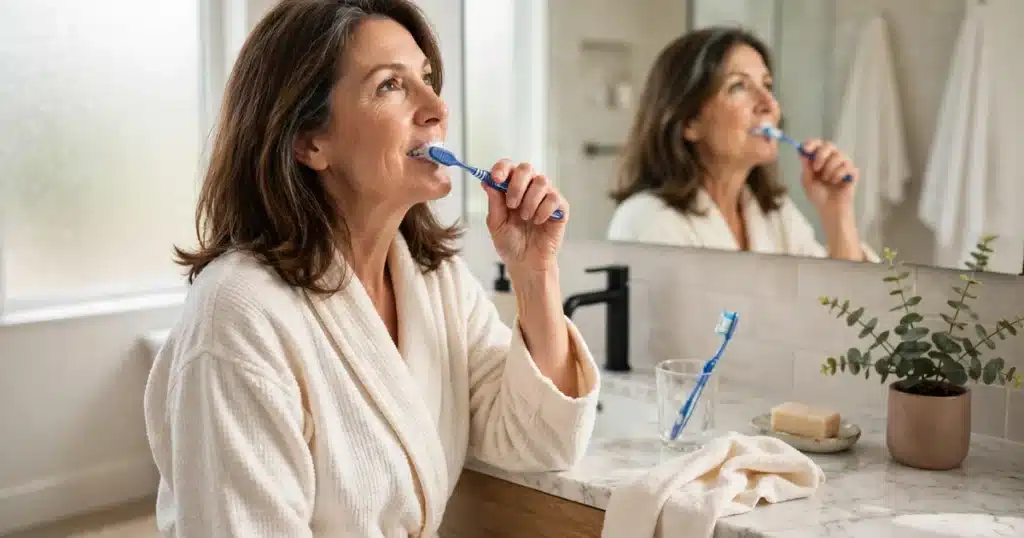
Chemotherapy can leave your mouth sore, dry, and sensitive, so oral care during treatment needs to be gentle rather than vigorous. The routine that protects your mouth is simple: a soft toothbrush, gentle brushing, regular rinsing with plain water, and care for your lips. This guide sets out that routine step by step — including what to be careful with, and the signs that mean you should call your care team rather than manage on your own.
Key Takeaways
- Clean matters, scrubbing does not: use a soft or extra-soft toothbrush, gentle strokes, and brush at least twice a day — after meals and before bed if you can manage it.
- Rinse little and often with plain water through the day to keep your mouth moist and clear of food debris.
- Keep lips protected with a plain, gentle lip balm applied regularly, so cracks do not get the chance to form.
- Strong flavours and alcohol-based mouthwash can sting a treatment-sore mouth. Ask your care team before starting, switching, or stopping any mouth product.
- Tell your team early about mouth pain, white patches, bleeding, or a dental problem — and never start home remedies or new dental treatments without asking them first.
Why Chemotherapy Affects Your Mouth
Chemotherapy works by damaging cells that divide quickly. Cancer cells do that — but so do the healthy cells lining your mouth, which replace themselves constantly. When that lining cannot repair itself as fast as usual, it becomes thin, dry, and sore, and small ulcers can form; doctors call this inflammation mucositis. Our guide to mouth sores during chemotherapy covers the soreness itself in depth — what it feels like, which foods soothe and which sting, and the comfort basics. This article focuses on the care routine that sits underneath: how to clean and protect a mouth that treatment has made fragile. Our pillar guide on living through breast cancer treatment places mouth care among the other everyday routines of treatment life.
Two consequences follow from that fragility, and they explain every recommendation in this guide. First, a sore mouth is more easily irritated — by firm brushing, strong flavours, alcohol, and rough food — so everything needs softening. Second, a sore mouth is more vulnerable to infection, because the lining that normally keeps bacteria out is damaged and your infection-fighting cells are lower than usual. Gentle cleaning is therefore not cosmetic; it is the main protection you control yourself.
Your Gentle Daily Routine
The routine itself is short. What matters is doing it consistently, including on tired days:
- Brush softly, at least twice a day. Use a soft-bristled toothbrush — extra-soft if your usual one feels harsh — with gentle, small strokes. Brushing after meals and before bed is a good rhythm when you can manage it.
- Look after the brush. Rinse it after use and let it air-dry between brushings. Replace it regularly during treatment, and ask your team if they advise anything more specific.
- Rinse with plain water, little and often. A rinse after meals and snacks, and whenever your mouth feels dry or coated, keeps food and bacteria from sitting against sore tissue.
- Be gentle with flossing. If you already floss and it is comfortable and pain-free, gentle flossing is usually fine. Skip anywhere that bleeds or hurts, and mention it at your next check-in — fragile gums bleed easily during treatment.
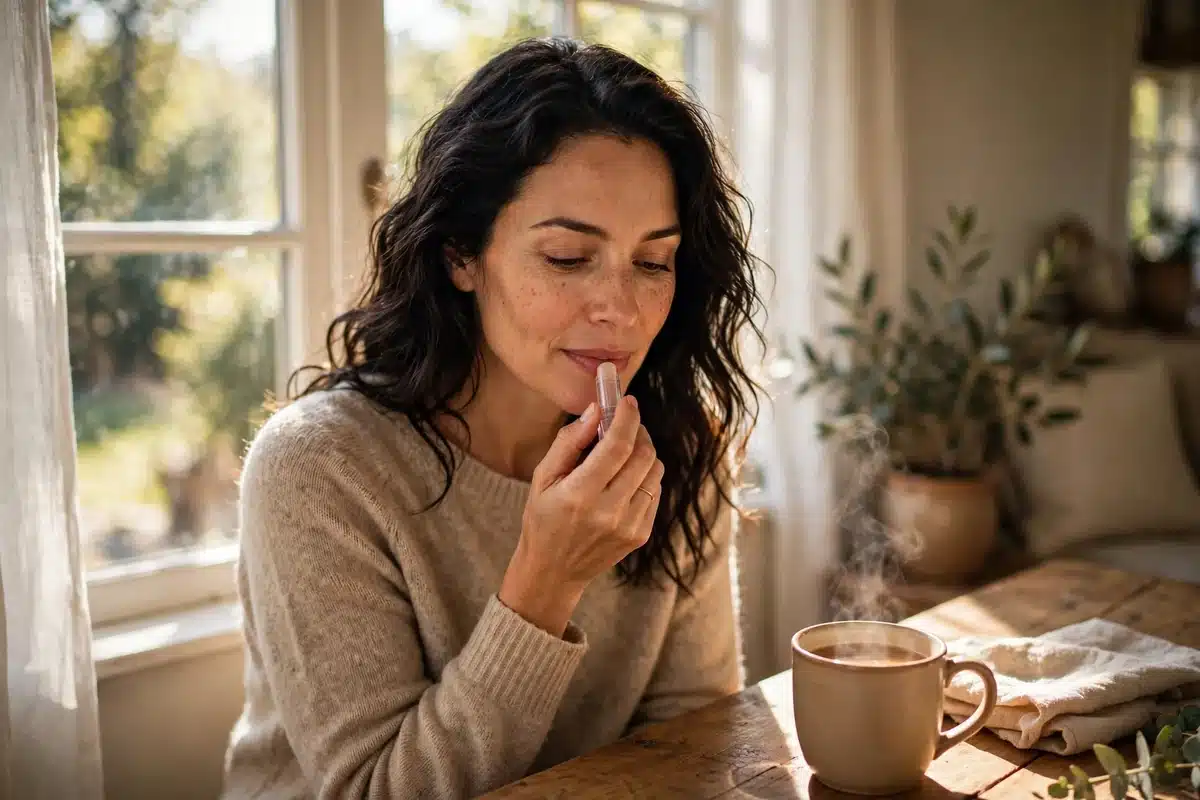
- Protect your lips. Apply a plain, gentle lip balm regularly through the day, before the skin cracks rather than after. Keeping one in your chemo day bag as well as at home makes this easy to keep up.
- If you wear dentures, keep them clean, wear them only as much as is comfortable — especially at mealtimes — and tell your team if they start to rub, because sore spots under a denture can break down quickly during treatment.
Choosing Toothpaste and Mouthwash
Product choice is where well-meaning shopping trips most often go wrong, so the rule is simple: gentle, plain, and checked with your team before you change anything.
- Toothpaste. Strong mint and whitening formulas can burn a sore mouth. If yours stings, that is worth raising — milder options exist, and your team can point you to the kind they usually suggest for people on your treatment.
- Mouthwash. Many familiar mouthwashes contain alcohol, which can dry and sting damaged tissue. Do not assume a product is suitable because it is on a pharmacy shelf — ask your team before using one, and before switching.
- Rinses your team suggests. Your team may recommend a simple rinse made at home, such as a salt-water or baking-soda rinse, and will tell you the proportions they want you to use. Follow their version rather than recipes from the internet, which vary widely.
- Anything new. Medicated gels, sprays, lozenges, supplements, and home remedies all belong in the “ask first” category. Some genuinely help; others irritate or interact with treatment. Your team would rather answer a quick question than treat a sore mouth made worse by a remedy.
Dental Care Before and During Treatment
Your mouth is easiest to protect if problems are dealt with before they meet chemotherapy. If there is time before treatment starts, and your oncology team agrees, a dental check-up can catch the loose filling, sharp edge, or early decay that would otherwise rub or flare up mid-treatment — a sharp tooth edge against a chemo-sore mouth is miserable and largely avoidable. Tell the dentist you are about to start chemotherapy, so any work can be planned and timed sensibly.
Once treatment is under way, the arrangement flips: your oncology team leads. Non-urgent dental work is usually best discussed with them first, because timing it around your blood counts and treatment cycle matters, and they will liaise with your dentist where needed. If dental pain strikes during treatment, do not book an emergency extraction on your own — call your oncology team first, the same day, and let them coordinate. And keep both sides informed: your dentist should know you are in treatment, and your care team should hear about any dental issue early, while it is still small.
Dry Mouth and Taste Changes
A dry mouth is uncomfortable in itself, and it also raises the risk of tooth decay and infection, because saliva normally washes and protects the mouth. Frequent small sips of water through the day are the simplest help; many people also find that ice chips, or sugar-free sweets or gum, keep saliva moving for a while. Keep water by your bed as well — dry mouth is often worst at night. Our article on eating well during breast cancer treatment covers the related problem of taste changes, which often travel with dryness and soreness: flavours may turn metallic or bland, and serving food lukewarm rather than hot is usually kinder on both counts. If dryness is severe or persistent, mention it — your team may have further suggestions suited to your situation.

When to Call Your Care Team
Call promptly — do not wait for your next scheduled appointment — if you notice any of the following:
- Mouth pain that is getting worse, or that stops you eating or drinking enough
- New white or creamy patches in your mouth, or spreading redness — possible signs of a mouth infection such as thrush
- Bleeding from your mouth or gums that does not settle, or ulcers that are not starting to heal as your cycle goes on
- A fever, chills, or feeling suddenly unwell
- Tooth pain, a broken tooth, or a denture sore that is breaking the skin
- Difficulty swallowing, or signs of dehydration such as very little urine or dizziness
Mouth problems matter more during chemotherapy because your ability to fight infection is reduced, so the threshold for calling is deliberately low. Our overview of managing chemotherapy side effects makes the same point across all side effects: report them early, while they are small and easier to settle.
Questions to Ask Your Care Team
- What exactly do you recommend for my daily mouth care during this treatment — and how often?
- Is my toothpaste suitable, or should I switch to something milder?
- Do you want me to use a rinse? If so, which one, and in what proportions?
- Should I see my dentist before treatment starts, and is there anything they should know?
- What can I safely use if my mouth becomes very sore or dry?
- Which mouth symptoms mean I should call you straight away?
Frequently Asked Questions
How often should I brush my teeth during chemotherapy?
At least twice a day, gently, with a soft brush — and after meals as well if that is comfortable. The goal is a clean mouth, not a scrubbed one. On days when your mouth is at its sorest, keep going with soft brushing and rinsing rather than stopping, and tell your team if even gentle brushing becomes too painful.
My gums bleed when I brush. Should I stop?
Do not stop cleaning your teeth — plaque left in place irritates sore gums further. Brush more gently, rinse afterwards, and tell your care team: bleeding gums are common during treatment, when the cells that help blood clot are lower than usual, and your team may adjust their advice or want to check your counts.
Is mouthwash safe to use during chemotherapy?
It depends entirely on the product. Alcohol-based mouthwashes can burn and dry a treatment-sore mouth, and medicated ones should only be used when your team has chosen them for you. Before using any mouthwash — or switching the one you have — ask your team what suits your situation.
Should I see a dentist before chemotherapy starts?
Often, yes, if time allows and your oncology team agrees. A check-up can fix small problems — a sharp edge, a loose filling, early decay — before they have a sore, fragile mouth to contend with. Make sure the dentist knows treatment is coming so anything they do is timed well. If treatment is starting urgently, your oncology team will tell you whether dental work should wait.
Can I still floss during treatment?
If flossing is already your habit and you can do it gently without pain or bleeding, it is usually fine to continue. Skip any spot that bleeds or hurts, be extra gentle throughout, and mention any bleeding at your next check-in. If you have never flossed, treatment is not the time to start — your mouth does not need new stresses right now.
Related Articles
- Living Through Breast Cancer Treatment: A Practical Day-to-Day Guide
- Mouth Sores During Chemotherapy: Everyday Care and Comfort Basics
- Managing Chemotherapy Side Effects
- Eating Well During Breast Cancer Treatment
- Chemo Day Bag Checklist: What to Pack for Infusion Days
This article is for general educational purposes only and is not medical, legal, or financial advice. It does not replace professional care. Talk to your doctor or care team about your own situation. If you think you may have a medical emergency, call 911.