
Breast cancer awareness runs all year, but it has a rhythm: a winter moment of global cancer awareness, a spring and summer season of community walks and survivor celebrations, and a crescendo each autumn, when October’s Breast Cancer Awareness Month brings the year’s biggest cluster of days, campaigns, and events. Knowing the shape of the year helps you plan — when to join in, when to book your own screening conversations, and when simply to share a reminder with someone you love.
Key Takeaways
- October is the peak: Breast Cancer Awareness Month contains several focused observances, including Metastatic Breast Cancer Awareness Day and National Mammography Day.
- The rest of the year has its own beats — World Cancer Day in winter, survivor celebrations in early summer, and community walk and fundraising seasons in spring and autumn.
- Exact dates and local details change; confirm anything you plan to attend on the organising charity’s or health organisation’s official website.
- Use the calendar personally: attach your own habits — knowing your normal, keeping screening conversations current — to the year’s natural reminders.
- Awareness is a year-round posture, not a month. The calendar is a set of prompts; what you do between them matters most.
How the Awareness Year Flows
Awareness activity is not spread evenly across the calendar, and it was never designed to be. It clusters where history put it — overwhelmingly in October — and fills the rest of the year with a mixture of global cancer days, survivorship celebrations, and the fundraising walks and runs that charities schedule for kinder weather. The table below gives the shape of the year at the level this article stays at: months and seasons. That is deliberate. Campaigns shift, local events are announced locally, and the authoritative details for any given year live with the organisations running them — the American Cancer Society at cancer.org is a reliable place to check current campaigns. Our pillar guide to breast cancer awareness and resources covers the organisations behind the calendar in more depth.
| Season | What happens | A good personal response |
|---|---|---|
| Winter | World Cancer Day — a global awareness day for all cancers, held in winter — plus the year’s planning season for charities | Learn something new; check your own screening plan is current |
| Spring | Community walks, runs, and fundraising events begin in many areas; awareness talks and school and workplace sessions | Join an event; start the conversation with younger women in your life |
| Early summer | Survivor celebrations, including National Cancer Survivors Day, marked in early summer | Celebrate and support the survivors you know |
| Late summer into autumn | Walk season peaks; October campaigns are announced and build | Sign up, volunteer, or plan your October participation |
| October | Breast Cancer Awareness Month — including Metastatic Breast Cancer Awareness Day and National Mammography Day within it | Book if you are due; remind a friend; support an organisation |
| Late autumn and December | Giving season; the awareness year winds down and reflection begins | Donate or volunteer through official websites; carry the habits into the new year |
Winter and Spring: Global Days and Walking Season
The year opens quietly. In winter, World Cancer Day — an international awareness day spanning all cancers, led by global cancer organisations — invites a broader conversation: prevention, early detection, and support across every cancer type, breast cancer included. It is a useful moment for the fundamentals rather than any single campaign: are you familiar with your own normal, is your screening conversation with your doctor up to date, do you know your family history as well as you could?
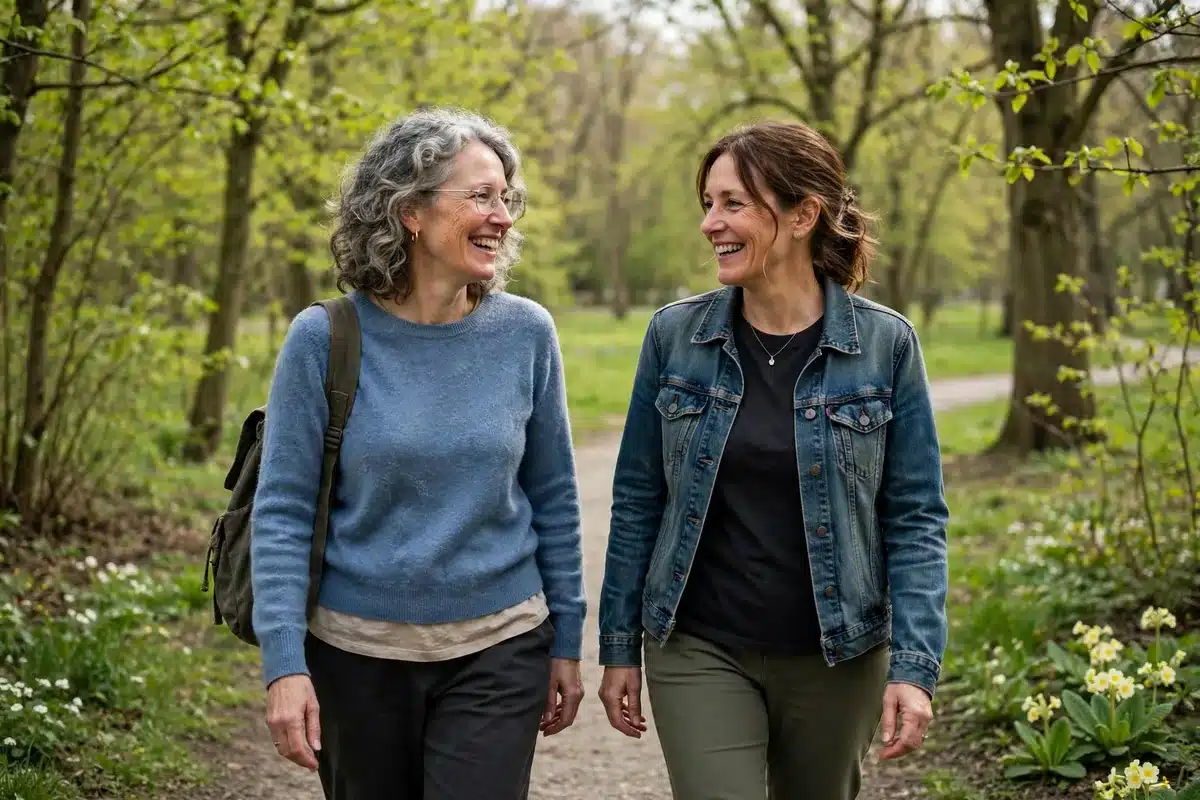
As spring arrives, awareness moves outdoors. Charity walks, runs, and community events begin in many parts of the country, and they do a kind of work no poster can: they make the disease visible as a community concern and put survivors, families, and supporters literally side by side. Spring is also when conversations with younger generations naturally happen at these events — our guide to breast cancer awareness for young women is written for exactly those conversations, since knowing your normal and your family history begins long before screening does.
Summer: Survivors and Community
Early summer brings the year’s most celebratory beat: National Cancer Survivors Day, an established annual celebration of people living with and beyond cancer, marked with community gatherings across the country. Its tone is different from October’s — less about detection, more about life after diagnosis: survivorship, gratitude, and the honest acknowledgement that life after cancer is its own chapter with its own needs.
Through the rest of summer, local activity continues at a gentler pace — support-group events, community fundraisers, and the behind-the-scenes planning for autumn. It is also, practically, a good season for your own quiet administration: if the autumn campaigns will prompt you to book a screening or chase a follow-up conversation, summer is when diaries have room. Awareness done well is unhurried.
Autumn: The Build-Up and October Itself
By late summer the walk and run season is in full swing and October is visibly approaching — campaigns are announced, workplaces and schools plan their activities, and the pink ribbon starts appearing. Then comes October itself: Breast Cancer Awareness Month, the peak of the calendar, when education, fundraising, remembrance, and support share one crowded month.
Within the month sit two focused observances. Metastatic Breast Cancer Awareness Day falls in October and turns the spotlight to people living with advanced, stage IV breast cancer — whose experience can be drowned out by the month’s “early detection” cheer, and whose community uses the day to insist, rightly, that awareness includes them; our article on Metastatic Breast Cancer Awareness Day explores what the day means to that community. National Mammography Day also falls during October, narrowing the whole month’s message to one practical action — knowing your screening plan and booking if you are due — as our guide to National Mammography Day explains. And woven through the month, usually less visibly, is awareness that breast cancer affects men as well as women — a theme our article on male breast cancer awareness takes up.
After October: The Quiet Months
November arrives and the pink comes down — which is precisely why the quiet months belong in this calendar. Late autumn is the traditional giving season, when many people make their charitable donations for the year; if breast cancer organisations are among yours, give through their official websites so you know exactly who you are supporting. December and the new year are for reflection and reset: what did October prompt you to intend, and did it happen? A screening booked, a donation made, a conversation held — or a note to do it in the year now starting.
The deeper point of the whole calendar is continuity. The history of breast cancer awareness shows a movement that grew from isolated voices into a month the whole country recognises — but the habits that actually protect people operate in all twelve months: knowing your normal, reporting changes promptly, keeping your personal screening plan current with your own doctor. Individual situations differ, and your plan is a matter between you and your care team; the calendar simply offers a dozen natural moments a year to remember it.
Using the Calendar Well
- Pick your moments. You do not need every observance. Choose two or three that fit your life — a spring walk, Survivors Day, October — and do those properly.
- Attach a personal action to each. An event plus a habit: the walk, and the screening conversation; October, and the reminder text to a friend.
- Verify before you go. Dates, times, and details for local events change yearly. Check the organising organisation’s official website rather than relying on shared posts.
- Include, don’t just observe. Invite the friend who was treated last year; make space in October content you share for metastatic voices; remember the men.
- Let the quiet months count. Use the post-October calm for the administration awareness prompts: booking, donating, updating your family history notes.
Questions to Ask Your Doctor
- Is my personal screening plan up to date, and when should we next review it?
- Given my family history, is there anything about awareness or screening I should approach differently?
- Between appointments, which changes should I report straight away rather than waiting?
- Are there reputable local organisations or support services you recommend I know about?
Frequently Asked Questions
Why does this calendar not give exact dates?
Because exact dates are set and sometimes adjusted by the organisations behind each observance, and local events are announced locally. Month and season are the stable facts; the precise day for this year’s event is best confirmed on the official website of the organisation running it, close to the time. That habit also protects you from outdated information in old posts and forwards.
Is Breast Cancer Awareness Month the only time that matters?
It is the biggest moment, not the only one. October concentrates attention, money, and energy in a way nothing else matches — but screening, self-awareness, and support run all year, and the calendar’s other beats, from World Cancer Day to Survivors Day, exist to carry the message through the quieter months.
What is the best way to take part if I cannot attend events?
Plenty of participation is private or online: book your own screening conversation, remind a friend, share material from recognised organisations, or donate through an official website. Awareness is measured in actions taken, not events attended — the smallest item on that list may matter most.
I am a survivor and October is hard for me. How do others handle that?
You are far from alone — many survivors and people in treatment find the month’s cheerfulness and ubiquity genuinely difficult. Common responses include choosing one observance that feels right and skipping the rest, muting campaign content, and leaning on the year’s quieter beats instead. There is no duty to perform awareness; the calendar is a resource, not an obligation.
How can I tell if an awareness event or appeal is genuine?
Check that it traces back to a recognised organisation’s official website — established cancer charities and health organisations list their events there. Be cautious with appeals you cannot trace, forwarded messages with no source, and anyone collecting in ways the named organisation does not describe on its own site. When in doubt, go directly to the organisation and give or register there.
Related Articles
- Breast Cancer Awareness and Resources: The Complete Guide
- Breast Cancer Awareness Month, Explained: What October Is All About
- National Mammography Day: What It Is and How to Take Part
- Metastatic Breast Cancer Awareness Day
- The Pink Ribbon: Its Meaning and How It Became a Symbol of Awareness
- History of Breast Cancer Awareness
This article is for general educational purposes only and is not medical, legal, or financial advice. It does not replace professional care. Talk to your doctor or care team about your own situation. If you think you may have a medical emergency, call 911.