
A bone density test is a quick, painless scan that measures how strong your bones are — and after breast cancer treatment, it earns a place in many follow-up plans because some treatments, and the hormonal changes that come with them, can thin bones over time. The most common test is a DEXA scan (dual-energy X-ray absorptiometry), which uses a low dose of X-rays to measure density at places like the hip and spine. This article explains why the test is discussed after treatment, what the scan itself is like, and how to understand — in general terms — what its results lead to.
Key Takeaways
- Bone density testing measures bone strength; the usual test is a DEXA scan, which is quick, painless, and uses a low dose of radiation.
- It comes up after breast cancer because some treatments and treatment-related hormonal changes can reduce bone density silently over time.
- The result sorts bone health into broad categories — normal, lower-than-normal density, and osteoporosis — and helps your team judge what, if anything, to do next.
- Whether you are offered the test, and how often it is repeated, is an individual decision your care team makes from your treatment history and overall picture — there is no single schedule this article can give you.
- Everyday supports — weight-bearing activity, adequate nutrition, not smoking, and care with fall risks at home — work alongside any monitoring plan.
Why Bones Are Tested After Breast Cancer
Bone is living tissue, constantly being broken down and rebuilt. For much of adult life the two processes balance; over time, and especially when estrogen levels fall, the balance can tip toward loss. Some breast cancer treatments work precisely by lowering estrogen or blocking its effects, and treatment can also bring on menopause earlier than it would otherwise have arrived. Ageing itself leans the same way. The result is that bone density — how much mineral is packed into the bone — can drift downward during and after treatment, quietly, with no symptoms until a bone breaks.
That silence is the reason for testing. A density scan gives your team a measurement to act on before a fracture makes the point instead. Our pillar guide to life after breast cancer places bone checks within the wider pattern of survivorship care, and our article on bone health after breast cancer covers the everyday factors that support bones day to day. Testing and daily habits are two halves of the same subject: one measures, the other maintains.
What the Test Is: DEXA in Plain Terms
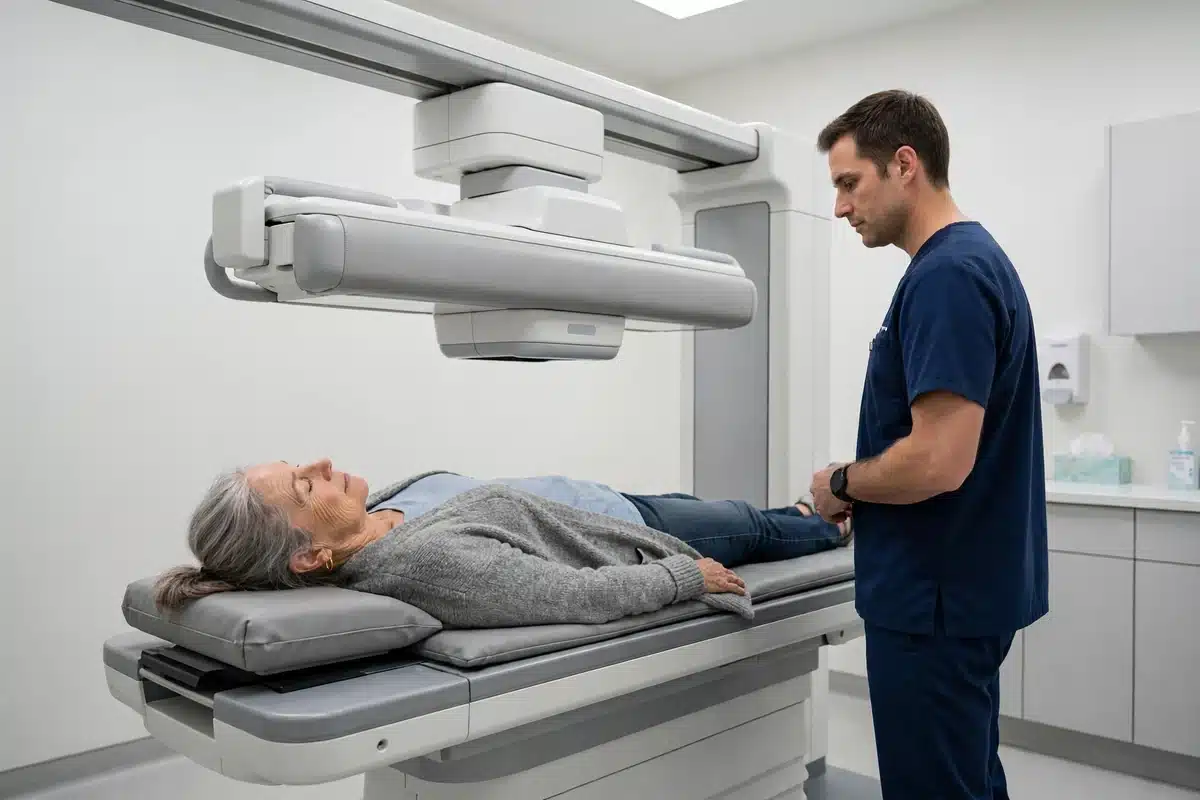
DEXA is the standard way bone density is measured. You lie on a padded table, fully clothed, while a scanner arm passes slowly over the areas being measured — most often the hip and the lower spine, sometimes also the wrist. There is no tunnel, no injection, no contrast dye, and nothing touches you beyond the table itself. The radiation dose is low — a small fraction of what many routine imaging tests involve. The whole appointment is usually brief, and you can drive yourself home and carry on with your day.
The scan produces scores that compare your bone density with reference values. One common comparison — the T-score — sets your result against the average for a young adult; another, the Z-score, compares you with people of your own age. Your team interprets these numbers together with your history rather than treating any single figure as a verdict, which is why the conversation afterward matters more than the printout.
| How results are broadly described | What it generally means | What usually follows |
|---|---|---|
| Within the normal range | Bone density is in the expected range for the comparison used | Everyday bone-supporting habits, and monitoring as your team advises |
| Lower than normal (often called low bone density or osteopenia) | Density is below the normal range but not into the osteoporosis range | Closer attention to lifestyle factors, possibly repeat testing in future, and treatment discussion based on your overall risk |
| Osteoporosis range | Density is low enough that fracture risk is considered substantially raised | Your team will discuss options for protecting your bones, which may include medication, alongside lifestyle measures |
These categories are a general sketch of how results are framed, not a reading of any individual scan. Where your result falls, and what it means alongside your treatment history, age, and other health factors, is a judgement your own care team makes with the full picture in front of them.
What Happens at the Appointment
- Before: Little preparation is usually needed. You may be asked about recent imaging tests, your height and weight, and any calcium supplements or medicines — follow whatever instructions the center gives you with the appointment.
- Clothing: Comfortable clothes without metal zips, buttons, or underwire over the areas being scanned make things simpler; you may be offered a gown if needed.
- During: You lie still on your back while the scanner arm moves over you. It does not enclose you and does not hurt. The technologist may position your legs with a support to angle the hip correctly.
- After: Nothing to recover from. Results typically go to the team that requested the test, who discuss them with you — ask, when you book, how and roughly when the result will reach you, so you are not left wondering.
Understanding the Result, in General Terms
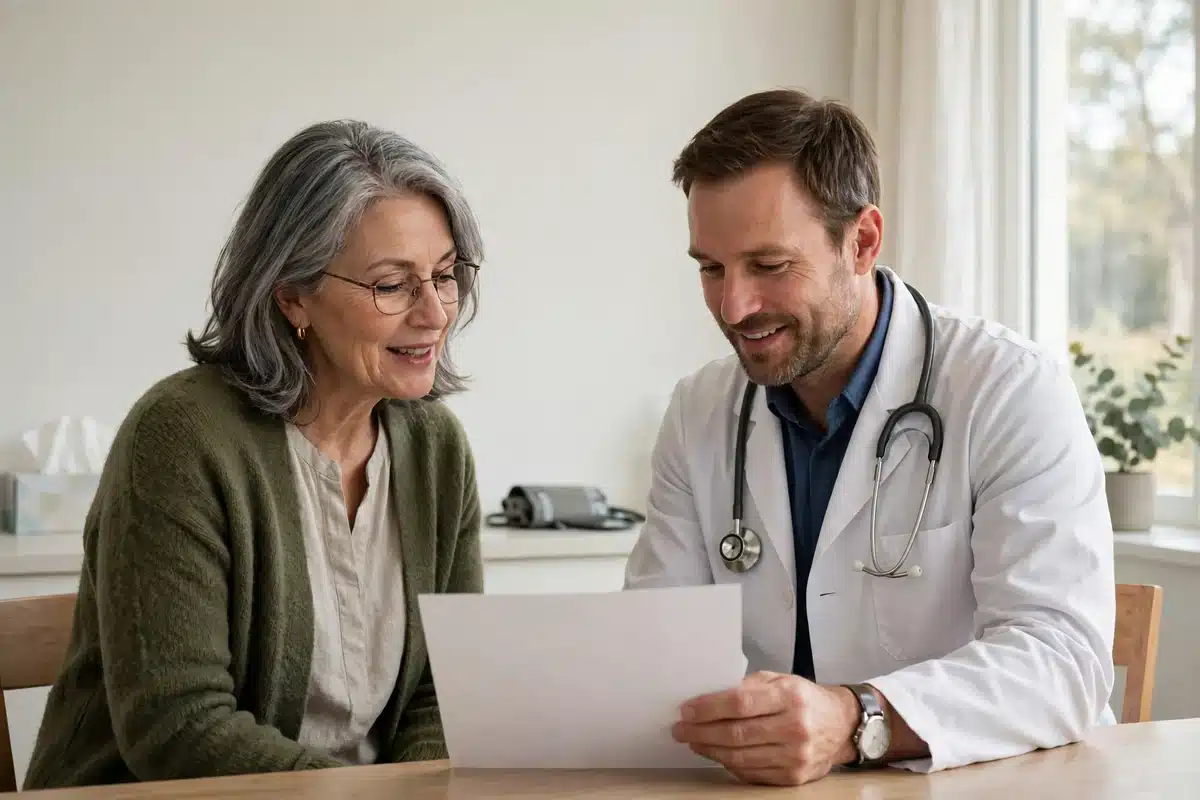
A result that surprises you — lower than you expected — is worth meeting with questions rather than alarm. Bone density changes slowly, and a single measurement is one point on a line; what matters most is the direction of travel, which is why teams value comparison with earlier scans done on similar equipment. Ask what your result was, how it compares with any previous test, and which parts of your history most influenced how the team reads it.
It also helps to keep the result in proportion. Low bone density is a risk factor to manage, not a catastrophe that has occurred. It responds to attention: activity, nutrition, fall prevention, and — where a team advises it — medication all play their parts. The scan’s job is to start that conversation early, while the options are gentle ones.
What Follows a Result
What happens next depends on the whole picture, and there is no standard timetable this article can hand you. How often density testing is repeated — if it is — depends on your first result, the treatments you are receiving or have received, and your other risk factors; those judgements belong to your care team, and current guidance is published by the American Cancer Society (cancer.org) and the National Cancer Institute (cancer.gov) for readers who want the background.
Between tests, the daily work is unglamorous and genuinely useful:
- Stay active in weight-bearing ways — walking and similar everyday loading are the bones’ natural signal to maintain themselves, within whatever limits your team sets for you.
- Eat with bones in mind — adequate calcium and vitamin D from your diet matter, and whether supplements suit you is a question for your team, who know your levels and medicines.
- Do not smoke, and go easy on alcohol — both work against bone strength over time.
- Make falling harder — clear trip hazards, good lighting on stairs, sensible footwear. Most fractures need a fall to happen; preventing the fall prevents the fracture.
Bone density testing sits inside a larger routine of staying well after treatment — our overview of routine health screenings for survivors maps how these checks fit together. Individual cases differ in every detail that matters here, so let your own doctor or care team turn this general picture into your plan.
Questions to Ask Your Doctor
- Given my treatment, is bone density testing part of my follow-up — and if not now, when might it be?
- What did my result show, and how does it compare with my previous scan?
- Which of my treatments or health factors most affect my bones?
- What should I be doing day to day to protect my bone strength?
- Do I need to think about calcium or vitamin D — and how would we know?
- When would you want to test again, and what changes should prompt me to ask sooner?
Frequently Asked Questions
Does a bone density scan hurt?
No. You lie on a padded table, fully clothed, while a scanner arm passes over you. There are no injections, no enclosed tunnel, and nothing presses on you. The hardest part for most people is simply lying still for a short while.
Why have I been offered this if I feel fine?
Because bone loss has no symptoms until a fracture. Feeling fine is entirely compatible with thinning bones, which is the point of measuring them: the scan finds the change while it is still a matter for gentle prevention rather than repair.
Is every breast cancer survivor tested?
No — it depends on your treatment, your menopausal status, your age, and your other risk factors. Some people are tested around the start of certain treatments, some during follow-up, and some not at all. If bones have never been mentioned in your follow-up, it is a fair question to raise at your next appointment.
My result says low bone density. Does that mean I will break a bone?
No. It means your fracture risk is higher than it would be with denser bones — one factor among several, including balance, muscle strength, eyesight, and the fall risks in your home. It is information your team can act on with you, not a prediction.
How often will I need this test?
That depends on your results and your situation, and there is no single schedule that fits everyone. Your care team decides the interval — if any — in your case; ask them what they are basing it on, and note it in your follow-up plan so the next test does not depend on memory.
Related Articles
- Life After Breast Cancer: A Survivorship Guide
- Bone Health After Breast Cancer: Protecting Your Bones During Survivorship
- Keeping Up With Routine Health Screenings After Breast Cancer
This article is for general educational purposes only and is not medical, legal, or financial advice. It does not replace professional care. Talk to your doctor or care team about your own situation. If you think you may have a medical emergency, call 911.