
A meal train is an organised rota in which friends, family, neighbours, and colleagues take turns delivering meals to a family during a hard stretch of illness or treatment. One person coordinates it, everyone signs up for a slot, and dinner quietly appears on the doorstep on the days it is needed most — no five casseroles on one Tuesday and none the next. This article walks through how to start one well: asking the family first, keeping the system simple, and handling the details that turn a kind offer into real help.
Key Takeaways
- A meal train is a planned rota with one coordinator — not a stream of unplanned drop-offs that the family has to manage.
- Ask the family first; let them set the terms: which days help, how much food, what they can and cannot eat, and how delivery should work.
- Keep the system simple: one shared sign-up everyone can see, a named coordinator, and one short briefing note for everyone cooking.
- Dietary needs come from the family and their care team — ask, never guess, and label every dish with what is in it.
- The default delivery is the doorstep: a cooler by the door, a text when it is there, and no expectation of a visit or a thank-you note.
- A good train flexes with treatment — pausing, shrinking, or switching to groceries and practical help when that serves the family better.
What a Meal Train Is — and Is Not
When someone is diagnosed with breast cancer, “let me know if I can do anything” gets said a hundred times — and usually leads to nothing, because the family is in no state to delegate. A meal train converts that goodwill into a schedule. Instead of offers, there are slots. The family simply knows that on Monday, Wednesday, and Friday, dinner is handled.
It is worth being clear about what it is not. It is not a rota of social visits with food attached — the family may be resting, at appointments, or keeping contact brief on their care team’s advice. It is not a nutrition programme: your job is a meal they will enjoy and can eat safely, not advice about what someone with cancer should be eating, which belongs to their care team alone. And it is not a test of your cooking — a simple, reliably delivered meal beats an ambitious one that never arrives. Our pillar caregiver handbook sets meal help in its proper place: one strand of practical support around a family, alongside transport, company, and paperwork help.
Step One: Ask the Family First
Before recruiting a single cook, ask — and accept the answer you get. Some families light up at the offer. Others are private, are already surrounded by family who cook, or simply do not want a procession at the door. A “no, thank you” is information, not rejection: ask what would help instead, and believe them.
Ask about privacy at the same time. Who may know about the diagnosis, and who may be invited onto the rota? Some families have told only a small circle, and a sign-up sheet circulating among near-strangers would distress them. Our article on helping a loved one share the news makes the governing principle plain: the patient controls what is shared, with whom, and when. A meal train should run entirely inside the boundaries the family has already set.
If they say yes, agree the shape of it together, in one short conversation: start date, rough length, which days of the week, and how they want to be contacted. Then take the organising off their hands completely — the gift is not only the food, but never having to think about it.
Step Two: One Coordinator, One Simple System
Every successful meal train has exactly one coordinator, and it is not the patient or the partner who is already caregiving full-time. A friend, sibling, neighbour, or colleague is ideal. The coordinator recruits the cooks, owns the schedule, sends reminders, and is the only person who contacts the family with questions — so the family answers everything once.
The system itself can be as plain as you like: a shared online calendar, a group message thread with a pinned schedule, or a simple sign-up page everyone can view. The tool matters far less than the rules:
- One place shows the whole rota — who is cooking, on which day, and any notes. If it cannot be seen at a glance, it is too complicated.
- One briefing note goes to every cook — the details from Step Three, in writing, so nothing depends on memory.
- Reminders come from the coordinator — a short message the day before each slot prevents the one failure every train fears: the day nobody comes.
- Changes go through the coordinator — swaps, pauses, extra needs. The family should never be the switchboard.

Step Three: Gather the Details That Matter
Most meal-train disappointments are detail failures, not cooking failures. The coordinator gathers these once and puts them in the briefing note:
| Detail | Why it matters |
|---|---|
| How many people are eating | Household size changes quantities; far too much becomes a burden of leftovers |
| Allergies and foods to avoid | Safety first — record exactly what the family and their care team have said, and pass it on verbatim |
| Tastes and current appetites | Treatment can change what tastes good; mild, simple food is often preferred, but ask rather than assume |
| Delivery window | A time that fits the family’s day — early enough to reheat, not so early it sits for hours |
| Where to leave the food | A cooler by the door keeps food safe and removes any need to knock |
| Containers | Disposable containers free the family from washing-up and returns; if you want a dish back, label it and collect it yourself |
One more rule, and it is absolute: label every dish with its name and main ingredients, and the date it was made. A family managing medications, allergies, and changed appetites should never have to guess what is in a container. Never improvise dietary advice into the meals, either — no “healing” ingredients slipped in with good intentions; what suits this patient is a question for her care team, not for the rota.
Step Four: Set a Rhythm That Fits Treatment
More is not better. For most families, meals on two or three set days a week is the sweet spot: enough to lift the week’s hardest evenings, spaced so leftovers get used. Daily deliveries usually become a burden of food management by the second week.
Time the train to the treatment pattern where you can. The days just after a treatment session, and the days around surgery and hospital appointments, are when cooking is hardest and help lands best. If the family keeps a schedule of appointments — many caregivers run their whole operation from a single calendar, as our article on a caregiver’s calendar for appointments and tests describes — the coordinator can quietly align delivery days with the heaviest days on it, without needing any medical details.
Agree a review point, too — say, a month in — when the coordinator checks whether the rhythm still fits. Appetites, treatment phases, and household circumstances all change.
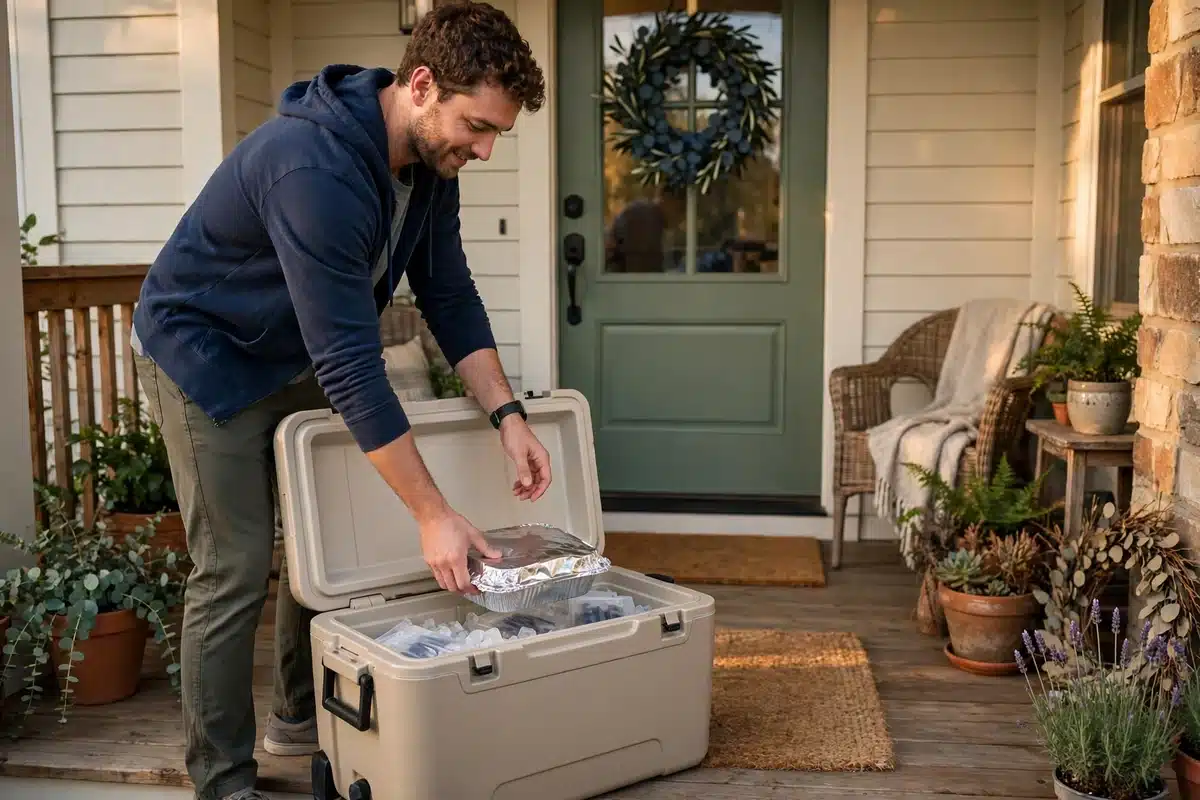
Step Five: Doorstep Etiquette
- Deliver and go. Leave the meal in the agreed place, send one short text — “Dinner is in the cooler, no need to reply” — and leave.
- Do not knock expecting conversation. The patient may be asleep or unwell. On weeks when the care team has advised keeping contact brief, doorstep delivery protects the family without anyone having to explain.
- Do not expect thanks in person. Gratitude is real but energy is scarce; the absence of a thank-you note is not the absence of appreciation.
- Be reliable or be replaced. If your slot day goes wrong, tell the coordinator as early as you can so a substitute can step in. The one unforgivable meal-train sin is the silent no-show.
- Include the small kindnesses. Reheating instructions on the lid, tomorrow’s lunch in the same box, breakfast items for the next morning — the touches families remember.
Keeping It Going — and Knowing When to Change It
Trains run for weeks or months, and two things typically change along the way. Volunteer energy dips after the first enthusiastic fortnight — the coordinator counters this by recruiting a deeper bench at the start, so nobody cooks weekly. And the family’s needs shift: as treatment settles into a rhythm, three meals a week may become one, or meals may matter less than lifts to appointments, a school run, or a grocery delivery. Letting the train evolve into general practical help is success, not failure.
Individual situations differ enormously — household size, distance, treatment phase, the family’s own wishes — so treat this as a pattern to adapt, not a standard to meet. Adaptation happens at the coordinator’s monthly check-in: one message to the family (“Still helping? Anything to change?”) and one to the rota. And when the family says the train has run its course, close it gracefully. Help that ends when it should is help that will be accepted again if it is ever needed.
What to Do Next
- Ask the family — once, clearly — whether a meal train would help, and accept their answer and their terms.
- Agree the circle: who may be invited to cook, respecting exactly what the family has shared about the diagnosis.
- Appoint one coordinator (not the patient or the main caregiver) and one simple shared rota everyone can see.
- Gather the details — numbers, allergies, tastes, delivery window, cooler spot, containers — and send them to every cook in one briefing note.
- Start with two or three delivery days a week, aligned to the family’s heaviest treatment days, with a review in a month.
- Deliver to the doorstep, text once, expect nothing — and show up on your day, every time.
Frequently Asked Questions
How long should a meal train run?
As long as it is helping and no longer. Many run through the hardest phase of treatment — the weeks around surgery or a chemotherapy course — with a review every few weeks. Build in check-ins from the start so shrinking or ending the train is a normal adjustment, not an abandonment.
I cannot cook. Can I still take a slot?
Yes. A slot is a promise that dinner arrives, not that you personally made it. A good-quality ready meal, a delivery from a local restaurant the family likes, or groceries for the days ahead all fill a slot honourably — just check the allergy and taste notes first, label anything that needs labelling, and deliver to the doorstep.
How do we handle allergies and dietary needs safely?
By asking, recording, and labelling — never by guessing. The coordinator collects the family’s exact requirements, including anything their care team has advised, and includes them verbatim in the briefing note. Every cook labels their dish with its ingredients. If unsure whether an ingredient is safe, leave it out or ask the coordinator first.
Should we ask about food restrictions related to treatment?
Ask the family what they have been advised and what currently tastes manageable, then cook to that. Do not research diets on their behalf or bring foods chosen for supposed medical benefits — treatment-related nutrition advice belongs to the patient’s own care team.
The family declined a meal train. What else can we do?
Believe them, and offer specifics instead of a rota: a grocery run, lifts to appointments, school pick-ups, gardening, or a standing weekly errand. Vague offers (“anything, anytime”) rarely get used; a named, repeated task does. And stay in touch as an ordinary friend — company and normality are help too.
What if volunteers start dropping out?
It is normal after the first weeks. The coordinator can widen the circle (with the family’s permission), lengthen the gaps between each person’s slots, or reduce delivery days. A smaller train that never misses a day is worth far more than a grand one that fades without telling the family.
Related Articles
- The Breast Cancer Caregiver Handbook
- A Caregiver’s Calendar for Appointments and Tests
- Helping a Loved One Share Breast Cancer News
- Organising a Breast Cancer Care Binder
This article is for general educational purposes only and is not medical, legal, or financial advice. It does not replace professional care. Talk to your doctor or care team about your own situation. If you think you may have a medical emergency, call 911.