
Driving a loved one to cancer appointments is one of the most practical ways to help — and one of the most tiring if it is improvised each time. A little planning around timing, comfort, parking, and the journey home turns treatment-day driving from a scramble into a calm, repeatable routine that supports you both.
Key Takeaways
- Treatment-day driving works best as a planned routine: confirmed times, a comfortable car setup, and a backup driver for when life intervenes.
- Plan for appointments to run long. Build in waiting time, food and water, and a flexible plan for the rest of the day.
- Comfort details matter: easy entry and exit, cushions, layers, a quiet ride option, and a small bag with essentials.
- Only the care team can advise on whether your loved one may drive herself, or on driving after sedation or treatment — always ask them, never guess.
- Share the load where you can. One coordinator and a small rota of drivers lasts far longer than one person doing every trip.
Planning the Trip
Start with the appointment itself. Confirm the day, the arrival time the clinic has asked for (which may be earlier than the appointment time), the building and entrance, and roughly how long the visit is expected to last. Treatment appointments vary — a short review is a different undertaking from a long infusion day — so plan each trip by its own shape rather than by habit. Our pillar breast cancer caregiver handbook sets driving within the wider set of jobs caregivers take on, and why the logistics jobs matter as much as the emotional ones.
A simple rhythm helps: check the plan the evening before, including the route, likely traffic at that hour, fuel or charge, and where you will park. Keep the essentials by the door — appointment letter or app details, insurance and identification cards if your loved one carries them, phone and charger, and the day bag described below. If your loved one uses a system for tracking visits, such as the caregiver’s calendar for appointments and tests, add pickup times to the same page so nothing lives in two places.
Agree between you who confirms what. One workable split: the driver owns the route, timing, and car; the patient owns her appointment details and anything she wants to raise with the team. On days when she feels unwell or tired, the driver quietly takes both lists — which is exactly why writing them down, rather than holding them in memory, is kind to you both.
Making the Car Comfortable
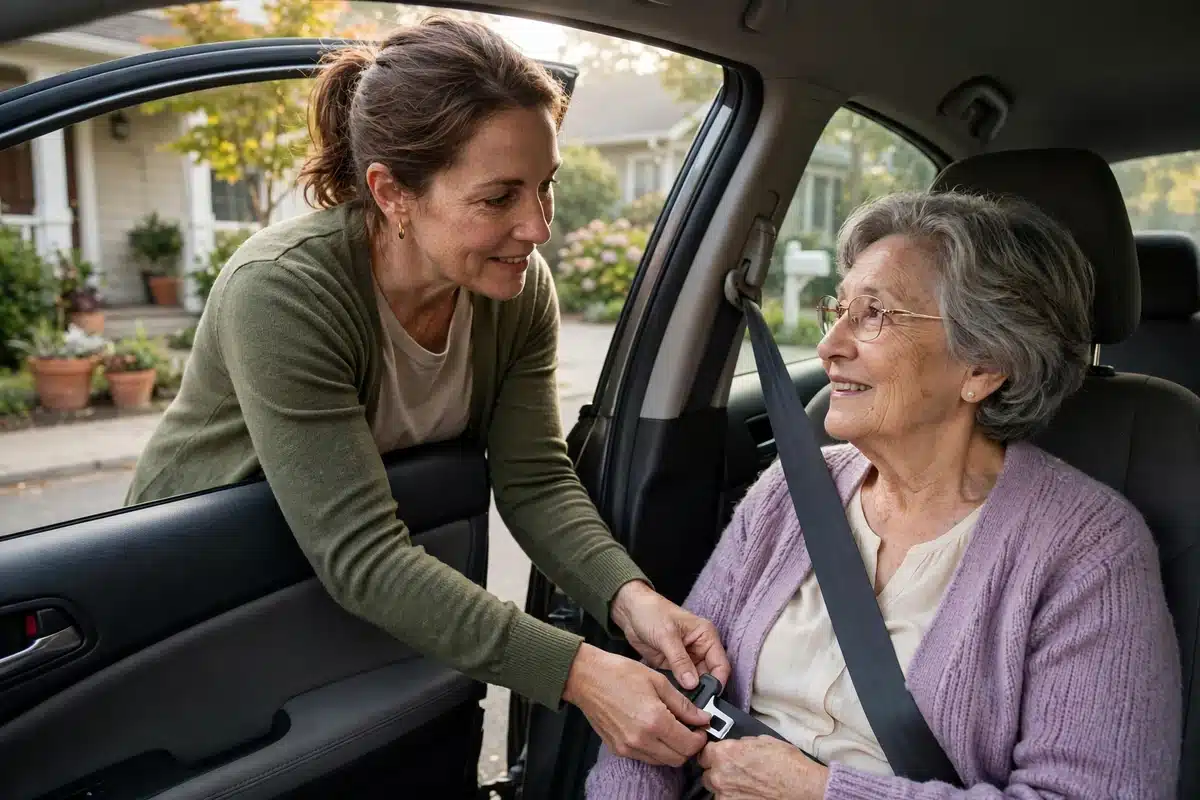
Small comforts make a real difference on treatment days, when your loved one may be tired, sore after surgery, sensitive to temperature, or simply anxious. Consider:
- Easy access. Park so she can get in and out on the side with most space, and offer a steady arm without fuss. If entry height is a problem, a small firm cushion can raise the seat — check with her care team first if she has had surgery and has movement restrictions to follow.
- Seatbelt comfort. After breast surgery, a seatbelt across the chest can be uncomfortable. A small soft pad or folded scarf under the belt is a common comfort measure — but the belt itself must always be worn correctly and snugly. If belt comfort is a persistent problem, raise it with the care team rather than improvising around safety.
- Layers and temperature. Keep a light blanket and an extra layer in the car. Clinics and cars both run hot and cold in the same day.
- The day bag. Water, a snack for afterwards, tissues, lip balm, a phone charger, something to read or listen to, and any comfort items from her own list. Our guide to a chemo day bag checklist covers infusion days in detail; a lighter version serves for shorter appointments.
- Sound and conversation. Agree the ride rules in advance: music, radio, conversation, or quiet. Many patients want quiet on the way there and talk on the way home — or the reverse. Asking once, early, removes a small daily negotiation.
| Trip stage | Driver’s job | Worth checking |
|---|---|---|
| Evening before | Route, timing, fuel, parking plan | Appointment time and arrival time; day bag packed |
| Pickup | Unhurried departure, comfortable seating | Cards, phone, water, extra layer |
| At the center | Drop-off or park, note the parking spot | Where to meet afterwards; your phone stays on |
| Journey home | Calm pace, flexible stops | Food, rest, and nothing demanding scheduled straight after |
Parking, Arrival, and Waiting
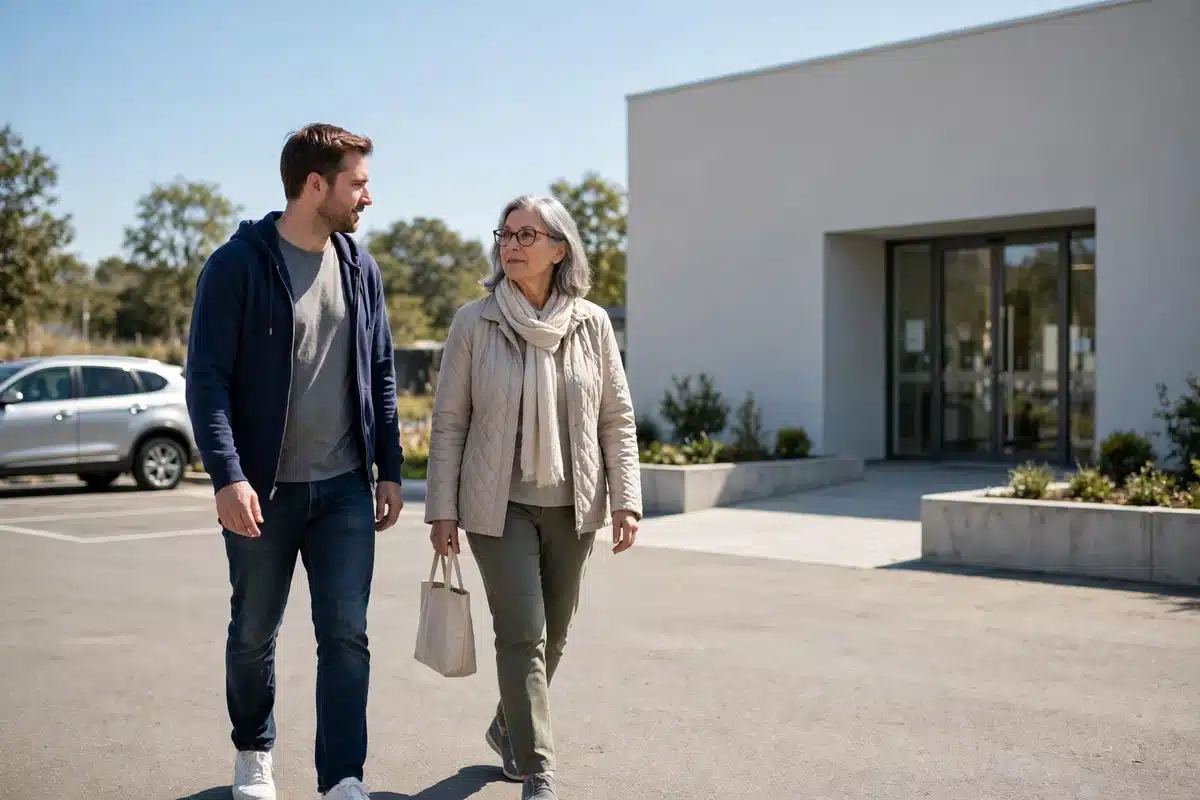
Hospital and clinic parking is the part new drivers most often underestimate. On a first visit, allow generous extra time: find the right car park, note the payment method, and learn the walking distance from car to entrance. If walking far is hard for your loved one, use the drop-off point first and park afterwards — most centers have one near the main entrance — and ask staff or the center’s website about wheelchair availability at the door if that would help. Saving the parking details after the first visit (which level, which entrance, which payment app) makes every later trip calmer.
Decide together what happens during the appointment. Sometimes you will go in together, sometimes she will prefer you wait elsewhere, and clinic rules may vary by appointment type. If you are waiting, keep your phone audible and stay within an agreed distance. If you are joining the appointment, our guide to taking notes at oncology appointments shows how a driver-companion can also be the second pair of ears — often the most valued part of the whole trip.
Expect overruns. Clinics run late, infusions are extended, blood results are waited for. Plan the rest of your day with slack, bring something for your own waiting time, and treat a long day as normal rather than as a failure of the plan. Families who need broader help with rides — including volunteer and community options when no driver is available — will find our article on help with transportation to treatment useful.
The Journey Home
The trip home deserves as much thought as the trip there. After treatment or a long appointment, your loved one may be tired, quiet, hungry, or keen to talk it all through — and it can differ by the day. Keep the pace calm, offer a stop for food or a drink if she would like one, and resist scheduling anything demanding immediately afterwards. At home, the kindest default is rest first, debrief later.
One boundary matters and is worth stating plainly: questions about driving after treatment belong to the care team. Whether your loved one may drive herself to or from any appointment, drive after any procedure involving sedation, or drive while taking particular medicines, depends on her individual situation. Never assume an answer from another patient’s experience. If she hopes to drive herself sometimes, help her ask the team directly and write down what they say — and keep offering lifts without commentary on the days she accepts them.
If she ever feels suddenly unwell during a journey — faint, very sick, in significant pain, or anything that frightens either of you — pull over safely and seek help rather than pressing on. Your care team can advise in advance what to watch for after her particular treatments and who to call, including outside clinic hours. Ask at an early appointment so the answer is in your notes before you need it.
Sharing the Driving Load
Treatment can mean several trips a week for months. One driver doing every trip, alongside work and home life, is a common route to caregiver exhaustion. The fix is the same one that works for all practical help: a small rota with named backups, organised by one coordinator. Our article on coordinating practical help for a cancer patient shows how rides sit inside a single schedule alongside meals, errands, and housework — so gaps are spotted early and no one person becomes the single point of failure.
When other drivers help, pass on the hard-won details: the parking routine, the drop-off point, the meeting place afterwards, what she likes in the car, and what a long day looks like. A short written handover in the care binder or shared calendar turns a substitute driver from a favour into a seamless replacement. And if you are the main driver, protect your own position too — rest on non-treatment days, accept the backup driver when offered, and tell the coordinator when the load stops being sustainable. A rota that breaks its driver helps no one.
What to Do Next
- List the upcoming appointments with arrival times, buildings, and expected lengths — and add pickup times to the same calendar.
- Do a practice run of the route and parking for any new center, or arrive extra early on the first visit.
- Set up the car kit: blanket, extra layer, water, tissues, charger, and the day bag by the door.
- Agree ride preferences together: quiet or conversation, drop-off or park together, who waits where.
- Ask the care team the driving questions that apply to her situation — especially about driving herself and driving after procedures — and write the answers down.
- Name a backup driver and share the parking and handover notes with them before you need them.
Frequently Asked Questions
How early should we leave for appointments?
Early enough that traffic, parking, and walking to the department are all unhurried — and on a first visit to a new center, earlier still. Use the arrival time on the appointment letter rather than the appointment time itself, and treat the first trip as reconnaissance: afterwards you will know the true door-to-door time and can plan by it.
Can my loved one drive herself to treatment?
Only her care team can answer that for her situation. It can depend on the type of appointment, any sedation or medicines involved, recent surgery, and how she is feeling on the day. Help her ask the question directly, note the answer, and keep lifts available regardless — many people who may drive themselves still prefer not to on treatment days.
What should I keep in the car for treatment days?
A light blanket and extra layer, water and a snack for afterwards, tissues, a phone charger, and anything from her own comfort list. Add a small cushion if seat comfort is an issue, and keep the parking payment method sorted in advance. For long infusion days, the fuller packing list in a chemo day bag is worth following.
What if appointments always run late and it disrupts my work?
You are describing the normal pattern, not bad luck — clinics overrun for clinical reasons. Build slack into treatment days where you can, talk to your employer early if your situation allows, and share the driving with a backup driver or rota so late days do not always land on you. Coordinating rides with other help, through one schedule, makes the load visible and shareable.
Should I go into the appointment with her?
That is her choice, and clinic arrangements can vary. Many patients value a companion who listens and takes notes; others prefer privacy for parts of their care. Agree it in advance for each type of appointment, and be ready for the answer to change over time — both patterns are normal.
Related Articles
- The Breast Cancer Caregiver’s Handbook
- Coordinating Practical Help for a Cancer Patient
- Help With Transportation to Breast Cancer Treatment
- Tracking Appointments, Labs and Scans: A Caregiver’s Calendar Method
- Taking Notes at Oncology Appointments
- The First Week as a Breast Cancer Caregiver
This article is for general educational purposes only and is not medical, legal, or financial advice. It does not replace professional care. Talk to your doctor or care team about your own situation. If you think you may have a medical emergency, call 911.