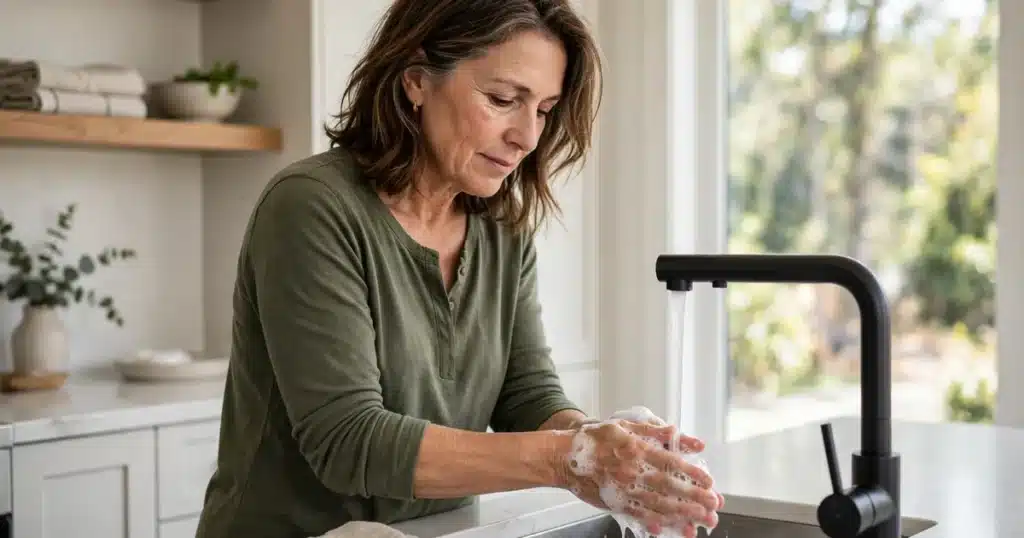
Chemotherapy can temporarily lower the white blood cells that fight infection, so everyday hygiene at home matters more than usual. The precautions themselves are simple: careful handwashing, a sensible kitchen routine, basic food safety, and thoughtful choices about visitors and outings. One rule sits above all the others — the specific instructions from your own care team come first, because they know your treatment and your blood counts.
Key Takeaways
- Chemotherapy can lower infection-fighting white blood cells for a time. Your own team’s instructions come first, always.
- Handwashing is the single most useful habit at home — before eating, after the bathroom, and when you come in from outside.
- Keep food safety simple: wash produce, cook foods thoroughly, and chill leftovers promptly.
- A reasonably clean home is enough: ordinary cleaning, fresh towels and bedding. There is no need for sterile conditions.
- Visitors are welcome when they are well. Anyone with a cold, flu, or a stomach bug should postpone.
- Know your team’s instructions for warning signs and who to call, day or night — and use them early rather than waiting.
Why Precautions Matter During Chemotherapy
White blood cells are the part of the blood that finds and fights germs. Many chemotherapy treatments slow the bone marrow that makes them, so for a period during each cycle of treatment, your counts can dip and your defences run lower than usual. That dip is an expected effect of treatment, and your team monitors it with blood tests. It does not mean staying indoors or treating your home like a hospital ward — it means the everyday habits that keep germs away are worth doing properly for a while.
Think of it as lowering the number of germs you meet while your defences are reduced. Most infections during treatment actually come from germs already living harmlessly on the skin or in the gut, which is another reason your team’s instructions matter more than general rules. Our pillar guide to living through breast cancer treatment puts this in the wider context of daily life during treatment — food, rest, skin, and routine — and the habits in this article are the infection-precaution part of that picture.

Hands and Home: The Everyday Basics
| Habit | Simple practice |
|---|---|
| Handwashing | Soap and water, worked over all surfaces of the hands, especially before eating or preparing food, after the bathroom, after coughing or blowing your nose, and when you come home |
| Hand gel | Keep a bottle by the door and in your bag as a backup for when soap and water are not available |
| Towels and bedding | Use your own towel, and change towels and bed linen regularly as part of the normal wash |
| Kitchen and bathroom surfaces | Ordinary cleaning, with extra care for food-preparation areas, chopping boards, and anything that touches raw food |
| Personal items | Keep your toothbrush, cup, and cutlery for your own use, and take any specific mouth-care advice from your team — see our guide to mouth care during chemotherapy for the gentle routine |
| Cuts and grazes | Wash promptly, cover with a clean dressing, and mention anything that looks angry or is slow to heal to your team |
Ordinary is the key word. A normally clean home, cleaned the normal way, is the goal — not special disinfectant regimes or avoiding your own furniture. If someone in the household does heavy cleaning, gardening, or pet-waste duty during your lowest-count days, it is sensible for them to take those jobs where possible, and to wash their hands well afterwards. Your skin itself is a barrier worth protecting, which is why the gentle routine in our article on skin care during chemotherapy pairs naturally with these basics.
Food Safety Basics
Food carries germs when it is handled, stored, or cooked carelessly, so the kitchen deserves the same calm attention as handwashing. The general habits are the ones food-safety guidance recommends to everyone, applied a little more carefully:
- Wash fruit and vegetables under running water before eating or cooking them.
- Cook meats, eggs, and leftovers thoroughly, and reheat leftovers until they are steaming hot.
- Put leftovers in the fridge promptly rather than leaving them out, and eat them within the time your usual food-safety guidance suggests.
- Keep raw meat separate from ready-to-eat foods, and wash boards, knives, and hands after handling it.
- Follow any specific food guidance your own team gives you — some teams advise avoiding particular foods during treatment, and their list for you outranks any general one.
When appetite is poor and energy is low, simple, freshly cooked food you actually feel like eating matters more than a perfect menu. If family or friends are cooking for you, share your team’s food guidance with them so their kindness follows the same rules. And if nausea, mouth soreness, or taste changes are making eating hard, our guides to mouth sores during chemotherapy cover comfort basics that sit alongside basic hygiene.

Visitors, Crowds, and Pets
Company is good for most people during treatment, and the aim is sensible selection, not isolation. Welcome visitors who are well; ask anyone with a cold, flu, a stomach bug, or a feverish child to visit another week — true friends would rather postpone than worry they made you ill. A normal greeting can be swapped for a wave or an elbow bump if you prefer; people understand. Ask visitors to wash their hands or use gel when they arrive — it is a small request that most guests are glad to follow.
Crowded indoor places are a judgement call. Your team may suggest extra care during the part of your cycle when counts are lowest, and may advise about particular situations — ask them rather than guessing, because the advice depends on your treatment. Pets are usually a comfort rather than a problem: keep their routine care going, wash your hands after handling them, and where possible let someone else handle litter trays and cage cleaning during treatment, or use gloves and wash thoroughly if you must do it yourself. Mention any bite or scratch that breaks the skin to your team.
When to Call Your Team
Your care team will give you their own instructions about which warning signs matter and what number to call, including out of hours. Write that number somewhere you cannot miss — on the fridge, in your phone, in your treatment folder — and make sure family members know where it is too. This article sets out no temperature thresholds and no symptom lists on purpose: the thresholds and signs that matter depend on your treatment, and the list your team gives you is the one to act on.
The habit to build is calling early. A call that turns out to be unnecessary costs nothing; a worry watched at home for days can become a much bigger problem. Teams would far rather hear from you the day something seems wrong — a new feverish feeling, chills, a cough that is worsening, pain or redness around your line or port, or simply feeling suddenly much worse — than meet the problem later. If you cannot reach your team and feel seriously unwell, seek urgent medical help.
What to Do Next
- Ask your team at your next visit, or by phone today: what are my warning signs, and what number do I call, day and night? Write both down.
- Put soap and hand gel where they will actually be used: sinks, the front door, your bag, the car.
- Do one kitchen pass: boards and surfaces cleaned, leftovers labelled and dated, raw and cooked foods separated.
- Tell regular visitors the house rule — come when you are well, wash hands on arrival — so you never have to decide case by case.
- Share your team’s food guidance with anyone who cooks for you.
- Keep your medicines organised alongside these habits, so doses are not missed on foggy days.
Frequently Asked Questions
Do I need to keep my home sterile during chemotherapy?
No. Sterile conditions are neither possible nor needed at home. A normally clean house, careful handwashing, and sensible food handling are what your team is asking for. Ordinary cleaning products used in the ordinary way are enough.
Can my family and grandchildren still visit?
Generally, yes — visits from people who are well are a normal and valued part of life during treatment. Ask visitors with colds, flu, or stomach bugs to postpone, have everyone wash their hands on arrival, and check with your team about anything specific, such as a child who has been exposed to an infectious illness at school.
Can I go shopping or eat out?
Many people do, with a little planning: quieter times, hand hygiene before eating, and freshly cooked hot food are sensible choices. Your team may advise extra care at the lowest point of your cycle, so ask them what fits your situation before assuming either way.
What about my dog or cat?
Pets can usually stay part of daily life. Wash your hands after handling them, avoid close face contact, and let someone else deal with litter and waste where you can. Tell your team about any bite or scratch that breaks the skin.
I feel completely well — do the precautions still matter?
Yes. The period of lower white cell counts does not always come with symptoms, which is exactly why the habits run on schedule rather than on how you feel. Your team can tell you how the pattern of your treatment affects the timing.
Related Articles
- Living Through Breast Cancer Treatment: A Practical Day-to-Day Guide
- Skin Care During Chemotherapy: A Gentle Routine for Dry, Sensitive Skin
- Mouth Sores During Chemotherapy: Everyday Care and Comfort Basics
- Nail Changes During Chemotherapy: What to Expect and How to Care for Your Nails
- Keeping Track of Medicines During Treatment: Simple Organizer Systems
This article is for general educational purposes only and is not medical, legal, or financial advice. It does not replace professional care. Talk to your doctor or care team about your own situation. If you think you may have a medical emergency, call 911.