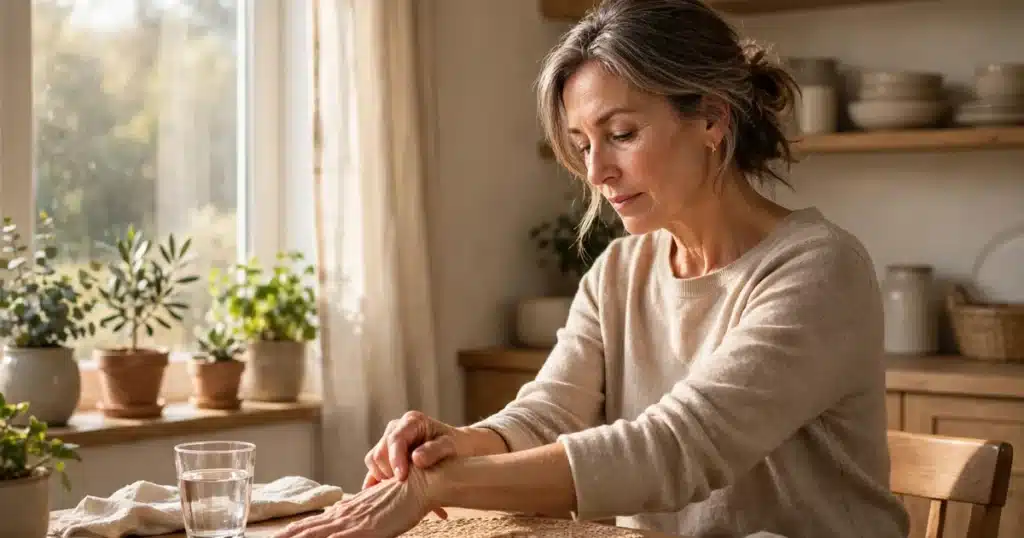
Aching, stiff joints are a common experience during and after breast cancer treatment, and for some people they linger into survivorship. The discomfort is often worst in the morning or after sitting still, and it can make ordinary things — jars, stairs, buttons, gardening — suddenly effortful. Gentle daily habits help many people, and persistent or worsening pain is always worth raising with your care team, because there can be more than one cause.
Key Takeaways
- Joint pain and stiffness are commonly reported during and after breast cancer treatment, in hands, knees, hips, shoulders, and other joints.
- The pattern is typically “stiff after rest, easier once moving” — mornings and long sits are often the hardest moments of the day.
- Gentle regular movement, warmth, pacing, and small practical adaptations around the house help many people day to day.
- This article names no medicines and recommends no supplements: what may help your joints, in your situation, is a conversation for your own care team.
- Raising persistent, worsening, or one-sided pain with your team matters, because joint symptoms can have several different causes and some need checking.
- Keep a simple note of when pain is worst and what helps — it makes your follow-up conversation far more useful.
What Lingering Joint Pain Can Feel Like
People describe it in ordinary language: “I feel twenty years older when I get up.” “My hands won’t work properly until I’ve been moving for a while.” “The stairs are a negotiation now.” The stiffness is often at its worst first thing in the morning or after a long sit, and eases — at least partly — once the joints get moving. Hands and fingers, knees, hips, ankles, and shoulders are the places people mention most, though any joint can be involved.
Our pillar guide to life after breast cancer sets out the wider landscape of survivorship, and joint aches sit firmly within it: one of those after-effects that is rarely dramatic, rarely the headline of an appointment, and yet shapes every day. That combination — constant, low-level, easy to dismiss — is exactly why it is worth an article of its own, and worth raising properly rather than enduring silently.
It is also worth saying what this pain usually does not feel like. A single joint that is suddenly hot, swollen, or severely painful, or pain that is getting steadily worse rather than fluctuating, is a different picture and should be raised promptly rather than managed at home — the section on when to raise it explains more.
Why Joints May Ache After Treatment, in General Terms
There is no single cause, and in any individual case the picture is usually a mixture. In general terms, several influences can be at work at once:
- The treatment itself. Some cancer treatments are known to leave joints aching or stiff for a time afterwards, and the after-effects of treatment on muscles, joints, and energy can linger well beyond the last session.
- Hormonal changes. Treatment can change the body’s hormone balance, sometimes suddenly, and joints are sensitive to those changes — many people first notice stiffness around the same time as other menopausal-type changes.
- Doing less for a while. Months of treatment usually mean months of reduced activity. Joints and muscles that have been rested protest when ordinary life resumes, and deconditioning alone can ache.
- Ordinary joint wear. Knees and hands that were already ageing do not pause for cancer treatment. Some of what people feel is the everyday arthritis of their decade, now impossible to ignore — and our article on bone health after breast cancer covers the related question of how bones and joints are looked after in follow-up.
Because the mixture differs from person to person, so does what helps. That is the practical reason this article sticks to everyday basics and keeps steering you back to your own team for anything beyond them: they can look at your treatment history, your other health conditions, and the pattern you describe, and judge what is likely going on in your case.
Everyday Basics That Help Many People
| Basic | What it looks like in practice |
|---|---|
| Keep moving, gently and often | Short, regular movement through the day — a walk, easy stretching, pottering — rather than one heroic effort followed by a day on the sofa. Joints that move a little, often, are usually more comfortable than joints kept still |
| Warmth | A warm shower to start the day, warm clothing on cold joints, a heat pack on a stiff knee while you sit — many people find warmth loosens morning stiffness |
| Pace the heavy jobs | Spread gardening, cleaning, and carrying across the week; alternate a joint-heavy task with a light one; sit for jobs you used to stand for |
| Morning routine | Give stiff joints a gentle start: flex hands and feet in bed or in the shower, begin with easy movement before anything demanding |
| Supportive basics | Comfortable, well-fitting shoes; a chair at the right height; keeping everyday items between waist and shoulder level so you are not crouching or reaching all day |
| Rest, properly | Achiness worsens with exhaustion. Sleep and real rest are part of joint care, not a reward after it |
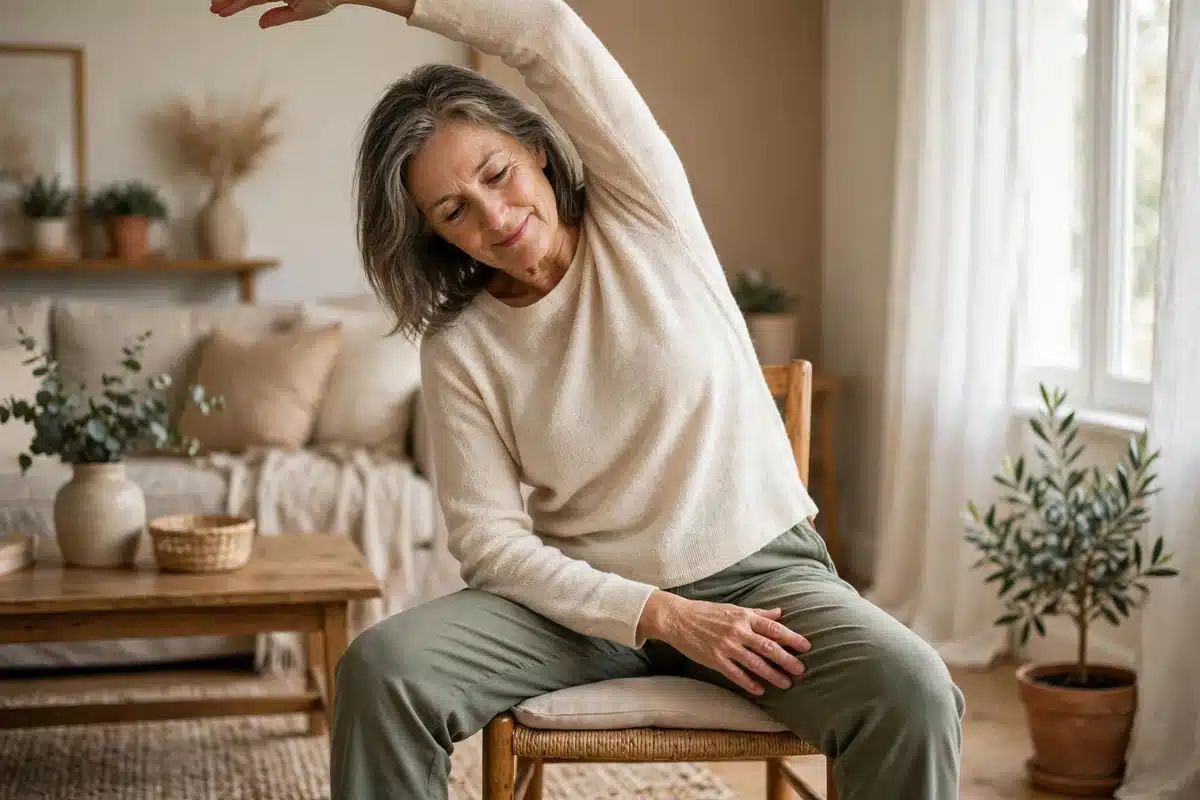
Start small and build slowly. If you have been inactive through treatment, the route back is graded — a little more each week — and your team or a physiotherapist can advise on what is sensible for you, particularly after surgery. Movement after cancer treatment is widely encouraged in general terms, but the right amount and kind for your body, your treatment, and your other conditions is individual advice, and it belongs with your team.
Hands, Feet, and the Fiddly Jobs
Hands deserve a section of their own, because stiff fingers collide with life constantly: jars, buttons, keys, typing, handwriting, crafts. Small adaptations make a disproportionate difference:
- Widen the grip. Built-up handles on cutlery, pens, and tools reduce the force fingers must produce; a rubber grip or a cloth gives jars and taps more purchase.
- Use the bigger joint. Carry bags on the forearm rather than in curled fingers; push doors with a shoulder or hip rather than fingertips; use both hands for jobs you used to do one-handed.
- Warm hands first. Warm water or a warm towel before a fiddly task loosens stiffness, especially in the morning.
- Alternate and rest. Swap a hand-heavy task for a light one and back again, rather than finishing the marathon job in one sitting.
- Feet, too. Comfortable, cushioned, supportive shoes, and getting up and moving after long sits, help stiff ankles and feet. Check your feet regularly if feeling in them has changed, and mention any change in feeling to your team, since hands, feet, and joints are often best looked at together.
Keeping a Note Your Team Can Use
Joint pain is easy to under-report — “just achy” covers a multitude — and a short note turns a vague complaint into something your team can act on. For a week or two, jot down:
- Which joints, and on which side.
- When it is worst — morning, after rest, after activity, at night.
- What helps and what makes it worse.
- Anything new alongside: a swollen joint, a rash, feverishness, new weakness, or a joint that will not bear weight.
- What it is stopping you doing — the functional cost is often the detail that changes the conversation.
Bring the note to follow-up. Survivorship appointments are structured occasions — our article on heart health after breast cancer treatment shows how follow-up watches several after-effects at once — and a written pattern helps your joint symptoms get their fair share of the visit rather than a sentence as you leave.
When to Raise It With Your Care Team
Raise joint pain at your next follow-up in any case, rather than assuming it is simply the price of treatment. Raise it promptly — between appointments — if:
- A joint becomes hot, red, swollen, or suddenly much more painful.
- Pain is steadily worsening, or a joint will not bear weight or stops moving properly.
- New symptoms arrive alongside: feverishness, a rash, marked weakness, or numbness that is new or spreading.
- The pain is interfering with sleep, work, or everyday independence despite the basics.
- It is getting you down. Persistent pain and low mood feed each other, and both deserve attention.
What your team does next is individual: they may examine the joints, review your treatment history, consider tests, or refer you to physiotherapy or another specialist. They may also discuss medicines with you — that conversation, about what might suit your body and your other treatments, is exactly where such decisions belong, which is why this article makes no recommendations of its own, and recommends no supplements or remedies either. Anything you are considering taking for your joints, including products sold as natural, is worth mentioning to your team first, since products can interact with treatment and follow-up care.
Questions to Ask Your Doctor
- My joints have been aching and stiff since treatment. Is that a pattern you see, and what might be behind it in my case?
- Is there anything in my treatment history or follow-up plan that relates to joint or bone health?
- What level and kind of activity would you advise for me as I build back up?
- Would physiotherapy or another referral help in my situation?
- Are there any products or remedies I should avoid, given my treatment?
- Which joint symptoms should make me contact you between appointments?
Frequently Asked Questions
Is joint pain after breast cancer treatment common?
Yes, it is commonly reported — during treatment and lingering afterwards — in hands, knees, hips, shoulders, and other joints. Because it is common, it is also commonly under-mentioned. Common does not mean you should simply put up with it: it is a standard, legitimate thing to raise in follow-up.
Why is the stiffness worst in the morning?
Joints that have been still for hours commonly feel stiff and achy on first moving, and ease as you get going — a pattern many people with joint problems of all kinds describe. Warmth and gentle movement at the start of the day help many people. If morning stiffness is severe or prolonged, mention its pattern to your team; the details help them judge the cause.
Should I exercise, or rest my joints?
For most people, gentle regular movement serves joints better than complete rest — stillness tends to deepen stiffness. But the right amount and kind of activity for you is individual, particularly after surgery or if a joint is inflamed. Build up gradually, avoid pushing through sharp pain, and take personalised advice from your team or a physiotherapist.
Can I take something for it?
Possibly — but that decision belongs with your care team, who know your treatment, your other medicines, and your health history. This article deliberately names no medicines and recommends no supplements, because what is safe and suitable varies between individuals and can interact with cancer treatment and follow-up care. Ask your team what, if anything, they advise for you, and mention anything you are already taking.
When is joint pain a sign of something more serious?
A joint that is hot, red, or swollen; pain that is worsening rather than fluctuating; a joint that will not bear weight; or new accompanying symptoms such as feverishness or weakness — all of these should be raised promptly rather than watched at home. Your team would always rather check a symptom early than meet it late.
Related Articles
- Life After Breast Cancer: A Survivorship Guide
- Bone Health After Breast Cancer Treatment: Strength, Testing, and Daily Habits
- Heart Health After Breast Cancer Treatment
- Chemo Brain After Treatment Ends: When the Fog Lingers and What May Help
- Routine Health Screenings for Breast Cancer Survivors
This article is for general educational purposes only and is not medical, legal, or financial advice. It does not replace professional care. Talk to your doctor or care team about your own situation. If you think you may have a medical emergency, call 911.