
Chemotherapy commonly changes how food tastes. Flavours that were familiar can turn metallic, bitter, or strangely flat, and favourite meals can suddenly seem unappealing. It happens because treatment affects the fast-renewing cells of your taste buds and the lining of your mouth — the same reason the mouth itself can become sore or dry. The changes are usually temporary, following the rhythm of your treatment cycles, and gentle everyday adjustments can make eating considerably easier while they last.
Key Takeaways
- Taste changes are a common chemotherapy side effect: food may taste metallic, bitter, too salty or sweet, bland, or simply “off.”
- They happen because chemotherapy affects fast-growing cells, including taste buds and the mouth’s lining; a dry mouth makes flavours duller still.
- For most people, taste recovers gradually in the weeks after each cycle and after treatment ends — though the pattern varies from person to person.
- Gentle basics help: a clean, moist mouth; foods served cool or at room temperature; small, frequent meals; and experimenting with seasonings, marinades, and textures.
- Tell your care team if taste changes stop you eating or drinking enough, or arrive together with mouth sores, weight loss, or trouble swallowing — and ask before trying any supplement or product marketed for taste.
Why Chemotherapy Changes Taste
Taste buds are among the body’s fast-turnover cells: they wear out and replace themselves constantly. Chemotherapy medicines act on dividing cells, and healthy fast-dividing cells — including taste buds and the lining of the mouth — are caught up in that effect. When the taste buds cannot renew themselves at their usual pace, flavours register weakly or wrongly. Some medicines also leave a taste of their own in the mouth during and shortly after treatment, and a dry mouth — another common effect — flattens flavours further, because taste needs saliva to carry it.
The pattern usually follows the treatment cycle: changes build in the days after a session and ease as the mouth recovers before the next one. Our pillar guide on living through breast cancer treatment sets this among the other everyday effects of treatment, and our guide to chemotherapy and what to expect gives the broader picture of how cycles work.
What Taste Changes Can Feel Like
Experiences differ from person to person and cycle to cycle. Common ones include:
| What you may notice | What is often behind it |
|---|---|
| A metallic or chemical taste, sometimes strongest during and just after treatment | The medicines themselves, and taste buds registering flavours incorrectly |
| Everything tastes bland or like cardboard | Taste buds renewing slowly, so flavours arrive muted |
| Food tastes too salty, too sweet, or bitter | Different taste buds affected unevenly, so balances shift |
| Going off a favourite food, especially one eaten around treatment days | The mind linking that food with feeling unwell |
| A dry mouth and thick saliva | Treatment affecting saliva, which taste depends on to work |
| Even water tastes strange | The same effects, noticeable because water usually has no taste to hide behind |
None of this means treatment is or is not working. It is a side effect of how the medicines act on healthy tissue, and it says nothing about you doing anything wrong with food.
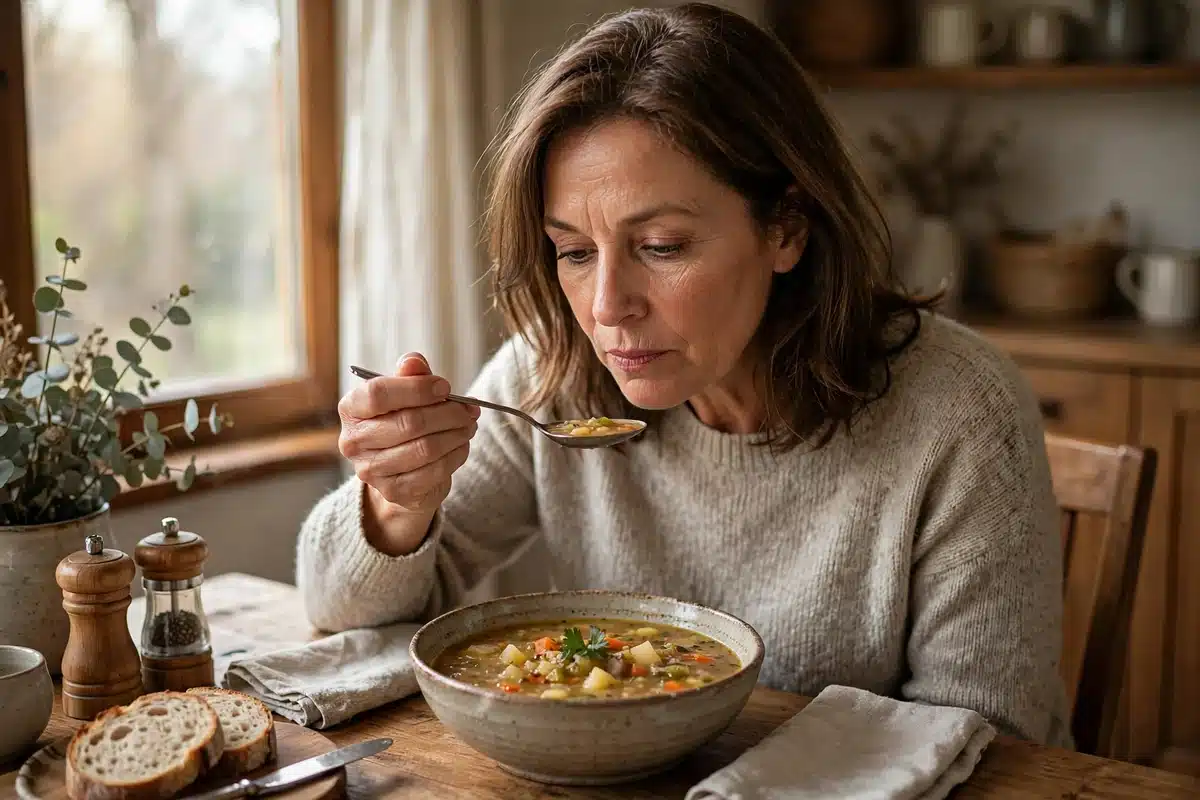
Gentle Things That Can Help
Nothing restores taste instantly, but these everyday basics make food more enjoyable for many people while the changes last:
- Start with a clean, moist mouth. Rinsing with plain water before eating clears stale flavours. Keeping up the gentle routine in our guide to oral care during chemotherapy helps taste as well as comfort.
- Serve food cool or at room temperature. Hot food smells stronger and tastes more intense; lukewarm food is often easier when flavours feel wrong.
- Try plastic or wooden utensils if a metallic taste is prominent — some people find metal cutlery makes it worse.
- Add gentle flavour. Herbs, mild spices, and marinades can lift bland food. A little sharpness — a squeeze of citrus, for example — suits some people, but if your mouth is sore, acidic foods will sting; our guide to mouth sores during chemotherapy covers that balance.
- Vary textures and temperatures. When flavour is unreliable, contrast — something crunchy beside something soft, a cold drink beside a warm meal — can make eating more interesting.
- Eat little and often. Small meals and snacks are less disheartening than a full plate you cannot face, and you can eat more at the times of day your taste feels closest to normal.
- Protect favourite foods on treatment days. If you go off a food you love because you ate it while feeling unwell, that aversion can stick. Some people keep favourites for good days.
Eating Enough When Nothing Tastes Right
While taste is disrupted, the goal quietly changes: getting enough in matters more than eating perfectly. Your body is dealing with treatment and repair, and steady nourishment supports that. Practical shifts that help include choosing foods for how they feel and sit rather than how exciting they are, adding energy where you can (sauces, gravies, and dressings make food moister as well as richer), and planning around your best hours rather than a fixed timetable.
Our article on eating well during breast cancer treatment covers the wider ground — appetite, weight, and working with your team if eating becomes a struggle. If you are losing weight without meaning to, say so at your next check-in rather than waiting; dietitians attached to treatment teams work on exactly this problem, and earlier is easier.

When to Tell Your Care Team
Taste changes on their own are usually a comfort issue rather than a danger — but tell your team promptly if:
- You cannot eat or drink enough to keep your strength up, or you are losing weight without trying
- Taste changes arrive with mouth sores, white patches, or pain when swallowing
- Drinking becomes difficult, or you notice signs of dehydration such as very little urine or dizziness
- A new medicine seems to have made things markedly worse
One caution belongs here too: products and supplements are marketed for taste problems, as they are for most treatment effects. Some can clash with treatment, so check with your care team before starting anything of that kind — that is a conversation they expect, not an imposition. Our overview of managing chemotherapy side effects explains the general rule: report effects early, because most are easier to settle when they are small.
Questions to Ask Your Care Team
- Is my treatment likely to change my taste, and when in the cycle should I expect it?
- What do you suggest for a metallic taste?
- Are there foods or drinks you would particularly encourage or discourage for me?
- How much weight loss should prompt a call to you?
- Can I be referred to a dietitian for help with eating during treatment?
- Is there anything I should avoid trying for taste without checking with you first?
Frequently Asked Questions
How long do taste changes last?
They usually follow the rhythm of your cycles: building in the days after treatment, easing as your mouth recovers, and gradually returning to normal after chemotherapy ends. For some people recovery takes a little longer. If your taste has not improved some time after treatment finished, mention it at a follow-up visit.
Why does everything taste metallic?
A metallic taste is one of the most commonly reported changes. It seems to come from a combination of the medicines themselves and taste buds misreading flavours while they struggle to renew. Plastic utensils, rinsing your mouth before eating, and cooler food temperatures help some people with this particular effect.
Is it normal to go off foods I used to love?
Yes — very. Aversions often form around foods eaten close to treatment, when you felt unwell, and they can be strong while treatment continues. Most fade afterwards. Keeping favourite foods for your better days during treatment can protect them from picking up the association.
Will my taste come back to normal?
For most people, yes — taste recovers as the taste buds resume their normal renewal after treatment. It is a gradual return rather than a switch being flipped, and flavours may come back unevenly for a while. Persistent changes are worth raising with your team, who can check for other causes such as mouth problems or medicines.
Can I use strong flavours and spices to get through this?
Gentle seasoning is fine for most people and can make bland food far more appealing. Very hot spices are a matter of comfort — if your mouth is sore or sensitive they will sting, so build up cautiously and follow what your mouth tolerates. If you are considering supplements or special products instead, ask your team first.
Related Articles
- Living Through Breast Cancer Treatment: A Practical Day-to-Day Guide
- Eating Well During Breast Cancer Treatment
- Mouth Sores During Chemotherapy: Everyday Care and Comfort Basics
- Oral Care During Chemotherapy: A Gentle Tooth and Mouth Routine
- Managing Chemotherapy Side Effects
This article is for general educational purposes only and is not medical, legal, or financial advice. It does not replace professional care. Talk to your doctor or care team about your own situation. If you think you may have a medical emergency, call 911.