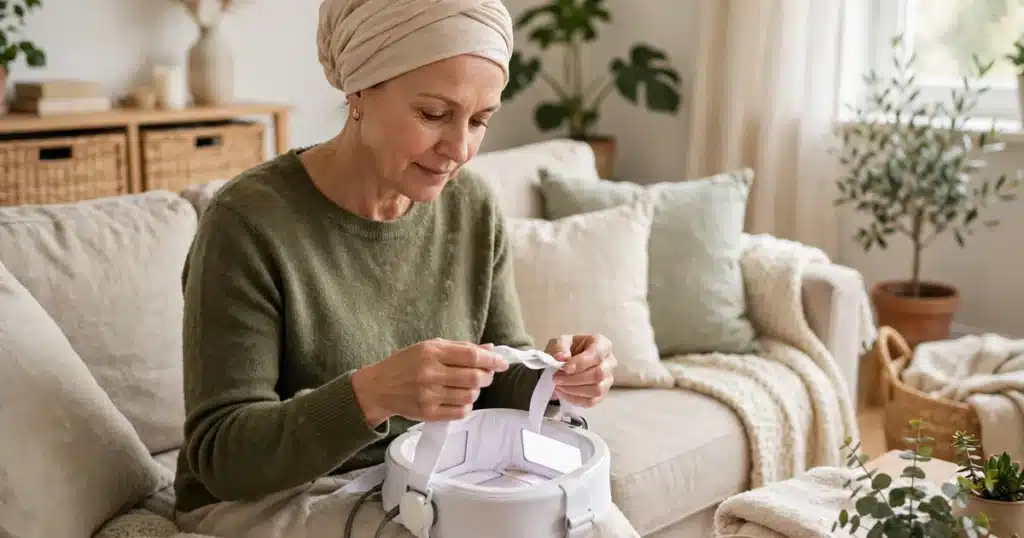
Scalp cooling — often called cold caps — is a technique used during some chemotherapy sessions to cool the scalp, narrowing the blood vessels in the skin of the head so that less of the chemotherapy medicine reaches the hair follicles. The aim is to reduce hair loss during treatment. It does not suit every person, drug regimen, or cancer situation, results vary widely from person to person, and it adds time and, in some cases, cost to treatment days — which is why it is a conversation to have with your care team before chemotherapy begins.
Key Takeaways
- Scalp cooling chills the scalp before, during, and after a chemotherapy infusion, so the follicles are exposed to less of the medicine.
- Two broad forms exist: machine-based cooling systems fitted at the treatment center, and manually changed cold caps that are frozen and swapped during the session.
- It can only be considered with certain chemotherapy regimens, and it is not appropriate for everyone — your team must confirm it fits your treatment and your cancer type.
- Experiences vary a great deal: some people keep much of their hair, others thin noticeably or lose most of it despite cooling.
- Cooling lengthens treatment days, and cost and coverage vary — ask your center what applies in your case.
- Hair loss, with or without cooling, is temporary in most chemotherapy situations, and regrowth follows its own timetable.
Why Chemotherapy Affects Hair
Chemotherapy medicines target fast-growing cells, and hair follicles are among the fastest-growing cells in the body. That is why many regimens cause hair to thin or fall out — not only on the head, but sometimes eyebrows, eyelashes, and body hair as well. Our article on hair loss during chemotherapy describes the usual pattern and timing. Not every regimen causes the same degree of loss, and your team can tell you what is typical for the medicines in your plan. This cluster’s pillar guide, living through breast cancer treatment, puts hair changes alongside the other everyday effects people plan around.
For many people, hair loss is one of the most visible and distressing parts of treatment, because it changes how they look to the world and to themselves. Wanting to reduce it is not vanity — it is about privacy, normality, and feeling like yourself at work, at school events, and in photographs. Scalp cooling exists because that wish is so widely shared, and it is reasonable to ask about it even if you ultimately decide the trade-offs are not worth it for you.

How Scalp Cooling Works
The idea is simple, even if the equipment is not. Cooling the scalp makes the small blood vessels in the skin tighten. With less blood flowing through the follicles while the chemotherapy medicine is at its strongest in the bloodstream, the follicles absorb less of it. Less exposure means less damage to the cells that grow hair, and — for some people — less shedding.
Timing matters, which is why the cap goes on before the infusion starts and stays on for a period after it finishes, while drug levels settle. That before-and-after cooling is also why a scalp cooling day is longer than an ordinary infusion day, sometimes considerably. The cooling protects only the scalp: it does nothing for eyebrows, eyelashes, or body hair, and it does not change how the chemotherapy works on the cancer itself — a point your team will confirm when you discuss it, since reassurance on that question matters to many people.
The Two Forms of Cooling
| Feature | Machine-based cooling system | Manual cold caps |
|---|---|---|
| How it works | A fitted cap connected to a cooling unit that holds a steady temperature | Gel caps frozen in advance and changed at intervals to stay cold |
| Where | Provided by some treatment centers, in the infusion chair | Usually rented or bought by the patient and brought to each session |
| Help needed | Center staff set it up | Often needs a helper to swap caps and manage fitting |
| Availability and cost | Depends on the center; fees and coverage vary | Rental and dry-ice or freezer costs vary; coverage varies |
Availability is uneven: some centers offer a machine system, some allow manual caps, and some cannot accommodate either because of space, staffing, or the regimens they give. If cooling matters to you, raise it early — before the first infusion — because it cannot be started partway through a course with the same effect, and arrangements take time. Our guide to preparing the night before chemotherapy and the chemo bag checklist can help you plan the longer days if you do go ahead.

What Sessions Feel Like
People describe the first minutes of cooling as intensely cold, sometimes with a headache-like pressure, which for many settles into a numb, manageable cold once the scalp adjusts. Warm blankets, layers, and a hot drink help, because the rest of you can feel chilly even though only your head is being cooled. A tight-fitting cap worn for hours can also feel heavy or confining, and some people find the added hours in the chair the hardest part — treatment days are long already, and cooling extends them at both ends.
Practical preparation makes a real difference: arrive with hair prepared as your center advises, bring entertainment and snacks for the longer day, and arrange company or a lift home if you tend to feel washed out afterwards. Gentle hair care during a cooling course is also commonly advised — mild washing, minimal heat styling and pulling — and our article on skin care during chemotherapy covers the same gentle approach for skin, which often becomes sensitive in parallel.
Limits, Trade-Offs, and Who It May Not Suit
The honest limit is variability. Cooling helps some people keep a good deal of hair, helps others only partly, and does not prevent substantial loss for some people at all — and there is no reliable way to know in advance which group you will be in. Shedding can also begin and then level off, which makes the middle weeks uncertain. Some people decide that partial success — keeping enough hair to feel like themselves, perhaps with a shorter cut — is worth it; others feel the extra hours and discomfort are not repaid. Both conclusions are reasonable.
There are also people for whom cooling is not advised. It is only used with certain chemotherapy medicines, and it may be unsuitable where there are concerns specific to your cancer type or scalp health, or where you have conditions that make prolonged cold unsafe or miserable, such as certain circulation or migraine problems. Cost is a further trade-off: fees, rental charges, and insurance coverage vary widely, and a hospital financial counselor or navigator — the subject of our article on hospital financial counselors and navigators — can help you check what applies before you commit. Individual cases differ in every one of these respects, so treat any general account, including this one, as background for a conversation with your own team.
Questions to Ask Your Doctor
- Is scalp cooling compatible with my specific chemotherapy regimen?
- Is there anything about my cancer type or my health that makes cooling inadvisable for me?
- Does this center offer a machine system, allow manual caps, or neither?
- How much longer will my treatment days be if I use cooling?
- What will it cost in my case, and is any of it covered?
- How should I care for my hair during the course if I go ahead?
- If cooling does not work well for me, what are my options then — and can I stop?
Frequently Asked Questions
Does scalp cooling stop chemotherapy from working?
Scalp cooling acts on the blood vessels of the scalp skin only; it does not change the medicine circulating through the rest of the body. Because of where breast cancer is treated, oncologists consider cooling in suitable cases, but there are cancer situations where it is not advised — which is exactly why your own team must confirm it fits your diagnosis before you start.
Will I definitely keep my hair if I use cold caps?
No one can promise that. Outcomes range from keeping most hair, through noticeable thinning, to losing most hair despite cooling — with the same regimen and the same equipment. Many people still judge the attempt worthwhile, but it helps to start with realistic expectations and a fallback plan, such as a shorter haircut or a wig consultation, that you may never need.
Can I start scalp cooling partway through chemotherapy?
Cooling is designed to be used from the first infusion, because each session’s exposure adds up. Starting later is generally not equivalent, and some centers will not offer it mid-course. If hair is important to you, ask at the planning appointment — before treatment begins — so the option is genuinely open.
Does scalp cooling protect eyebrows and eyelashes too?
No. It cools only the scalp, so it can only affect the hair on your head. Eyebrows and eyelashes may thin on regimens that cause hair loss, and they typically regrow after treatment. Makeup techniques and false lashes are a personal choice; your center may have appearance-support resources to suggest.
What happens to my hair after chemotherapy ends?
Whether or not you used cooling, hair usually begins to regrow after treatment finishes, often with a different texture or curl at first that settles over time. Our article on hair loss during chemotherapy describes regrowth in more detail. If regrowth seems very slow, mention it at a follow-up visit so your team can check for other causes.
Related Articles
- Living Through Breast Cancer Treatment: A Complete Guide
- Hair Loss During Chemotherapy: What to Expect
- Skin Care During Chemotherapy: A Gentle Routine
- Chemo Bag Checklist: What to Bring to Infusion Days
- Nail Changes During Chemotherapy
This article is for general educational purposes only and is not medical, legal, or financial advice. It does not replace professional care. Talk to your doctor or care team about your own situation. If you think you may have a medical emergency, call 911.